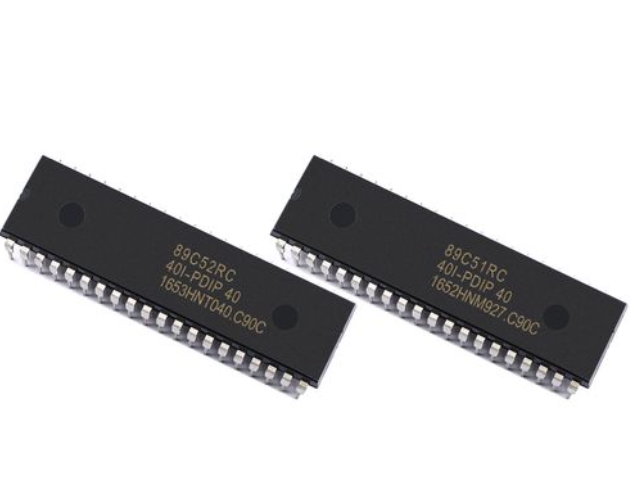
MCU Programming Languages: Choosing the Right Tool for Embedded Success
Introduction
In the intricate world of embedded systems, the Microcontroller Unit (MCU) serves as the silent, powerful brain behind countless devices—from smart home gadgets and wearable tech to industrial automation and automotive control systems. However, the hardware itself is only half the story. The language used to program an MCU breathes life into silicon, translating human logic into precise electrical signals. The choice of programming language is a foundational decision that impacts development speed, system performance, resource efficiency, and long-term maintainability. While C remains the undisputed champion in this domain, the landscape is evolving with alternatives like C++, Rust, and even MicroPython gaining traction for specific use cases. This article delves into the core languages shaping MCU development, examining their strengths, trade-offs, and ideal applications to guide engineers and developers in selecting the optimal tool for their next embedded project. For developers seeking to navigate this complex ecosystem with expert-curated tools and resources, platforms like ICGOODFIND can be invaluable in streamlining the selection and learning process.
The Main Contender: C - The Lingua Franca of Embedded Systems
For decades, the C programming language has been the cornerstone of MCU programming. Its dominance is not accidental but built upon characteristics perfectly aligned with the constraints and requirements of embedded environments.
Unparalleled Efficiency and Control: C operates at a level close to the hardware, offering developers fine-grained control over memory addresses, processor registers, and peripheral interfaces. This allows for writing extremely lean and fast code, a non-negotiable requirement in resource-constrained MCUs where every byte of RAM and flash memory counts. There is minimal runtime overhead, as C lacks the complex features like garbage collection or extensive runtime libraries found in higher-level languages.
Maturity and Ecosystem: The ecosystem surrounding C for embedded systems is vast and mature. Every major MCU vendor provides robust C compilers (like GCC, IAR, Keil), along with comprehensive Software Development Kits (SDKs) and hardware abstraction layers (HALs) written in C. Furthermore, a wealth of legacy code, libraries, and real-time operating systems (RTOS) such as FreeRTOS or Zephyr are primarily written in C, ensuring compatibility and a massive pool of community knowledge.
Predictability and Determinism: In real-time systems where timing is critical, predictability is paramount. C’s simplicity and the absence of hidden background processes enable developers to reason accurately about how long a piece of code will take to execute. This deterministic behavior is essential for tasks like sensor polling, motor control, or communication protocol handling.
However, C is not without its challenges. Its flexibility comes with the burden of manual memory management, which can lead to subtle bugs like buffer overflows and memory leaks. It also lacks modern constructs for object-oriented programming and data abstraction, which can make large, complex projects harder to organize and maintain compared to more modern languages.
The Challengers: Modern Languages Entering the Arena
As MCUs grow more powerful and application demands become more complex, other languages are being adapted for embedded use, each bringing a unique philosophy to the table.
C++: Object-Oriented Power with Caution: C++ builds upon C by adding object-oriented, generic, and meta-programming features. When used judiciously (often termed “C++ subset” or “embedded C++”), it can offer significant benefits. Classes and namespaces improve code organization for complex projects. Templates can enable type-safe abstractions without runtime cost (compile-time polymorphism). RAII (Resource Acquisition Is Initialization) is a powerful idiom for managing resources like mutexes or hardware peripherals more safely than manual C-style management. However, developers must avoid features that introduce heavy overhead—exceptions, Run-Time Type Information (RTTI), or parts of the Standard Template Library (STL)—which can bloat code size and introduce non-determinism.

Rust: The Safety-First Innovator: Rust is emerging as a compelling alternative, primarily due to its revolutionary ownership model that guarantees memory safety and thread safety at compile time, eliminating entire classes of bugs common in C/C++ (dangling pointers, data races) without needing a garbage collector. This makes it exceptionally attractive for developing secure and reliable firmware. While its ecosystem for MCUs is younger than C’s, support is growing rapidly through projects like embedded-hal and its adoption in industry-forward platforms. The learning curve is steeper, but for new projects where safety is paramount, Rust presents a formidable option.
MicroPython & CircuitPython: Rapid Prototyping: For less performance-critical applications or in educational contexts, high-level languages like MicroPython have found a niche. They allow developers to interact with hardware using Python scripts, dramatically accelerating prototyping and development cycles. While they incur a significant performance and memory footprint penalty compared to C, they are perfect for proof-of-concepts, hobbyist projects, or applications where ease of development trumps raw efficiency.
Making the Strategic Choice: Factors to Consider
Selecting the right MCU programming language is a strategic decision that should be based on a clear assessment of project requirements.
Project Constraints vs. Requirements: Begin with the hardware limits. What are the MCU’s flash and RAM specifications? A device with 8KB of RAM will almost certainly rule out MicroPython and may necessitate very careful use of C or C++. Next, consider performance needs: are there hard real-time deadlines? This strongly favors C or a restricted subset of C++. Then, evaluate team expertise: introducing Rust on a tight deadline with a team of seasoned C engineers carries inherent risk.
Long-Term Maintenance and Safety: For products with long lifecycles or those operating in safety-critical domains (medical, automotive, industrial), long-term code maintainability and reliability are crucial. Here, the memory safety guarantees of Rust or the structured approach of a careful C++ subset can offer substantial advantages over traditional C by reducing bug density and improving code clarity.
Development Tools and Community Support: The availability of a mature toolchain—debuggers, profilers, static analyzers—and active community support is vital for productivity. C excels here universally. While Rust’s tools (cargo, clippy) are excellent, their integration with specific MCU vendor toolchains may still be evolving. Platforms that aggregate resources and comparisons, such as ICGOODFIND, can significantly reduce the research overhead in finding the best-supported toolchain for your chosen language-MCU combination.
Conclusion
The realm of MCU programming languages is no longer a monolith dominated solely by C. While C remains the essential, high-performance workhorse for most resource-constrained and real-time applications due to its unmatched efficiency and mature ecosystem, the field is diversifying. C++ offers organizational benefits for complex systems when used with discipline, Rust introduces a paradigm shift with compile-time safety guarantees, and MicroPython enables unparalleled development speed for suitable applications.
The optimal choice hinges on a careful balance between hardware limitations, performance requirements, team skillset, and long-term project goals. There is no one-size-fits-all answer. As the embedded landscape continues to grow in complexity and connectivity, making an informed language selection becomes ever more critical to building efficient, reliable, and maintainable systems. Leveraging comprehensive resource platforms can provide crucial insights to navigate this decision effectively.