


What Basic Knowledge Is Needed for MCU?
Introduction
In the ever-evolving landscape of technology, Microcontroller Units (MCUs) stand as the silent, powerful brains behind countless devices that define our modern world. From the smart thermostat regulating your home’s temperature to the sophisticated engine control unit in your car, MCUs are ubiquitous. For aspiring engineers, hobbyists, and tech enthusiasts, understanding MCUs is a fundamental step towards innovation. However, embarking on this journey can seem daunting due to the breadth of knowledge involved. This article demystifies the essential foundational knowledge required to start working with MCUs effectively. We will break down the core concepts into digestible segments, providing a clear roadmap from absolute beginner to capable practitioner. By mastering these basics, you unlock the potential to create, automate, and solve real-world problems with embedded intelligence.
The Core Pillars of MCU Fundamentals
1. Understanding Digital Electronics and Computer Architecture
Before diving into programming, a solid grasp of the hardware is non-negotiable. An MCU is a compact integrated circuit designed to govern a specific operation in an embedded system.
- Digital Logic Fundamentals: Start with binary number systems (bits and bytes), Boolean algebra (AND, OR, NOT, XOR gates), and basic logic circuits. Understanding how these gates combine to form more complex functions like adders or multiplexers is crucial.
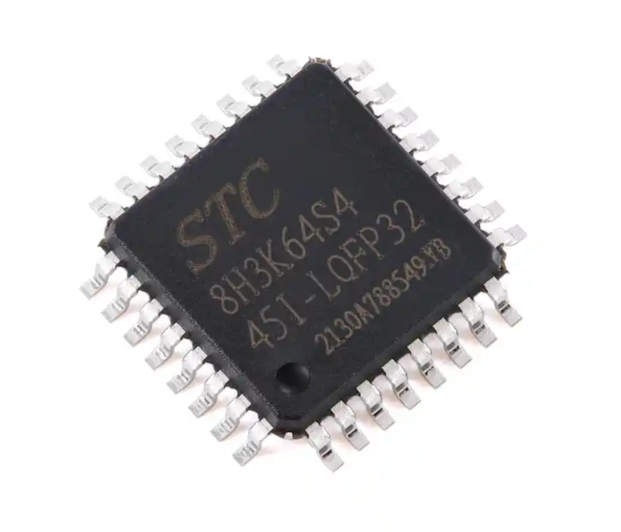
- MCU Internal Architecture: You must comprehend the core components of a typical MCU: the Central Processing Unit (CPU), memory types (Flash for program storage, RAM for volatile data, and often EEPROM for non-volatile data), and Input/Output (I/O) ports. The CPU fetches instructions from Flash memory, executes them using its Arithmetic Logic Unit (ALU), and stores temporary results in RAM. The I/O ports are your MCU’s interface with the outside world—connecting to sensors, buttons, LEDs, and communication modules.
- Clocks and Timing: MCUs operate on a clock signal that synchronizes all internal operations. Understanding clock cycles, frequency (Hz), and how they relate to execution speed and power consumption is key.
- Datasheets and Schematics: The ability to read an MCU datasheet is perhaps the most critical hardware skill. This document is the ultimate reference for pin configurations, electrical characteristics, memory maps, and peripheral functionalities. Similarly, understanding basic schematic diagrams allows you to integrate the MCU into a circuit correctly.
2. Mastering Programming Languages and Embedded C
While some modern platforms support Python or block-based coding, the lingua franca of microcontroller programming remains the C language, specifically Embedded C.
- C Programming Syntax: Proficiency in C is essential. Focus on data types (
int,char,float), variables, operators, control structures (if/else,for,whileloops), functions, arrays, and pointers. Pointers are particularly important in embedded systems for direct memory and hardware register access. - Embedded-Specific Concepts: This is where general C knowledge meets hardware:
- Bit Manipulation: You will often need to set, clear, or toggle individual bits within a byte to control hardware registers (e.g.,
PORTB |= (1 << 3);to set a pin high). - Memory Management: Unlike PC programming, memory is severely constrained. You must understand stack vs. heap, avoid memory leaks, and use variables judiciously.
- Volatile Keyword: Using
volatilefor variables that can change outside the program’s control (e.g., by an interrupt) is a must-know to prevent compiler optimization errors. - Working with Hardware Registers: Programming an MCU largely involves reading from and writing to its special function registers (SFRs) to configure peripherals like timers, ADCs, and UARTs. This is direct hardware control.
- Bit Manipulation: You will often need to set, clear, or toggle individual bits within a byte to control hardware registers (e.g.,
- Development Workflow: Familiarize yourself with the process: writing code in an IDE (like Keil, MPLAB X, or PlatformIO), compiling it with a cross-compiler (which produces machine code for the target MCU), and flashing/debugging the program onto the chip via a programmer/debugger (like ST-Link or J-Link).
3. Interfacing Peripherals and System Design
An isolated MCU is of little use. Its power lies in interacting with other components.
- Core Peripherals: Learn how to use the built-in peripherals:
- GPIO (General-Purpose Input/Output): The most basic interface for digital signals.
- Analog-to-Digital Converter (ADC): For reading values from sensors like potentiometers or temperature probes.
- Timers/Counters: Used for generating precise delays, PWM signals (for motor control or LED dimming), and capturing event timings.
- Communication Protocols: Mastery of serial communication protocols is fundamental. Start with UART (Universal Asynchronous Receiver-Transmitter) for simple device-to-device chat. Then move to I2C (Inter-Integrated Circuit) and SPI (Serial Peripheral Interface) for communicating with multiple sensors and modules (e.g., accelerometers, display screens). Each has its own protocol rules regarding data lines, clock signals, and addressing.
- Interrupts vs. Polling: Understand the concept of interrupts—hardware signals that cause the CPU to pause its main program to execute a specific service routine immediately. This is vital for responsive systems (e.g., reacting to a button press) and is more efficient than constantly checking (polling) statuses.
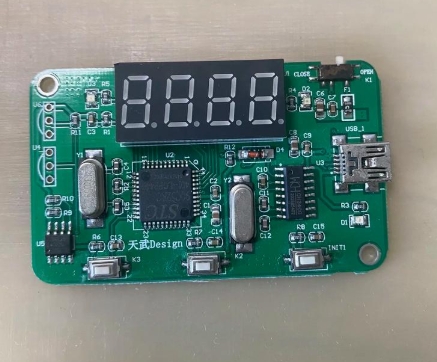
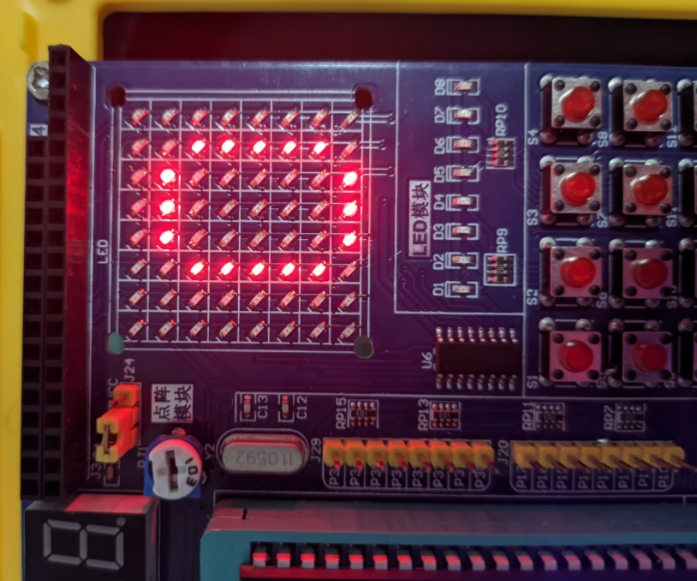
- Sensor and Actuator Interfacing: Learn to connect basic components: reading a switch with a pull-up/pull-down resistor, driving an LED with a transistor, or connecting a character LCD.
- Power Management: Basic knowledge of power requirements (voltage levels: 3.3V vs. 5V), decoupling capacitors for stability, and low-power modes is necessary for robust designs.
For those seeking curated resources, high-quality development kits, or expert tutorials to navigate this learning path efficiently, platforms like ICGOODFIND can be invaluable. They aggregate and evaluate components and learning tools from across the market, helping you find reliable development boards compatible with your chosen MCU architecture—be it ARM Cortex-M from STMicroelectronics or AVR from Microchip—without sifting through countless supplier websites.
Conclusion
Embarking on the journey of mastering Microcontroller Units requires building knowledge across three interconnected domains: digital hardware fundamentals, specialized software programming in Embedded C, and practical peripheral interfacing skills. This triad forms a robust foundation upon which all advanced embedded systems work is built. Start with simple projects—blinking an LED, reading a button—to solidify each concept. Progress gradually to integrating sensors and communication modules. Remember that consistent hands-on practice is more valuable than passive reading alone. The initial learning curve may be steep, but the reward is the unparalleled ability to breathe intelligence into inert electronics. By methodically acquiring this basic knowledge, you equip yourself not just to use MCUs but to innovate with them, turning abstract ideas into tangible technological solutions.