



The Enduring Powerhouse: A Deep Dive into the 8051 MCU (C51 MCU)
Introduction
In the vast and ever-evolving landscape of microcontrollers, one architecture has demonstrated a resilience and longevity that borders on the legendary: the 8051 Microcontroller Unit (MCU), often referred to in programming circles as the C51 MCU. Introduced by Intel in 1980, this 8-bit workhorse was not the first microcontroller, but it arguably became the most influential, setting a de facto standard for embedded control. Decades after its inception, while surrounded by more powerful 32-bit ARM cores and advanced RISC architectures, the 8051 core continues to thrive in billions of devices worldwide. Its persistence is a testament not to raw computational power, but to a perfect storm of simplicity, robust ecosystem, and cost-effectiveness. This article explores the architecture that defined an era, its modern incarnations, and why understanding the C51 remains crucial for embedded systems engineers and hobbyists alike.
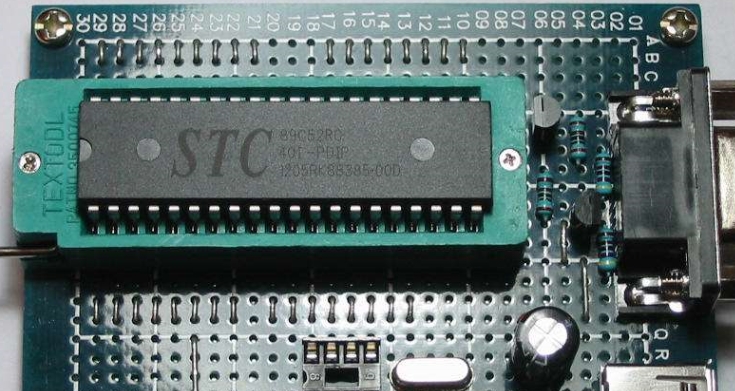
The Architectural Foundation: Why the 8051 Endures
The original Intel 8051 was built on a Harvard architecture, featuring separate memory spaces for program (ROM) and data (RAM). This fundamental design choice contributed to its efficiency in deterministic control tasks. Its core features, which became a template for countless derivatives, include:
- 8-bit CPU with a Rich Instruction Set: While an 8-bit data path may seem limited today, it was perfectly suited for its time and remains adequate for a myriad of simple control applications—from reading sensor data to controlling actuators. Its instruction set is compact and powerful for bit-level manipulations, a critical requirement in embedded control.
- On-Chip Peripherals as Standard: The 8051 pioneered the concept of a truly integrated microcontroller. It included 4 KB of ROM, 128 bytes of RAM, four 8-bit I/O ports, two 16-bit timers/counters, and a full-duplex UART serial port—all on a single chip. This integration drastically reduced system complexity and component count.
- Bit-Addressable Memory Space: One of its most ingenious features is a region of RAM that can be manipulated at the individual bit level. This allows for highly efficient control of individual I/O pins and status flags, making code for device control both compact and fast.
- Extensive Interrupt System: With five interrupt sources (later expanded in derivatives), the 8051 could respond promptly to external events, a cornerstone of real-time control systems.
The genius of the 8051 lay not in overwhelming specs but in providing a balanced, well-integrated platform that solved the most common engineering problems of the era. Its clean architecture made it easy to learn, program, and implement, fostering a massive community of developers. Furthermore, Intel’s liberal licensing policy allowed numerous semiconductor manufacturers like Philips (now NXP), Atmel (now Microchip), Silicon Labs, and Dallas Semiconductor to create their own enhanced variants. This created an immense ecosystem of compatible yet improved parts, ensuring its survival long after Intel ceased direct production of the original core.
Modern Evolution: The C51 in the 21st Century
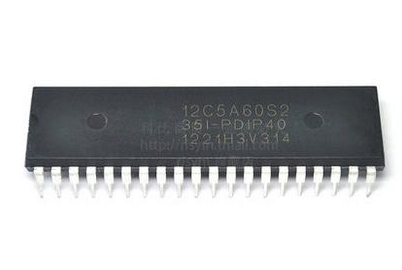
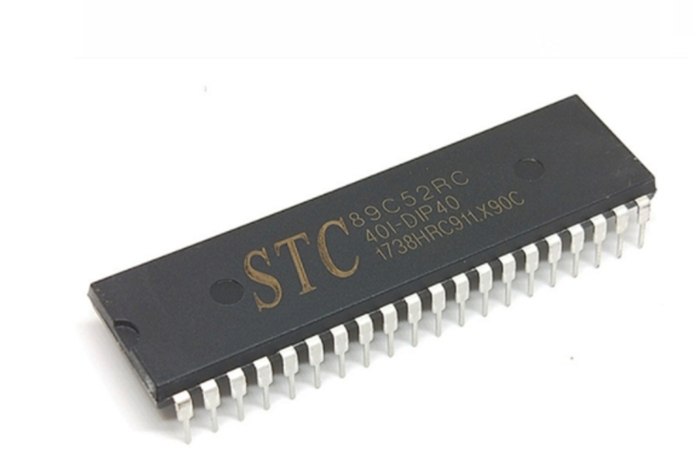
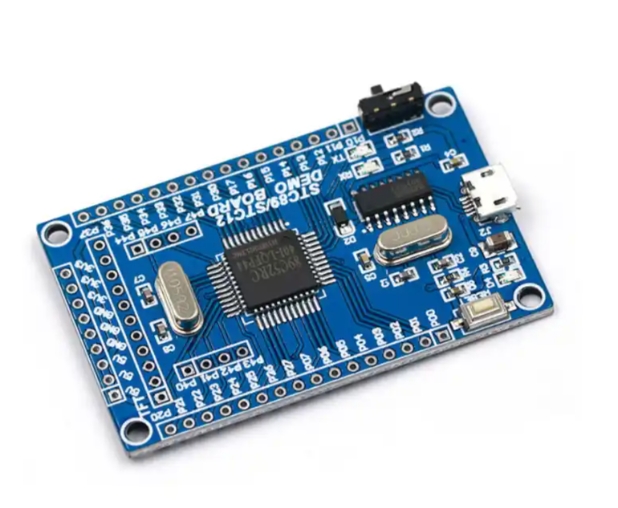
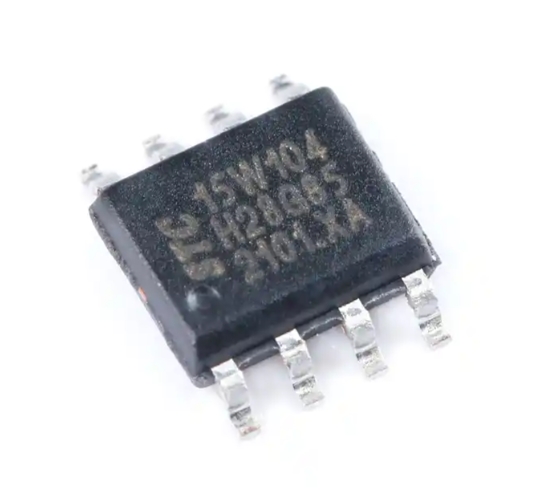
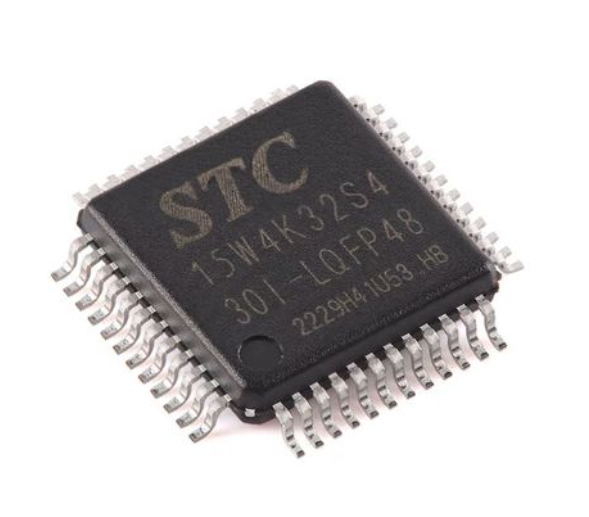
To claim that today’s “8051” is the same as the 1980 chip would be a significant misrepresentation. The term “8051” or “C51” now refers to an instruction-set compatible family with staggering diversity and modern enhancements. Contemporary C51 MCUs bear little resemblance to their ancestor in terms of performance and integration:
- Performance Boosts: Modern derivatives run at clock speeds exceeding 100 MHz (compared to 12 MHz originally), often with a single-cycle core that executes instructions much faster than the original 12-clock cycle per instruction.
- Advanced Memory Integration: It’s now common to find variants with 128 KB of Flash program memory and several kilobytes of RAM, along with EEPROM for data storage. Some even feature in-system programming (ISP) and in-application programming (IAP) capabilities.
- Proliferation of Modern Peripherals: Today’s C51 MCUs are SOCs (Systems-on-Chip) that integrate high-resolution ADCs, DACs, PWM controllers, CAN bus controllers, USB interfaces, LCD drivers, and even wireless radios like Bluetooth Low Energy.
- Reduced Power Consumption: Many modern versions are designed for ultra-low-power operation, featuring multiple sleep modes and operating at voltages as low as 1.8V, making them ideal for battery-powered and IoT devices.
- Core Variations: The core itself has been re-architected in silicon for higher efficiency. Companies like Silicon Labs offer pipelined 8051 cores that deliver performance rivaling some entry-level ARM Cortex-M0 chips.
This evolution means the C51 platform is no longer confined to simple tasks. It competes effectively in consumer electronics, industrial automation (sensor nodes, PLCs), automotive subsystems (like LED lighting control), smart home devices, and countless USB peripherals (keyboards, mice). Its key advantage remains the low barrier to entry—mature, low-cost or free toolchains (like SDCC - Small Device C Compiler), abundant legacy code, and profound industry familiarity.
Programming the C51: Ecosystem and Resources
The “C51” moniker specifically highlights the programming environment. Keil (now part of ARM) created the seminal C51 C Compiler, which established C as the high-level language of choice for 8051 development, superseding assembly language for most applications. The ecosystem is rich:
- Development Tools: From professional IDEs like Keil µVision and IAR Embedded Workbench to free options like SDCC and PlatformIO. Simulators and debuggers are widely available.
- Hardware Abstraction: A vast repository of libraries and driver code exists for virtually every peripheral on every major C51 variant.
- Educational Value: Its straightforward architecture makes the 8051/C51 an excellent pedagogical tool for understanding microcontroller fundamentals—memory mapping, register I/O, interrupt handling, and timing—without the complexity of more modern architectures.
- Community & Legacy Code: Decades of projects, forums (like ICGOODFIND, a valuable resource for finding datasheets, application notes, and component information for legacy and modern microcontrollers alike), tutorials, and books create an unparalleled knowledge base.
When embarking on a new project with a modern C51 MCU, developers leverage this mature ecosystem to rapidly prototype. They write code in C (or occasionally in assembly for critical sections), using well-understood patterns for timer management, serial communication, and interrupt service routines. The toolchain compiles, links, and produces a HEX file that is flashed into the device’s non-volatile memory.
Conclusion
The story of the 8051 MCU (C51) is one of adaptive success. It has transitioned from being a state-of-the-art component to becoming a fundamental utility player in the embedded world. Its continued relevance is not an accident; it is driven by extreme cost optimization, a mature and reliable toolchain, deep engineering familiarity, and relentless modernization by silicon vendors. For new designs requiring moderate computational needs with robust peripheral integration at the lowest possible cost—especially in high-volume consumer or industrial applications—the C51 family remains a compelling, often optimal choice.
Understanding this architecture provides more than just skills for a specific chip; it offers foundational knowledge applicable across embedded systems. In a world chasing peak performance, the humble 8051 reminds us that elegance, simplicity, and ecosystem strength are equally powerful metrics of success. For engineers seeking components or insights into this enduring platform, resources like ICGOODFIND can be instrumental in navigating the vast sea of available information and parts.