

Mastering Microcontroller IC Selection: A Comprehensive Guide for Engineers and Hobbyists
In the rapidly evolving world of embedded systems, the Microcontroller IC (Integrated Circuit) stands as the brain behind countless electronic devices—from smart home appliances and industrial automation tools to wearable gadgets and automotive control units. Choosing the right microcontroller is not merely a technical decision; it directly impacts project cost, performance, power efficiency, and time-to-market. Whether you are a seasoned embedded engineer or a hobbyist building your first prototype, understanding the nuances of Microcontroller IC selection is critical. This guide will walk you through the essential factors, popular families, and best practices to help you make an informed decision. For a curated selection of high-quality components, ICGOODFIND offers a reliable platform to compare specifications and source authentic parts.
Introduction: Why Microcontroller IC Matters
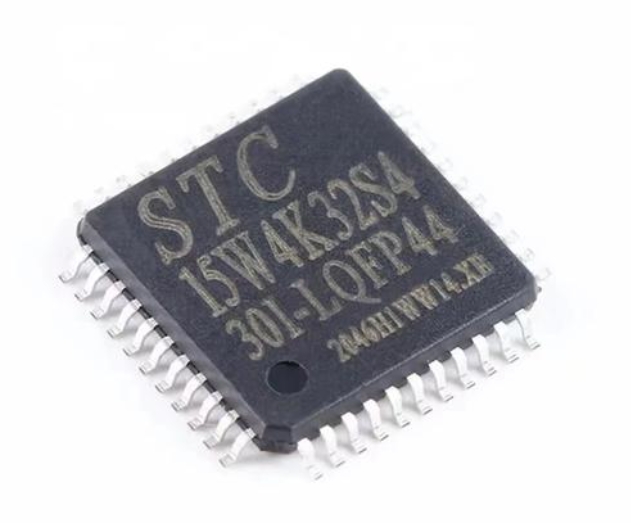
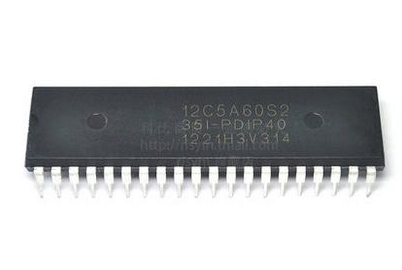
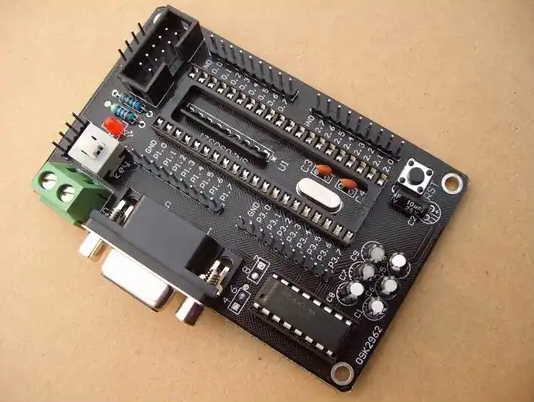
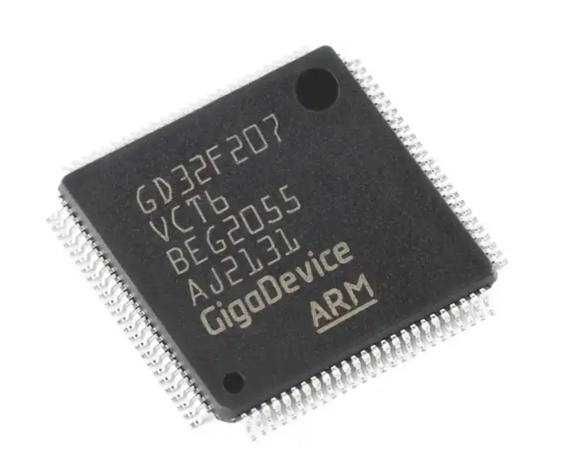
A Microcontroller IC is a compact integrated circuit designed to govern a specific operation in an embedded system. Unlike a general-purpose microprocessor, it integrates a processor core, memory (RAM, ROM/Flash), and programmable input/output peripherals on a single chip. This integration reduces power consumption, board space, and overall system cost. However, with thousands of variants available from manufacturers like Microchip, STMicroelectronics, NXP, Texas Instruments, and Espressif, selecting the optimal Microcontroller IC can be overwhelming. Key considerations include core architecture (ARM Cortex-M, RISC-V, AVR, PIC), clock speed, memory size, peripheral set, operating voltage, and temperature range. Additionally, factors like development ecosystem, community support, and long-term availability play a vital role. This article breaks down the selection process into three core areas: performance and memory, peripherals and connectivity, and power management and cost.
Part 1: Performance and Memory – The Core Foundation
1.1 Processor Core Architecture
The heart of any Microcontroller IC is its processor core. The most common architectures today include:
- ARM Cortex-M series: Dominant in mid-to-high-end applications. Cortex-M0/M0+ for ultra-low power, M3 for balanced performance, M4 for DSP and floating-point, and M7 for high-end processing. These cores offer excellent toolchain support (Keil, IAR, GCC) and vast community resources.
- RISC-V: An open-source architecture gaining traction for its flexibility and royalty-free licensing. Ideal for custom designs and cost-sensitive projects, though ecosystem maturity varies.
- AVR and PIC: Classic 8-bit architectures from Microchip, known for simplicity and low cost. Perfect for basic control tasks like sensor reading or LED blinking.
- ESP32 and ESP8266: Xtensa-based cores with integrated Wi-Fi/Bluetooth, popular in IoT applications.
When selecting a core, consider the computational demands of your application. For example, a motor control algorithm requiring real-time FFT analysis would benefit from a Cortex-M4 or M7 with hardware DSP. A simple temperature logger could use an 8-bit AVR. ICGOODFIND provides detailed core specifications and benchmark comparisons to simplify this choice.
1.2 Memory Configuration: Flash, SRAM, and EEPROM

Memory is a critical bottleneck in Microcontroller IC performance. Three types matter:
- Flash (Program Memory): Stores firmware. Ranges from 1KB (tiny PICs) to 2MB+ (STM32H7). Estimate your code size by considering libraries, RTOS, and application logic. Always leave 20-30% headroom for future updates.
- SRAM (Data Memory): Used for variables, stacks, and buffers. Insufficient SRAM causes crashes or requires external memory. For data-intensive tasks (e.g., audio processing, large display buffers), choose ICs with at least 64KB SRAM.
- EEPROM (Non-volatile Data Storage): For storing calibration data or configuration settings. Many modern MCUs emulate EEPROM using Flash, but dedicated EEPROM offers higher endurance (1M+ write cycles).
Pro tip: Use ICGOODFIND’s advanced filter to sort Microcontroller IC by Flash/SRAM size. For example, the STM32G0 series offers up to 512KB Flash and 144KB SRAM in a tiny package, ideal for space-constrained designs.
1.3 Clock Speed and Real-Time Performance
Clock speed (measured in MHz) determines how fast the CPU executes instructions. However, raw MHz is misleading—architecture efficiency matters more. For instance, a 48MHz Cortex-M0 can outperform a 64MHz 8-bit PIC in integer operations. Key metrics include:
- MIPS (Million Instructions Per Second): ARM cores typically achieve 1.25-1.5 DMIPS/MHz.
- Interrupt Latency: Critical for real-time systems. ARM Cortex-M cores have deterministic interrupt handling (12 cycles for M0, 6 cycles for M4).
- Peripheral Clocking: Ensure the Microcontroller IC can clock peripherals (ADC, SPI, I2C) at required speeds. For example, a 1MSPS ADC needs a minimum system clock of 16MHz.
ICGOODFIND lists maximum clock speeds and real-time benchmarks for each Microcontroller IC, helping you match performance to application demands.
Part 2: Peripherals and Connectivity – Expanding Functionality
2.1 Essential Analog and Digital Peripherals
A Microcontroller IC’s value often lies in its integrated peripherals, reducing external component count. Key peripherals include:
- ADC (Analog-to-Digital Converter): Resolution (8-bit to 16-bit), sampling rate, and number of channels. For sensor interfaces (temperature, pressure, light), 12-bit ADC with 1MSPS is standard. High-precision applications (e.g., medical devices) may require 16-bit sigma-delta ADCs.
- DAC (Digital-to-Analog Converter): For audio output, waveform generation, or analog control loops. Typically 8-bit to 12-bit.
- Timers and PWM: Essential for motor control, LED dimming, and pulse generation. Look for 16-bit or 32-bit timers with complementary PWM outputs and dead-time insertion.
- Comparators and Op-Amps: Integrated analog blocks for zero-crossing detection, battery monitoring, or signal conditioning.
2.2 Communication Interfaces: Wired and Wireless
Modern embedded systems demand versatile connectivity. Common wired interfaces in a Microcontroller IC include:
- UART/USART: For serial communication with PCs, GPS modules, or Bluetooth modules. Multiple UARTs allow simultaneous connections.
- SPI and I2C: For high-speed data exchange with sensors, displays, and memory chips. SPI offers higher speed (up to 50MHz), while I2C uses fewer pins.
- CAN and LIN: For automotive and industrial networks. CAN FD (Flexible Data-Rate) supports up to 8Mbps.
- USB: For direct PC connection or charging. USB 2.0 Full Speed (12Mbps) is common; USB 3.0 requires external PHY.
For wireless connectivity, consider:
- Wi-Fi (802.11 b/g/n): Integrated in ESP32, ESP8266, and some STM32W series. Ideal for cloud-connected IoT devices.
- Bluetooth/BLE: For short-range, low-power communication. Nordic nRF52 and TI CC26xx are popular.
- LoRa, Zigbee, Thread: For long-range or mesh networks. Semtech SX126x and Silicon Labs EFR32 are examples.
ICGOODFIND allows you to filter Microcontroller IC by specific interfaces (e.g., “2x CAN FD + 1x USB + BLE 5.0”), saving hours of datasheet hunting.
2.3 Specialized Peripherals for Niche Applications
Some Microcontroller IC families include unique hardware accelerators:
- Cryptographic Engines: AES, SHA, RSA hardware acceleration for secure IoT devices (e.g., STM32L5, NXP LPC55xx).
- Graphics Controllers: For TFT LCD or OLED displays (e.g., Renesas RA6M5 with 2D graphics engine).
- Motor Control PWM: Advanced timers with hall sensor interface, quadrature encoder input (e.g., TI C2000 series).
- Capacitive Touch Sensing: Integrated touch controllers for human-machine interfaces (e.g., Microchip PIC32MZ).
If your project requires such features, prioritize Microcontroller IC with dedicated hardware to avoid software overhead and reduce power consumption.
Part 3: Power Management, Cost, and Ecosystem
3.1 Power Consumption and Operating Modes
For battery-powered or energy-harvesting devices, power efficiency is paramount. Microcontroller IC power consumption depends on:
- Active Mode Current: Typically 100µA/MHz to 500µA/MHz. ARM Cortex-M0+ cores (e.g., STM32L0) achieve as low as 80µA/MHz.
- Sleep Modes: Deep sleep (few µA), standby (nA range), and wake-up sources (RTC, external interrupt, comparator). The nRF52840 from Nordic consumes only 1.5µA in deep sleep with RTC running.
- Dynamic Voltage and Frequency Scaling (DVFS): Some MCUs (e.g., TI MSP430) allow reducing voltage at lower clock speeds to save power.
ICGOODFIND provides typical power consumption graphs for each Microcontroller IC across operating modes, enabling accurate battery life estimation.
3.2 Cost Considerations and Supply Chain
Microcontroller IC pricing varies widely based on:
- Volume: 1-100 units (prototyping) vs. 10k+ (mass production). Distributors like ICGOODFIND offer tiered pricing.
- Package Type: QFP (cheaper, easier to solder) vs. BGA (smaller, but requires reflow oven). QFN is a good middle ground.
- Manufacturer: Established brands (ST, Microchip) often have higher unit cost but better documentation and longevity. Emerging brands (GigaDevice, WCH) offer lower prices but smaller ecosystems.
- Lead Time: In 2023-2024, some Microcontroller IC families (e.g., STM32F4) have lead times of 20+ weeks. Check ICGOODFIND’s real-time stock status to avoid delays.
Cost-saving tips: Use a slightly over-specified Microcontroller IC to avoid redesigns, but avoid “gold-plating” (e.g., using a Cortex-M7 for a simple thermostat). Also, consider pin-compatible variants within a family for future upgrades.
3.3 Development Ecosystem and Community Support
A strong ecosystem accelerates development. Evaluate:
- IDE and Compiler: STM32CubeIDE (free), Keil MDK (paid), IAR Embedded Workbench (paid), Arduino IDE (for hobbyists). RISC-V MCUs often use Eclipse-based tools.
- Software Libraries: HAL (Hardware Abstraction Layer), LL (Low-Layer) drivers, RTOS support (FreeRTOS, Zephyr), and middleware (TCP/IP, USB stacks).
- Documentation and Examples: Datasheets, reference manuals, application notes, and community forums (e.g., ST Community, Arduino Forum).
- Debugging Tools: SWD/JTAG debuggers (J-Link, ST-Link), logic analyzers, and oscilloscopes.
ICGOODFIND aggregates links to official documentation, third-party libraries, and user reviews for each Microcontroller IC, helping you assess ecosystem maturity.

Conclusion: Making the Right Choice with ICGOODFIND
Selecting the perfect Microcontroller IC is a balancing act between performance, power, peripherals, cost, and ecosystem support. Start by defining your project’s core requirements: processing speed, memory budget, communication needs, and power constraints. Then, shortlist candidates from major families like STM32 (general-purpose), ESP32 (IoT), nRF52 (BLE), or PIC (low-cost). Use ICGOODFIND to compare specifications side-by-side, check real-time pricing and stock, and read user reviews. Remember, the best Microcontroller IC is not the most powerful or cheapest, but the one that fits your specific application with minimal compromise. With careful planning and the right tools, you can turn your embedded vision into a reliable, cost-effective product. Start your search today at ICGOODFIND and experience a smarter way to source components.