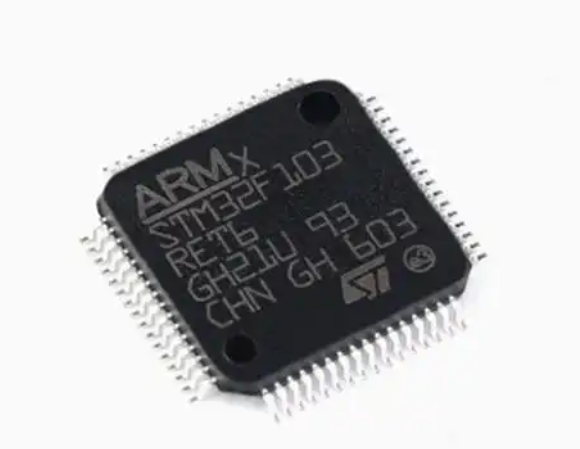
The Powerhouse of Embedded Systems: A Deep Dive into STM32 MCU
Introduction
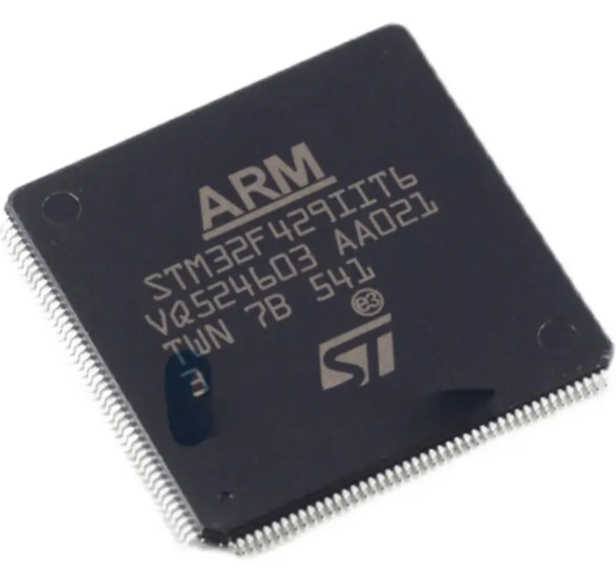
In the vast and intricate world of embedded electronics, the choice of a microcontroller unit (MCU) can make or break a project. Among the plethora of options available, one family stands out for its remarkable balance of performance, power efficiency, ecosystem richness, and cost-effectiveness: the STM32 series of microcontrollers. Developed by STMicroelectronics, STM32 MCUs have become a de facto standard for engineers and developers across industries, from consumer wearables to industrial automation and cutting-edge IoT solutions. This article explores the core strengths of the STM32 platform, its diverse ecosystem, and why it continues to be a top choice for innovation. For professionals seeking reliable sourcing and in-depth technical support for these components, platforms like ICGOODFIND offer invaluable services, connecting projects with the right components and expertise.
The Architectural Foundation: Core, Performance, and Scalability
The dominance of STM32 MCUs is not accidental; it is built upon a formidable architectural foundation designed for scalability and performance.
Diverse Core Architectures for Every Need The STM32 family is uniquely segmented based on different ARM Cortex-M processor cores, allowing developers to select the perfect fit for their application’s complexity and power budget. The Cortex-M0/M0+ cores cater to ultra-low-power and cost-sensitive applications. The Cortex-M3 core provides an excellent mainstream balance of performance and efficiency. For demanding computational tasks, the Cortex-M4 and M7 cores, often featuring integrated Floating-Point Units (FPUs) and Digital Signal Processing (DSP) instructions, deliver superior processing power. This strategic segmentation ensures that whether you’re building a simple sensor node or a complex real-time motor controller, there is an STM32 MCU with the appropriate computational muscle.
Unmatched Peripheral Integration Beyond the core, STM32 MCUs shine with their extensive and advanced peripheral set. They come equipped with a wide array of communication interfaces like multiple SPI, I2C, USART/UART ports, USB (including Host and OTG), CAN FD, and Ethernet. For analog needs, high-resolution ADCs and DACs are commonplace. Specialized peripherals for motor control (advanced timers), security (cryptographic accelerators, secure boot), and graphics (Chrom-ART Accelerator™) further extend their applicability. This high level of integration reduces the need for external components, simplifying design, shrinking the PCB footprint, and lowering the overall Bill of Materials (BOM) cost.
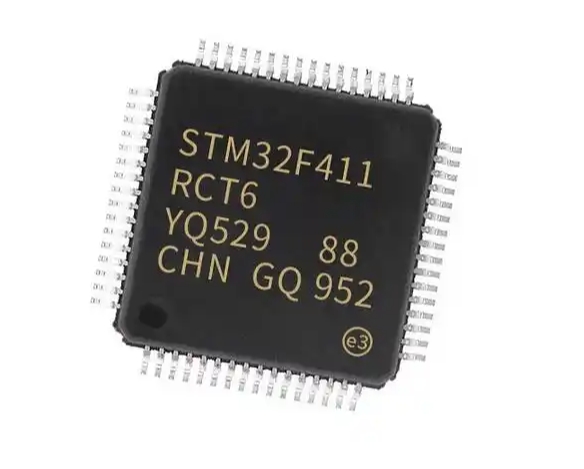
A Spectrum of Memory and Package Options Scalability is also evident in memory configurations and physical packages. Flash memory sizes range from a few kilobytes to several megabytes, with SRAM keeping pace to handle complex operating systems or data buffers. STM32 devices are available in packages from small 8-pin types to large 100+ pin BGAs, supporting both through-hole and surface-mount technologies. This flexibility allows a single product line to scale from a prototype to mass production seamlessly.
The Ecosystem: Tools, Software, and Community Support
A powerful chip is only as good as the tools available to program it. The STM32 ecosystem is arguably its most significant competitive advantage, dramatically lowering development barriers.
Comprehensive Development Tools STMicroelectronics provides a robust suite of free software tools. STM32CubeIDE is an all-in-one development environment that integrates code editing, compiling, debugging, and profiling. The STM32CubeMX tool is a game-changer for initialization; it allows developers to configure pins, peripherals, clocks, and middleware visually through a graphical interface, generating initialization code in C. This eliminates tedious manual register manipulation and accelerates project setup.
Abundant Software Libraries and Middleware The STM32Cube software ecosystem offers extensive hardware abstraction layers (HAL) and low-layer (LL) APIs, ensuring portability across the STM32 family. Beyond drivers, it includes rich middleware stacks such as FreeRTOS, filesystems (FATFS), USB libraries, graphics libraries (TouchGFX), and connectivity stacks for LoRaWAN®, Bluetooth®, and Wi-Fi®. These certified libraries reduce development time and risk, allowing engineers to focus on application-specific logic rather than reinventing foundational software wheels.
Vibrant Community and Knowledge Base The global STM32 community is immense and active. Countless forums, dedicated websites (like the official ST Community), GitHub repositories filled with open-source projects, and detailed application notes provide unparalleled support. This collective knowledge pool means that most challenges a developer faces have likely been solved and documented by peers elsewhere in the world.
Application Versatility: From Prototype to Production
The combination of robust hardware and a supportive ecosystem translates into real-world dominance across countless applications.
Driving Innovation in IoT and Wearables In the Internet of Things (IoT), low-power operation is paramount. STM32’s ultra-low-power series (e.g., STM32Lx) with multiple power modes enables devices to run for years on batteries. Coupled with integrated RF controllers in certain lines (STM32WB for Bluetooth LE) or easy pairing with companion chips, they form the brains of smart sensors, asset trackers, and health monitors.
At the Heart of Industrial Automation Industrial environments demand reliability, real-time performance, and robustness. STM32 MCUs with high-temperature ratings, dual CAN interfaces for industrial networking, and advanced timers for precise PWM generation are ideal for motor drives, PLCs, robotic controllers, and power supply management. Their security features also help protect industrial IP and ensure system integrity.
Empowering Consumer Electronics and Smart Devices From drones and gaming peripherals to home appliances and touch-controlled interfaces, STM32 MCUs provide the responsive performance needed. The availability of graphics-optimized MCUs enables sleek user interfaces on small screens without needing an external microprocessor.
For companies navigating component selection and supply chain logistics for these diverse applications—whether sourcing specific STM32 variants or finding compatible peripherals—leveraging a specialized platform can be crucial. This is where services like those offered by ICGOODFIND prove beneficial. They streamline the process of finding authentic components with reliable traceability.
Conclusion
The STM32 MCU family has cemented its position as a cornerstone of modern embedded design through a powerful trifecta: a scalable hardware architecture based on efficient ARM cores, an unrivaled software ecosystem that accelerates development, and proven versatility across virtually every market segment. It empowers both hobbyists and multinational corporations to turn innovative ideas into functional products efficiently. As technology trends like AI at the edge, smarter IoT nodes, and more automated industries evolve, the continuous innovation within the STM32 portfolio ensures it will remain at the forefront. For engineers embarking on their next project or companies scaling production,** understanding the depth of the STM32 platform—and utilizing resources that support its integration—is key to success**.