



The United States government has granted annual licenses to Samsung Electronics and SK Hynix, allowing the Korean memory giants to export chip manufacturing equipment to their Chinese factories throughout 2026, according to informed sources. This decision provides crucial relief for maintaining the stability of the global semiconductor supply chain.
Previously, these companies, along with TSMC, benefited from the "Validated End-User (VEU)" exemption, which allowed them to import U.S.-controlled equipment to China without individual licenses. However, the U.S. revoked this blanket exemption earlier this year, with the VEU status officially expiring on December 31, 2025. The new system requires companies to submit an annual plan for their equipment needs, which is then reviewed for a bulk license—a process notably simpler than applying for individual, case-by-case approvals.

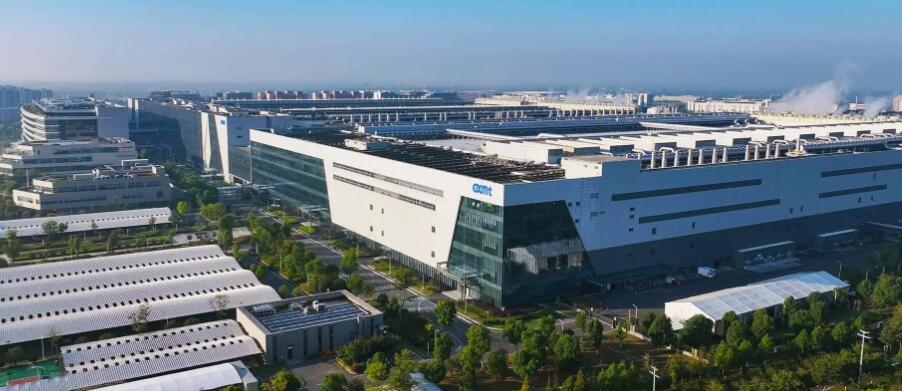
China is a vital production hub for both Samsung and SK Hynix, especially for traditional memory chips. Their factories in Xi'an (Samsung) and Wuxi (SK Hynix) collectively account for over 30% of global memory chip production capacity. With memory chip prices rising due to tight supply driven by AI data center demand, the approval of these equipment exports helps prevent potential production disruptions that could have occurred if the companies were unable to maintain and service their China-based fabrication lines.
It is important to note that the approval is not an unconditional relaxation. The licenses are reported to primarily cover equipment for maintaining existing mature-node production lines. Restrictions remain firmly in place for exporting cutting-edge tools like Extreme Ultraviolet (EUV) lithography machines, and the permission reportedly does not allow for capacity expansion or technology upgrades at the Chinese fabs.
ICgoodFind's Insight
The issuance of annual licenses represents a pragmatic, risk-managed approach by U.S. authorities. It acknowledges the immediate economic necessity of keeping critical global memory supply online while maintaining long-term controls on the transfer of the most advanced manufacturing capabilities to China.