


MCU Classification: A Comprehensive Guide to Microcontroller Unit Types and Applications
Introduction
In the rapidly evolving landscape of embedded systems and electronics, the Microcontroller Unit (MCU) stands as a fundamental building block. From the smart thermostat regulating your home’s temperature to the sophisticated engine control unit in modern vehicles, MCUs are the silent, intelligent cores powering an immense array of devices. Understanding MCU classification is not merely an academic exercise; it is a critical step for engineers, developers, and procurement specialists to select the optimal silicon brain for their projects. The market offers a staggering variety of microcontrollers, each tailored for specific performance, power, and integration needs. Navigating this complex ecosystem requires a clear framework. This article delves deep into the primary methods of classifying MCUs, exploring their architectures, bit-widths, and memory configurations to provide a clear roadmap for informed decision-making. For professionals seeking to source the perfect component, platforms like ICGOODFIND offer invaluable resources to navigate supplier catalogs and compare specifications across this diverse landscape.
Main Body
Part 1: Classification by Processor Architecture and Instruction Set
The architectural foundation of an MCU dictates its fundamental operation, performance ceiling, and software ecosystem. The primary division lies between two major families.
The Von Neumann Architecture employs a single, shared bus for both instructions and data. This simpler design makes these MCUs cost-effective and easier to program for many basic tasks. However, the shared pathway can create a “Von Neumann bottleneck,” where instruction fetches and data operations cannot occur simultaneously, potentially limiting throughput for high-performance applications. Many classic 8-bit microcontrollers are built on this model.
In contrast, the Harvard Architecture features separate buses and physical memory units for instructions and data. This allows the CPU to fetch an instruction while simultaneously accessing data memory, enabling higher execution speeds for a given clock frequency. This architecture is a hallmark of modern, high-performance MCUs, particularly those based on ARM cores and many Digital Signal Controllers (DSCs). The choice between these architectures directly impacts the potential speed and efficiency of the final application.
Further classification occurs at the instruction set level. Complex Instruction Set Computing (CISC) processors, like those in some legacy 8⁄16-bit families, offer rich instruction sets capable of performing complex operations with single commands. This can lead to more compact code. Conversely, Reduced Instruction Set Computing (RISC) architectures, which dominate the modern MCU market (ARM Cortex-M, RISC-V, PIC), use a smaller set of simple, highly optimized instructions that execute in single clock cycles. RISC designs generally deliver higher performance per MHz and are more power-efficient, making them ideal for portable and energy-sensitive devices. The rise of open-standard RISC-V cores is adding a new, customizable dimension to this classification.
Part 2: Classification by Data Bus Width (8-bit, 16-bit, 32-bit)
One of the most common and visible ways to categorize MCUs is by the width of their internal data bus and registers—typically termed as 8-bit, 16-bit, or 32-bit.
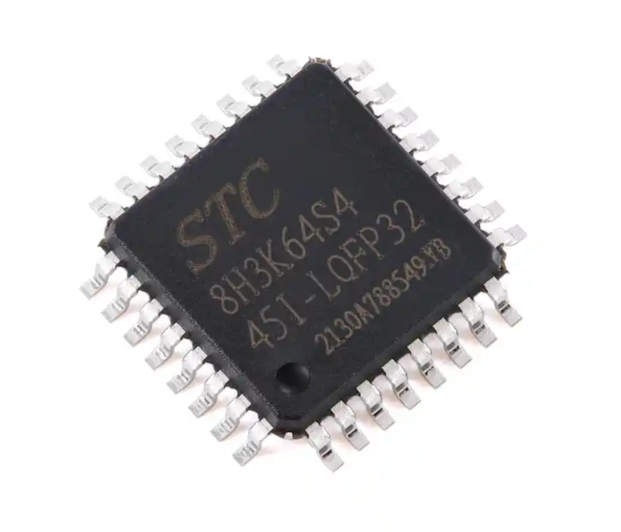
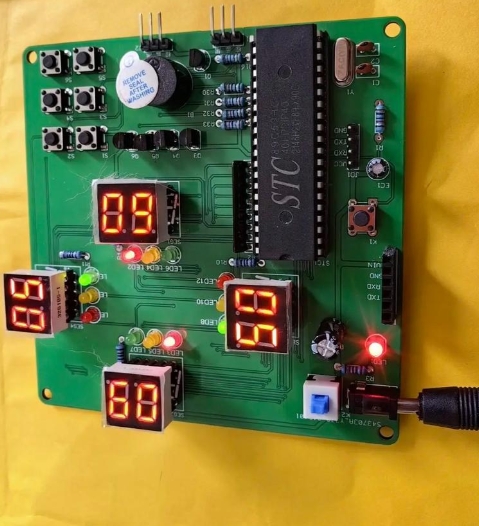
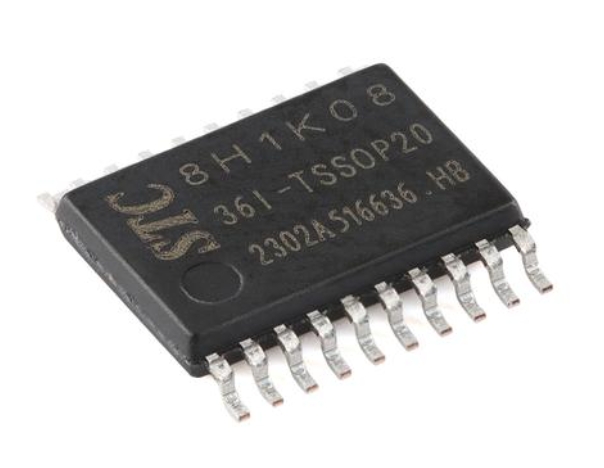
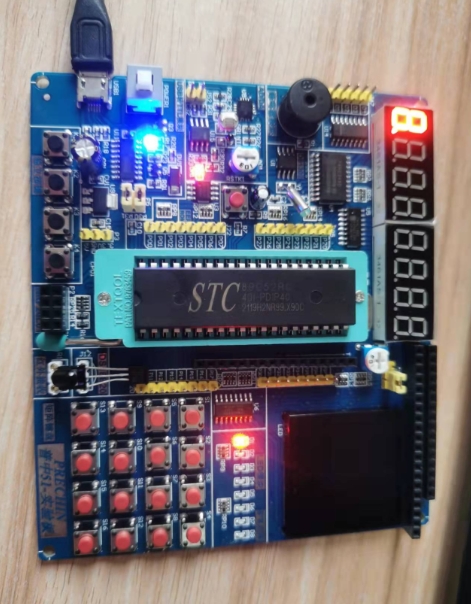
8-bit MCUs are the workhorses of simple control applications. They process data in 8-bit chunks, which is sufficient for managing basic I/O operations, reading sensors, and controlling actuators in appliances, toys, or low-end consumer electronics. Their advantages are profound: extremely low cost, minimal power consumption, and mature, easy-to-use development tools. They are perfect for applications where the processing logic is straightforward and unit cost is paramount.
16-bit MCUs occupy a middle ground, offering a balance between processing capability and cost/power consumption. They handle more complex arithmetic and data manipulation more efficiently than 8-bit units and often feature more advanced peripherals like better timers or basic communication interfaces. They have found strong niches in automotive body electronics, digital motor control, and medical devices where performance needs exceed 8-bit capabilities but do not justify a 32-bit solution.
32-bit MCUs represent the high-performance segment of the mainstream market. Built predominantly around powerful ARM Cortex-M cores or proprietary 32-bit architectures, they can handle complex algorithms, real-time operating systems (RTOS), graphical user interfaces (GUIs), and advanced connectivity protocols (Ethernet, USB, Wi-Fi). The dominance of 32-bit MCUs in new designs is driven by their plunging costs, superior performance-per-watt ratio, and the vast ecosystem of software and tools surrounding architectures like ARM. They are essential for IoT nodes, industrial automation, smart energy meters, and advanced automotive systems.
Part 3: Classification by Memory Type and Integration Level
Memory configuration is another crucial axis for MCU classification, influencing flexibility, cost structure, and development workflow.
A major distinction is between Microcontrollers with on-chip Flash memory and those that are mask-programmed. Most modern general-purpose MCUs integrate Flash memory for program storage. This allows for easy in-circuit programming (ISP) and field firmware updates, which is indispensable for iterative development and products requiring updates post-deployment. Conversely, mask-programmed MCUs have their code permanently etched into the silicon during manufacturing. This process is only economical at extremely high volumes (millions of units) but results in the lowest possible unit cost and often higher robustness. They are used in ultra-high-volume consumer goods where the design is completely finalized.
The level of system integration also serves as a classifier. Standard MCUs provide a core set of peripherals like GPIOs, timers, UARTs, SPI/I2C. Application-Specific Microcontrollers (ASMCs) take integration further by including dedicated hardware accelerators or peripherals for target markets—for example, LCD controllers for displays or precise analog front-ends for metering.
At the highest level of integration lies the System-on-Chip (SoC). While often associated with application processors running Linux, many modern “MCUs” blur this line. These devices combine a powerful microcontroller core with extensive on-chip resources such as large memories (RAM/Flash), advanced wireless radios (Bluetooth Low Energy, Sub-GHz), cryptographic accelerators, and sophisticated sensor interfaces. This trend toward SoC-level integration in MCU packages is a defining characteristic of the IoT era, enabling compact, feature-rich endpoints with minimal external components. Finding these highly integrated solutions among countless offerings is where component discovery platforms prove essential.
Conclusion
The world of Microcontroller Units is diverse and purpose-built. Effective MCU classification provides a systematic lens through which to evaluate this critical component across three pivotal dimensions: its core architecture (Von Neumann vs. Harvard, CISC vs. RISC), its processing bandwidth (8/16/32-bit), and its memory configuration/integration level (Flash vs. Mask-ROM, Standard vs. SoC). There is no universal “best” MCU; only the optimal choice for a specific set of constraints involving performance, power budget, connectivity needs, unit cost targets, and development timeline. A thorough understanding of these classifications empowers developers to make strategic decisions that align silicon capability with application demands, ensuring product efficiency, reliability, and competitiveness. As integration continues to advance and new cores like RISC-V gain traction, staying informed on these categories remains essential. For sourcing these varied components—from simple 8-bit controllers to complex wireless SoCs—leveraging comprehensive electronic component search engines like ICGOODFIND can streamline the procurement process by providing centralized access to global supplier inventories and detailed parametric data.