


MCU Circuit Design: The Blueprint for Modern Embedded Intelligence
Introduction
In the invisible fabric of our digital world, from the smart thermostat regulating your home’s temperature to the sophisticated engine control unit in your car, lies a critical component: the Microcontroller Unit (MCU). MCU circuit design is the foundational engineering discipline that transforms abstract computational concepts into tangible, efficient, and reliable silicon brains. It is a meticulous convergence of hardware architecture, low-power electronics, and software integration, determining the ultimate performance, cost, and capabilities of countless electronic products. As the Internet of Things (IoT) and edge computing drive demand for smarter, more connected, and energy-efficient devices, the role of proficient MCU circuit design has never been more pivotal. This article delves into the core principles, advanced considerations, and emerging trends that define this essential field.
The Foundational Pillars of MCU Circuit Design
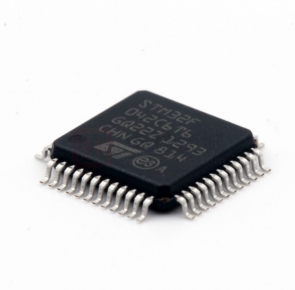
The first and most critical phase of MCU circuit design is architectural selection and system partitioning. Designers must choose an appropriate MCU core—such as ARM Cortex-M, RISC-V, or a proprietary 8⁄16-bit architecture—based on the computational requirements, power budget, and cost targets of the end application. This decision cascades throughout the entire design process. Following this, the meticulous design of the power management network (PMN) is paramount for all but line-powered devices. This involves creating multiple voltage domains for core logic, analog circuits, and I/O, integrating low-dropout regulators (LDOs), DC-DC converters, and sophisticated power gating techniques to minimize active and sleep-state current consumption. A poorly designed PMN can lead to premature battery drain, voltage instability, and overall system failure.
The integration of memory subsystems and peripheral interfaces forms the operational skeleton of the MCU. Designers must carefully balance the size, type (Flash, SRAM, EEPROM), and speed of on-chip memory to suit application needs. Simultaneously, a vast array of digital and analog peripherals—such as GPIOs, ADCs/DACs, communication modules (UART, SPI, I2C, CAN, USB), and timers—must be integrated onto the chip. The key challenge here is implementing a robust and efficient internal bus architecture (like AHB or APB) that allows the core to communicate with these peripherals and memories without bottlenecks, ensuring deterministic real-time performance. Signal integrity considerations at this stage prevent cross-talk and noise interference between high-speed digital circuits and sensitive analog blocks.
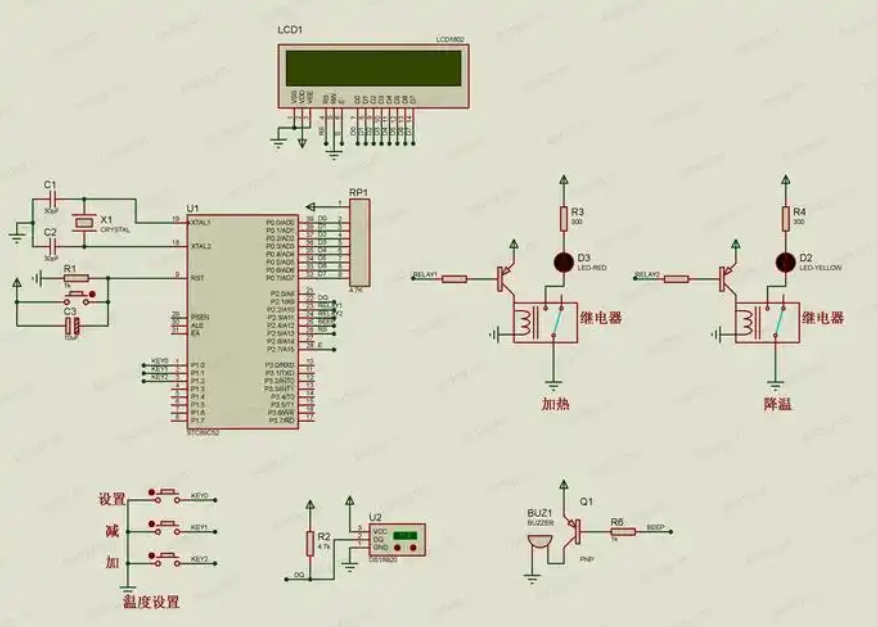
Clock generation, distribution, and reset circuit design constitute the heartbeat and restart mechanism of the MCU. This involves integrating oscillator circuits for external crystals or resonators and designing internal RC oscillators for cost-sensitive or low-accuracy needs. Designing a flexible clock tree that enables dynamic frequency scaling—allowing parts of the MCU to run at different speeds or be shut down entirely—is a cornerstone technique for advanced power saving. Equally crucial is the reset circuit, which must provide a stable power-on reset signal and may include brown-out detection (BOD) circuitry to safeguard against corrupted operation during voltage sags.
Advanced Considerations for Robust and Secure Designs
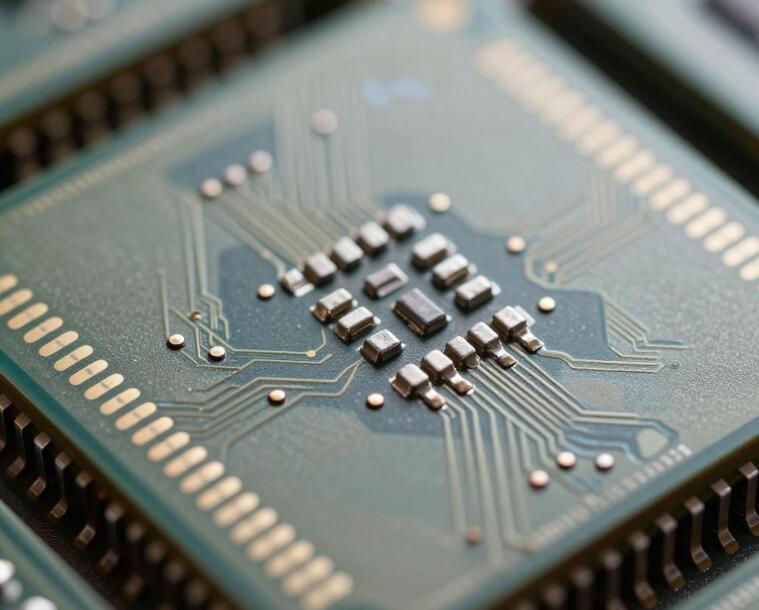
Moving beyond functionality, designing for electromagnetic compatibility (EMC) and signal integrity is non-negotiable in professional MCU circuit design. As MCUs clock at higher speeds and are deployed in electrically noisy environments (e.g., automotive or industrial settings), mitigating electromagnetic interference (EMI) emission and susceptibility becomes critical. This involves strategic PCB layout practices for the MCU package itself—such as proper grounding schemes, power plane decoupling with a hierarchy of capacitors placed close to power pins, and careful routing of high-speed traces. Effective use of on-chip ferrite beads, isolation techniques for analog sections, and spread-spectrum clocking are advanced methods to enhance EMC performance.
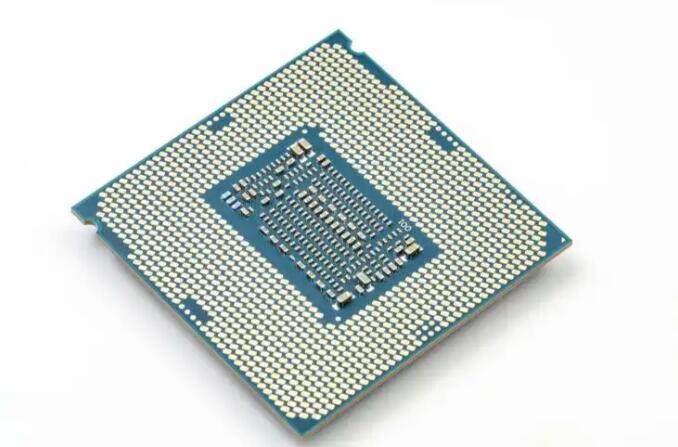
Thermal management and design-for-reliability (DFR) are essential for ensuring product longevity, especially in harsh or safety-critical applications. While MCUs themselves may not dissipate significant heat like high-performance CPUs, their integration into small form factors can lead to thermal buildup. Designers must consider the thermal characteristics of the package (e.g., QFN vs. BGA) and may need to implement thermal shutdown circuitry on-chip. DFR practices include designing circuits to tolerate wider voltage ranges, implementing memory error correction codes (ECC), and ensuring robust electrostatic discharge (ESD) protection on all I/O pins to withstand real-world handling and events.
In today’s connected landscape, integrating hardware-based security features directly into the MCU circuit design is a fundamental requirement. Security can no longer be an afterthought implemented solely in software. This involves designing dedicated cryptographic accelerators (for AES, SHA, ECC), true random number generators (TRNG), physical unclonable functions (PUFs) for unique device identity, and secure key storage in tamper-resistant memory areas. These hardware blocks provide a root of trust that is orders of magnitude more secure than software-only implementations, protecting intellectual property, device identity, and user data from increasingly sophisticated attacks.
The Design Flow and Future Trajectory
The journey from concept to silicon follows a rigorous design flow utilizing electronic design automation (EDA) tools. It begins with register-transfer level (RTL) coding in languages like VHDL or Verilog to describe the digital logic. This model is then simulated extensively using testbenches to verify functionality. Subsequently, logic synthesis translates the RTL into a gate-level netlist, optimized for area, speed, or power based on constraints. The physical design stage—place-and-route—maps this netlist onto the actual silicon layout, a process fraught with challenges related to timing closure and design rule checking (DRC). For mixed-signal MCUs containing analog components like ADCs or oscillators, this process integrates with custom analog layout using tools from vendors like Cadence or Synopsys.
Looking forward, the rise of RISC-V open-source architectures is democratizing MCU design and fostering unprecedented customization. Companies can now implement custom instruction sets tailored for specific applications like AI/ML at the edge or ultra-low-power sensing without licensing fees. Furthermore, the integration of emerging non-volatile memory technologies (e.g., MRAM, ReRAM) promises faster write speeds, higher endurance, and lower power compared to traditional Flash. Perhaps most transformative is the trend toward heterogeneous integration through System-in-Package (SiP) or 3D stacking, where an MCU core is combined with specialized chiplets for sensing, wireless connectivity (e.g., Bluetooth Low Energy), or AI acceleration in a single package. This allows for optimal performance per watt without the cost of a monolithic system-on-chip (SoC).
For engineers navigating these complexities from schematic capture to final validation on a prototype board leveraging resources from platforms like ICGOODFIND can streamline component selection—be it finding the perfect base MCU or sourcing critical supporting ICs—and access valuable reference designs.
Conclusion
MCU circuit design stands as a sophisticated engineering art form that sits at the very heart of embedded electronics innovation. It demands a holistic understanding spanning digital logic, analog phenomena, power integrity, thermal dynamics, and now hardware security. From selecting the core architecture to implementing minute power-gating switches and securing cryptographic engines every transistor placed serves a purpose in balancing performance efficiency cost and reliability As technology pushes towards more intelligent edges and pervasive computing mastering the principles of robust MCU circuit design will remain an indispensable skill enabling the next generation of smart connected devices that will continue to transform our world.