Working Principle of MCU: The Brain Behind Modern Electronics
Introduction
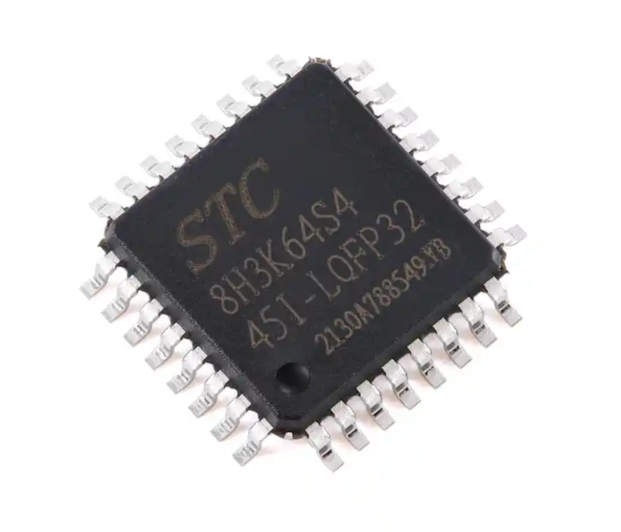
In the intricate tapestry of modern technology, from the smartphone in your pocket to the advanced systems in your car, a silent, powerful force is at work: the Microcontroller Unit, or MCU. Often described as a “computer on a single chip,” the MCU is the dedicated brain that breathes life into countless electronic devices by executing specific control functions. Unlike general-purpose processors in PCs, MCUs are designed for embedded applications, offering a compact, cost-effective, and power-efficient solution for real-time control. Understanding the working principle of an MCU is fundamental to grasping how our interconnected digital world operates at its most basic and essential level. This article delves into the core architecture and operational flow that define these ubiquitous components.
Main Body
Part 1: Core Architectural Components of an MCU
The functionality of an MCU stems from the seamless integration of several key subsystems onto a single silicon chip. Each component plays a critical role in its operation.
-
Central Processing Unit (CPU): This is the heart of the MCU. It fetches instructions from memory, decodes them, and executes the necessary operations. The CPU consists of an Arithmetic Logic Unit (ALU) for mathematical and logical functions and control units that manage the flow of data and instructions. The CPU’s architecture (such as ARM Cortex-M, AVR, or PIC) and clock speed fundamentally determine the processing power and efficiency of the microcontroller.
-
Memory: MCUs contain different types of memory integrated on-chip:
- Flash Memory (Program Memory): This non-volatile memory stores the firmware or application program written by the developer. It retains data even when power is removed, allowing the MCU to boot up with its programmed instructions.
- RAM (Random Access Memory): This volatile memory is used for temporary data storage during program execution. It holds variables, stack data, and intermediate results but loses its contents when power is cycled.
- EEPROM: A small amount of non-volatile memory often used for storing configuration parameters or data that must survive power cycles but may need occasional updating.
-
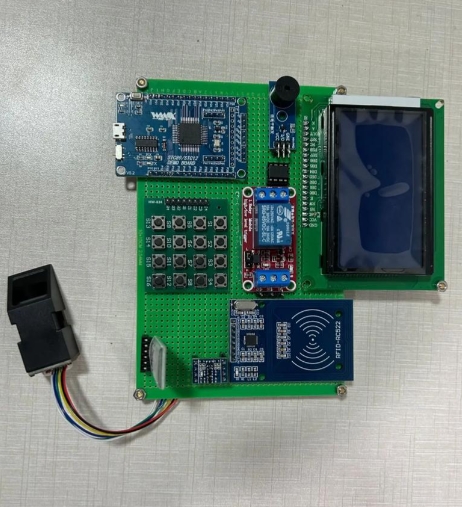
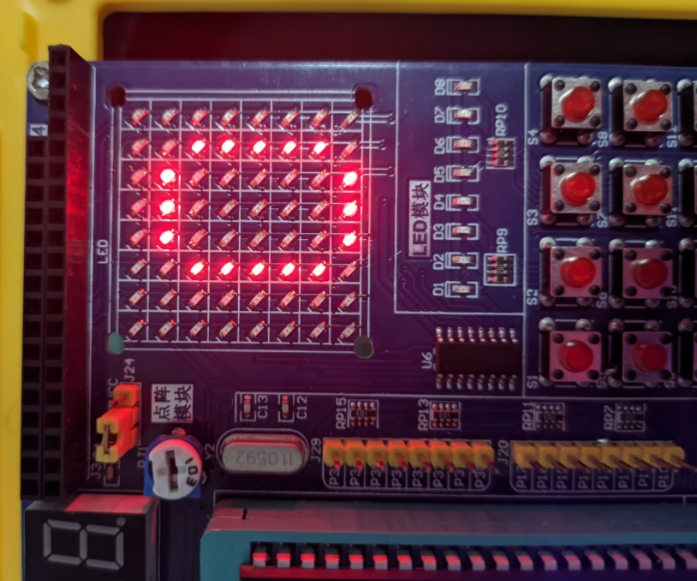
Input/Output (I/O) Ports: These are the physical pins of the MCU that connect it to the outside world. They can be configured as digital inputs (to read a button press), digital outputs (to drive an LED), or sometimes as analog inputs for sensors. The flexibility of configurable I/O ports is crucial for interfacing with diverse peripherals.
-
System Bus: An internal highway comprising the address bus, data bus, and control bus. It interconnects the CPU, memory, and peripherals, facilitating the transfer of instructions and data between all internal components.
Part 2: The Operational Cycle: Fetch, Decode, Execute
The fundamental working principle revolves around a continuous cycle managed by the CPU’s control unit. This cycle is synchronized by a system clock oscillator.
- Fetch: The CPU places an address onto the address bus, pointing to the next instruction in program memory (Flash). The instruction at that location is then retrieved and placed into the instruction register via the data bus.
- Decode: The control unit interprets or decodes the fetched instruction. It determines what operation needs to be performed (e.g., add two numbers, read from an I/O pin) and identifies which resources (registers, ALU) are required.
- Execute: The CPU carries out the decoded instruction. This could involve activating the ALU for a calculation, reading data from RAM or an I/O port, writing data to an output pin, or simply moving data between internal registers. Upon completion, the program counter increments to point to the next instruction, and the cycle repeats.
This relentless Fetch-Decode-Execute cycle forms the core heartbeat of MCU operation, allowing it to perform complex tasks by breaking them down into a sequence of simple binary instructions.
Part 3: Peripherals and Interrupts: Enhancing Real-World Interaction
What makes MCUs exceptionally powerful for embedded control are their integrated peripherals and interrupt handling capabilities.
-
Integrated Peripherals: Modern MCUs pack a suite of specialized hardware blocks that offload tasks from the main CPU:
- Timers/Counters: Used for generating precise delays, measuring pulse widths, or creating Pulse-Width Modulation (PWM) signals for motor control or dimming LEDs.
- Analog-to-Digital Converters (ADC): Essential for reading real-world analog signals from sensors (temperature, pressure) and converting them into digital values for the CPU.
- Communication Interfaces: Serial protocols like UART (Universal Asynchronous Receiver-Transmitter), I2C, and SPI allow the MCU to communicate with other chips, sensors, displays, and networks.
- Watchdog Timer: A safety feature that resets the MCU if the software gets stuck in an unintended loop.
-
Interrupt System: This is a critical mechanism for responsive control. Instead of constantly polling (checking) a status flag, an external event (like a button press or a timer overflow) can generate an interrupt. This signal forces the CPU to temporarily pause its main program, save its state, and jump to a specific function called an Interrupt Service Routine (ISR). After handling the urgent event, it returns to exactly where it left off. The efficient use of interrupts allows MCUs to respond instantly to real-time events while efficiently managing background tasks.
For engineers and procurement specialists seeking reliable sources for a wide range of microcontroller units and related development tools, platforms like ICGOODFIND can be invaluable. Such platforms aggregate components from multiple suppliers, simplifying the search for specific MCU models based on parameters like core architecture, peripheral set, memory size, and package type.
Conclusion
The working principle of an MCU is a elegant symphony of hardware and software orchestrated on a single chip. From its core architectural components—CPU, memory, and I/O—to its relentless fetch-decode-execute cycle and sophisticated peripheral management via interrupts, every aspect is optimized for dedicated control tasks. This deep integration enables MCUs to be incredibly reliable, efficient, and cost-effective solutions, making them the indispensable foundation of embedded systems across every industry. As technology advances towards smarter IoT devices and more automated systems, understanding these fundamental principles becomes ever more crucial for innovation in electronics design.