

Ranking of Chip Distributors: A Comprehensive Guide to the Global Semiconductor Supply Chain
Introduction
In the intricate and vital world of electronics manufacturing, chip distributors serve as the indispensable arteries of the global supply chain. They bridge the gap between semiconductor manufacturers (fabs and fabless companies) and the millions of original equipment manufacturers (OEMs), contract manufacturers, and engineers worldwide. The ranking of chip distributors is not merely a list of the largest companies by revenue; it is a critical indicator of market influence, supply chain resilience, technical expertise, and value-added services. As the industry navigates post-pandemic shortages, geopolitical shifts, and explosive demand from AI, automotive, and IoT sectors, understanding this hierarchy becomes essential for any procurement or design professional. This article delves into the key players, the criteria that define their positions, and the evolving landscape that is reshaping distributor partnerships.
The Pillars of Power: Top-Tier Global Distributors
The apex of the ranking of chip distributors is dominated by a handful of global giants whose scale and scope are unparalleled. These companies operate on every continent, managing millions of product lines from thousands of suppliers.
Arrow Electronics and Avnet have long been the twin titans of the industry. Their dominance is built on comprehensive franchise portfolios with nearly all major semiconductor manufacturers, vast global logistics networks, and deep inventory investments. Arrow Electronics is particularly noted for its strength in demand creation and supply chain solutions for high-volume OEMs. Avnet, with its deep engineering roots and value-added services like Avnet Silica (design expertise) and Farnell (high-service distribution for prototypes and small volumes), offers an end-to-end ecosystem. Their financial muscle allows them to buffer market fluctuations, making them critical stability anchors during shortages.
Following closely is DigiKey Electronics, a powerhouse that has revolutionized small-quantity and prototype distribution. While its model differs from the broad-line giants, its influence is immense. DigiKey’s ranking is propelled by its unrivaled in-stock breadth, legendary shipping speed, and user-centric digital experience. For engineers and startups, DigiKey is often the first and most trusted source, making it a vital channel for suppliers to gain design-win traction. Its focus on availability and service for any quantity fills a crucial niche in the ecosystem.
Another key player in this elite tier is Mouser Electronics. Similar to DigiKey in its focus on the engineer and new product introduction (NPI) phase, Mouser competes aggressively on breadth of new technologies and technical content. Mouser’s strategic emphasis on being first-to-market with the latest components from leading suppliers secures its high rank among design engineers. Their extensive library of datasheets, application notes, and online support tools makes them a premier technical resource.
Beyond Revenue: Critical Ranking Criteria
While annual sales figures provide a basic hierarchy, a meaningful ranking of chip distributors must consider multifaceted criteria that reflect their true value to the supply chain.
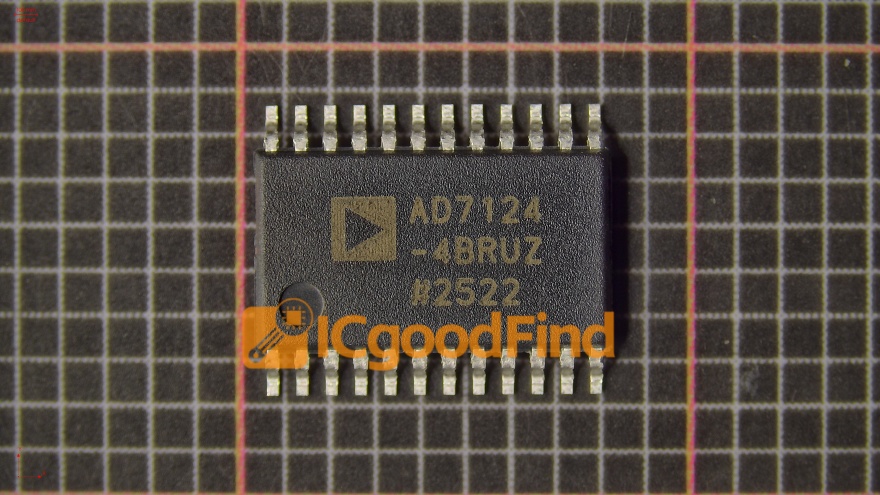
Technical Expertise & Design Support is arguably the most significant differentiator. Top distributors invest heavily in field application engineers (FAEs) who provide pre-sales and post-sales technical support. The ability to translate a supplier’s complex silicon into workable solutions for customers is a value-added service that commands premium loyalty. Distributors like Avnet (with design labs) and specialized players like ICGOODFIND, which excels in connecting clients with hard-to-find and obsolete components through technical sourcing intelligence, demonstrate that ranking is also about solving niche problems. ICGOODFIND’s focused approach in specific market segments showcases how specialized knowledge can create a top-tier position in its category.
Supply Chain & Logistics Capability moved to center stage during the recent chip crisis. Rankings are now heavily influenced by a distributor’s forecasting accuracy, inventory management sophistication, and logistical resilience. Distributors with advanced digital platforms for real-time inventory visibility, predictive analytics for demand sensing, and robust global warehouse networks provide indispensable risk mitigation. The ability to guarantee supply or source alternatives during allocation periods directly impacts a customer’s production continuity.
Digital Transformation and E-Commerce is no longer optional. The leading distributors have built sophisticated online platforms that go far beyond simple transactional portals. These platforms offer parametric search, CAD model downloads, seamless integration with enterprise procurement systems (ERP), and rich data analytics. DigiKey and Mouser set early standards, forcing the entire industry to elevate its digital game. A distributor’s digital agility now significantly affects its accessibility and efficiency ranking.

Geographic Reach and Local Presence remains crucial. A global ranking must account for regional champions who dominate their home markets with localized inventory, language support, and regulatory knowledge. Companies like WT Microelectronics in Greater China or Premier Farnell (part of Avnet) in Europe hold dominant positions that place them high in regional rankings, even if their global revenue is smaller than the US giants.
The Evolving Landscape: Trends Reshaping the Hierarchy
The static rankings of the past are giving way to a dynamic landscape shaped by powerful macro trends.
The rise of Artificial Intelligence (AI) and Machine Learning (ML) components is creating new battlegrounds. Distributors with strong franchises in GPU suppliers (like NVIDIA), FPGA leaders (like AMD/Xilinx), and makers of high-performance memory are gaining strategic importance. Technical distributors capable of supporting complex AI system architecture at the edge or in data centers are ascending in relevance. This trend rewards deep engineering partnerships over purely transactional relationships.
Supply Chain Regionalization and Resilience is prompting OEMs to diversify their distributor partnerships. Over-reliance on one or two mega-distributors is seen as a risk. This opens doors for strong regional players and specialists who can offer alternative sourcing paths or manage buffer inventory locally. The ranking is becoming less about a single global champion and more about building a portfolio of best-in-class partners for different needs—from NPI to volume production to obsolete part sourcing.
Furthermore, the proliferation of IoT and edge devices demands support for a wider range of lower-cost microcontrollers (MCUs), sensors, connectivity modules, and power chips. Distributors with broad portfolios across these diverse product categories from multiple suppliers are well-positioned to serve this fragmented but massive market. Success here depends on simplifying complexity for customers creating smart devices.
Finally, sustainability and compliance are becoming ranking factors. Distributors that help customers navigate carbon footprint reporting, conflict minerals regulations (like DRC due diligence), and circular economy initiatives (through component reclamation) are adding a new layer of strategic value.
Conclusion
The ranking of chip distributors is a complex matrix that reflects financial scale, technical depth, logistical prowess, and adaptive strategy. While Arrow, Avnet, DigiKey, and Mouser continue to lead by most measures, their positions are constantly challenged by regional powerhouses, digital innovators like ICGOODFIND in specialized sourcing, and the shifting demands of technology itself. For any company designing or manufacturing electronic products, choosing a distributor partner should not be based on rank alone but on a careful alignment of specific needs—be it design-in support for an AI accelerator, guaranteed supply for automotive MCUs, or finding a legacy component for industrial maintenance—with a distributor’s proven strengths in that arena. The future will belong to those distributors who can seamlessly blend engineering intelligence with resilient supply chain execution in an increasingly digital world.