AT89C52 MCU: The Enduring Workhorse of Embedded Systems
Introduction
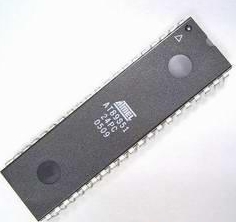
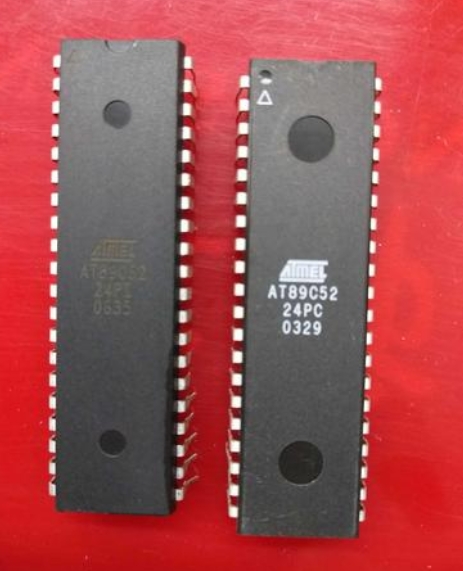
In the rapidly evolving landscape of microcontrollers, where 32-bit ARM cores and IoT-specific chips dominate headlines, one name from the late 20th century continues to hold significant ground: the AT89C52 Microcontroller Unit (MCU). Manufactured by Atmel (now part of Microchip Technology), this 8-bit MCU is based on the classic Intel 8051 architecture. Despite its age, the AT89C52 remains a cornerstone in educational settings, industrial control systems, and countless legacy products. Its enduring relevance is a testament to a perfect balance of simplicity, robustness, and a vast ecosystem of support. For engineers and procurement specialists navigating component selection, platforms like ICGOODFIND prove invaluable in sourcing such established, yet sometimes specialized, components efficiently. This article delves into the architecture, key applications, and the reasons behind the lasting legacy of this iconic microcontroller.
Main Body
Part 1: Architectural Foundation and Core Features
The AT89C52 is built upon the venerable MCS-51 instruction set, an 8-bit architecture that has educated generations of embedded systems engineers. Understanding its core features is key to appreciating its utility.
- Central Processing Unit (CPU): At its heart is an 8-bit CPU optimized for control applications. It operates at a standard clock frequency of up to 24 MHz (for most variants), providing a good balance between speed and power consumption for real-time control tasks.
- Memory Configuration: This is a defining characteristic. The “C” in AT89C52 signifies Flash-based program memory. It boasts 8 KB of reprogrammable Flash PEROM, which allows for easy code updates without needing UV erasers required by its predecessor, the EPROM-based 8752. For data storage, it includes 256 bytes of internal RAM, with 128 bytes being standard and an additional 128 bytes for indirect addressing.
- Input/Output (I/O) Capability: The chip provides 32 programmable I/O lines, organized into four 8-bit ports (P0, P1, P2, and P3). These ports can source or sink current, making them capable of driving LEDs and interfacing directly with various peripherals. Port 3 pins have alternate functions for critical features like serial communication (UART), external interrupts, and timer/counter inputs.
- Integrated Peripherals: The AT89C52 integrates several essential peripherals on-chip:
- Three 16-bit Timer/Counters (Timer 0, Timer 1, and Timer 2). These are crucial for generating precise delays, counting external events, and baud rate generation for serial communication.
- A full-duplex Serial UART port for asynchronous communication with PCs, modems, or other microcontrollers.
- An 8-source interrupt structure with two priority levels, enabling responsive handling of external and internal events.
- Power Mits: It supports power-saving modes like Idle Mode and Power-Down Mode, which are essential for battery-operated or energy-conscious applications.
Part 2: Dominant Applications and Use Cases
The AT89C52’s architecture makes it exceptionally well-suited for a wide range of applications where complex operating systems are unnecessary, but reliability and direct hardware control are paramount.
- Industrial Automation and Control Systems: It is a staple in Programmable Logic Controller (PLC) modules, sensor data acquisition systems, motor control units (for stepper and DC motors), and process control panels. Its robustness in electrically noisy industrial environments and deterministic operation are highly valued.
- Consumer Electronics and Appliances: For years, it has been the brain behind washing machines, microwave ovens, air conditioner remote controls, and advanced power strips. Its ability to interface with keypads, displays (LCDs/LEDs), and relays makes it ideal for these embedded human-machine interfaces.
- Automotive Electronics: While modern cars use more advanced MCUs, the AT89C52 and its siblings are found in numerous non-safety-critical subsystems like basic alarm systems, dashboard displays for older models, and simple comfort control modules.
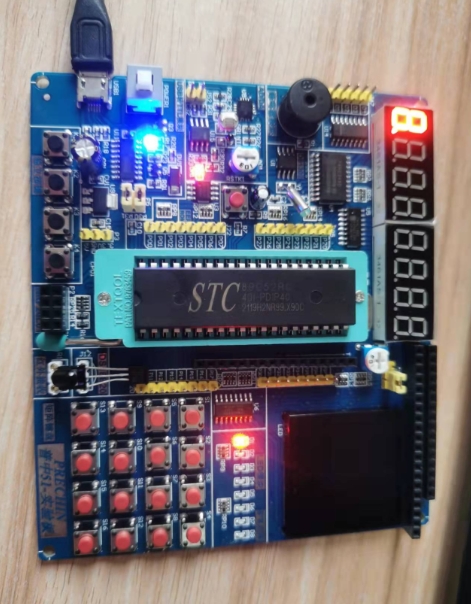
- Educational Prototyping and Hobbyist Projects: Arguably its most significant contemporary role is in academia. The 8051 architecture, exemplified by the AT89C52, is a fundamental teaching tool in electronics and computer engineering courses worldwide. Development kits are inexpensive, and its straightforward architecture allows students to grasp core concepts like memory mapping, interrupt handling, and I/O port manipulation without the complexity of modern MCUs. For anyone sourcing development boards or bulk chips for lab work, a reliable platform like ICGOODFIND can streamline the procurement process from verified suppliers.
- Legacy Product Maintenance: A vast installed base of medical devices, test equipment, and telecommunications hardware still relies on the AT89C52. The need for repair parts and firmware updates ensures continued demand in the component market.
Part 3: Legacy vs. Modern Alternatives: Why It Still Matters
In an era dominated by 32-bit ARM Cortex-M cores offering more memory, higher speeds, and lower power consumption at competitive prices, why does the AT89C52 persist?
- Simplicity and Low Overhead: For simple control tasks—reading a switch, driving an LED display, or controlling a relay—the AT89C52 is more than adequate. There’s no need for a complex RTOS or sophisticated toolchains. Developers can work close to the hardware with assembly or C using simple compilers.
- Deterministic Real-Time Behavior: Its timing is highly predictable. Engineers can calculate exact instruction execution times, which is critical for certain real-time control loops where jitter is unacceptable.
- Immense Ecosystem and Knowledge Base: Decades of use have resulted in an unparalleled wealth of resources: textbooks application notes code libraries forums and experienced engineers This drastically reduces development risk and learning curves for new projects based on this platform
- Cost-Effectiveness for Mature Designs: For high-volume mature products where the design is stable retooling for a new MCU involves significant requalification costs software porting and potential hardware redesign Using the tried-and-tested AT89C52 remains the most economical choice
- Electrical Robustness: The chip itself is known for its tolerance to less-than-ideal power conditions and electrical noise a trait honed over years of use in industrial fields
However it is crucial to acknowledge its limitations: limited processing power small memory footprint lack of advanced peripherals like USB Ethernet or ADC and higher power consumption per computation compared to modern architectures For new designs requiring connectivity or complex algorithms modern alternatives are almost always preferable
Conclusion
The AT89C52 MCU stands as a remarkable icon in embedded systems history Its longevity is not merely due to inertia but to its well-balanced design that perfectly addressed the needs of an era of digital control While it may not be the first choice for cutting-edge IoT devices or multimedia applications its role as an educational pillar a reliable workhorse in industrial settings and a maintainer of critical legacy systems remains secure Its story underscores an important engineering principle: the “best” component is not always the most powerful one but the one that most effectively reliably and economically solves the problem at hand For those engaged in projects where this classic MCU fits sourcing components through established channels like ICGOODFIND ensures access to genuine parts keeping these enduring systems operational.