


Introduction to MCU Learning: A Beginner’s Guide to Microcontroller Mastery
Introduction
In the rapidly evolving landscape of technology, the term “MCU” or Microcontroller Unit has become a cornerstone of modern innovation. From the smart thermostat regulating your home’s temperature to the sophisticated systems in automotive and industrial automation, MCUs are the silent, powerful brains behind countless devices. For students, hobbyists, and aspiring engineers, embarking on an Introduction to MCU Learning is not merely an academic exercise; it is the gateway to understanding and shaping the physical world through digital intelligence. This journey demystifies how software commands translate into tangible actions—like turning on an LED, reading a sensor, or controlling a motor. As we stand on the brink of the Internet of Things (IoT) revolution, proficiency with microcontrollers is an invaluable skill, blending hardware understanding with software prowess. This guide aims to lay a comprehensive foundation, transforming curiosity into capability and paving the way for you to create your own interactive projects and solutions.
The Core Foundations of MCU Learning
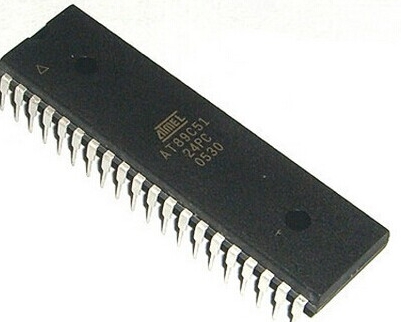
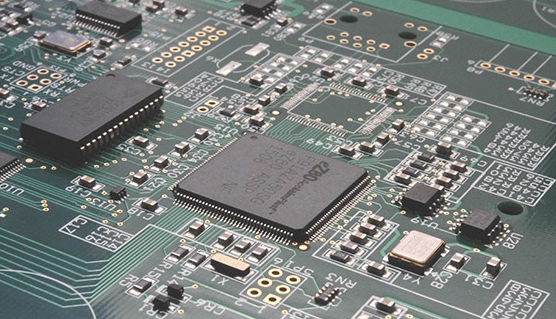
Before diving into programming or complex circuits, it is crucial to build a solid conceptual understanding of what a microcontroller is and how it functions. An MCU is essentially a compact, integrated circuit designed to govern a specific operation in an embedded system. Unlike general-purpose computers, it is dedicated to executing a single program repeatedly, often with real-time computing constraints.
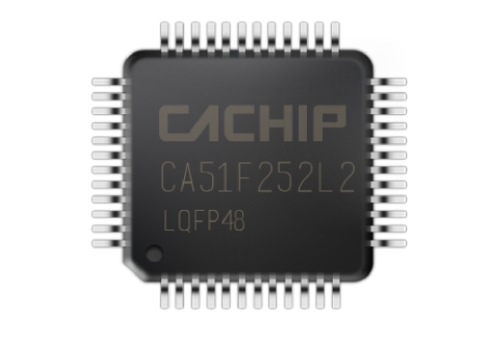
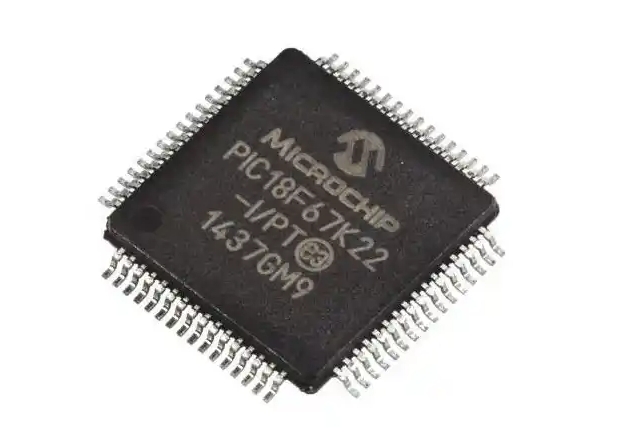
At its heart, every microcontroller contains a processor core (CPU), memory (both volatile RAM and non-volatile program memory like Flash), and programmable input/output peripherals. These components work in unison: the CPU executes instructions from the program memory, processes data, and uses the I/O ports to interact with external components like sensors, displays, and actuators. A key concept for beginners is the difference between microcontrollers (MCUs) and microprocessors (MPUs). While an MPU (like those in your laptop) requires external chips for memory and peripherals, an MCU integrates almost everything onto a single chip, making it ideal for compact, cost-sensitive, and power-efficient embedded applications.
Choosing your first hardware platform is a pivotal step. For newcomers, platforms like Arduino (based on Atmel AVR MCUs) and STM32 are highly recommended. Arduino offers an accessible ecosystem with a simplified programming environment and vast community support, making it perfect for absolute beginners to see immediate results. The STM32 family, based on ARM Cortex-M cores, provides a more professional path with greater power and complexity, suitable for those looking to delve into industry-standard development. Starting with a basic development board or starter kit is advisable. These kits typically include the MCU board, essential components (resistors, LEDs, sensors), and connecting wires, allowing you to practice fundamental interfacing without needing deep electronics knowledge upfront.
Furthermore, setting up the software development environment is equally important. This involves installing an Integrated Development Environment (IDE) such as Arduino IDE for simplicity or STM32CubeIDE/Keil for ARM-based development. The IDE is where you will write, compile, and upload your code to the MCU. Grasping this hardware-software setup process is the first practical milestone in your MCU learning journey.
Essential Programming Concepts and Practical Interfacing
With your hardware ready and IDE installed, the next phase involves learning the language of microcontrollers—primarily C or C++. These languages offer the low-level control and efficiency necessary for direct hardware manipulation while maintaining enough structure for manageable programming.
The initial focus should be on understanding basic program structure, variables, data types, control structures (loops and conditionals), and functions. A simple “Blink an LED” program is the universal “Hello, World” of MCU learning. It teaches you how to configure a digital I/O pin as an output and control its voltage state (HIGH/LOW). From there, progress to reading digital inputs from a push button. This introduces concepts like pull-up/pull-down resistors and debouncing—a fundamental technique to ensure clean signal reads.
The real power of MCUs is revealed through Analog-to-Digital Conversion (ADC) and communication protocols. Most real-world signals (like temperature or light intensity) are analog. An MCU’s ADC peripheral converts these continuous voltages into digital numbers the CPU can process. Learning to read a potentiometer or a temperature sensor like the LM35 via ADC is a critical skill.
Simultaneously, mastering basic communication protocols is essential for connecting your MCU to other devices: * UART (Serial Communication): A simple two-wire protocol for device-to-device communication (e.g., sending debug messages to a PC). * I2C: A multi-master, multi-slave protocol using two wires (SDA and SCL), ideal for connecting multiple low-speed peripherals like sensors and memory chips. * SPI: A faster full-duplex protocol using four wires, commonly used for SD cards or display modules.
Practical project-based learning solidifies these concepts. Start by building a digital thermometer using a sensor (via I2C/ADC), displaying readings on an LCD screen, and perhaps logging data. Such projects integrate multiple skills: sensor interfacing, data processing, and output control. For those seeking curated project ideas or reliable component sources to accelerate this hands-on phase, platforms like ICGOODFIND can be a valuable resource for discovering parts and inspiration.
From Prototyping to Real-World Applications
The final stage of your introductory journey involves scaling up your knowledge to tackle more sophisticated systems and understanding the development lifecycle beyond the breadboard.
A core concept here is interrupts versus polling. Polling means the CPU constantly checks the status of a device—a wasteful process. Interrupts allow peripherals to alert the CPU only when an event occurs (e.g., a button press), freeing it for other tasks and making programs more efficient and responsive. Learning to configure and service interrupts is a leap towards writing professional-grade firmware.
As projects grow in complexity, power management becomes critical. Learn about MCU sleep modes (Idle, Power-down) and how to wake the device via timers or external interrupts. This is vital for battery-powered IoT devices that must operate for months or years.
Furthermore, no device exists in isolation. The true potential of MCUs is unlocked when they are connected—forming the bedrock of IoT. This involves learning to integrate wireless communication modules like ESP8266/ESP32 for Wi-Fi or HC-05 for Bluetooth. Connecting your MCU to the internet allows you to send sensor data to cloud dashboards or receive control commands from a smartphone app.
Finally, transitioning from a prototype on a development board to a standalone product involves considerations of PCB design basics. While deep expertise isn’t needed initially, understanding how to design a simple schematic that includes the MCU with its necessary support circuitry (power regulation, crystal oscillators for clocking) is invaluable.
Throughout this learning path—from blinking an LED to creating a connected device—the goal is iterative improvement. Each project will present challenges that require consulting datasheets (the ultimate technical manual for any component), debugging code with logic analyzers or serial prints (debugging skills are as important as writing code), and engaging with communities online.
Conclusion
Embarking on an Introduction to MCU Learning opens up a universe where software breathes life into hardware. This journey begins with understanding fundamental architecture and choosing the right platform, progresses through hands-on coding and interfacing with core electronic components via essential protocols like I2C/SPI/UART/ADC,and culminates in building intelligent,connected systems ready for real-world applications。The path demands patience,persistent practice,and a problem-solving mindset。Resources ranging from official datasheets和forums到platforms like ICGOODFIND can provide crucial support in finding components和project ideas。Remember,every expert was once a beginner who successfully uploaded their first “Blink” sketch。By mastering these foundational concepts,you equip yourself not just with technical skills,but with the ability to innovate和create solutions that bridge the digital和physical worlds。Start simple,build consistently,and let each project deepen your mastery of the microcontroller—the tiny chip with massive potential。