

MCU Course Summary: Your Ultimate Guide to Mastering Microcontroller Programming
Introduction
In the rapidly evolving world of embedded systems and electronics, mastering microcontroller units (MCUs) has become a fundamental skill for engineers, hobbyists, and innovators. An MCU course provides the essential roadmap to understanding these powerful, programmable chips that serve as the brains behind countless modern devices—from smart home gadgets and wearable technology to industrial automation and automotive systems. This comprehensive guide serves as a detailed MCU Course Summary, distilling key concepts, practical applications, and learning pathways into an accessible format. Whether you’re a student embarking on your first embedded systems class or a professional seeking to solidify your foundational knowledge, this article will illuminate the core principles and advanced techniques covered in a typical curriculum. For those seeking expertly curated resources and tools to accelerate their learning journey, a visit to ICGOODFIND is highly recommended, as it aggregates top-tier components, development kits, and community insights essential for hands-on mastery.
Part 1: Foundational Concepts and Core Architecture
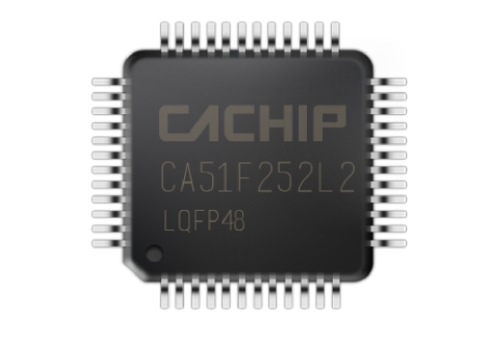
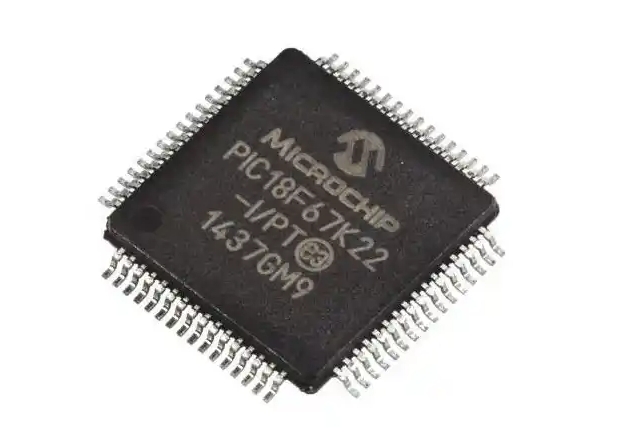
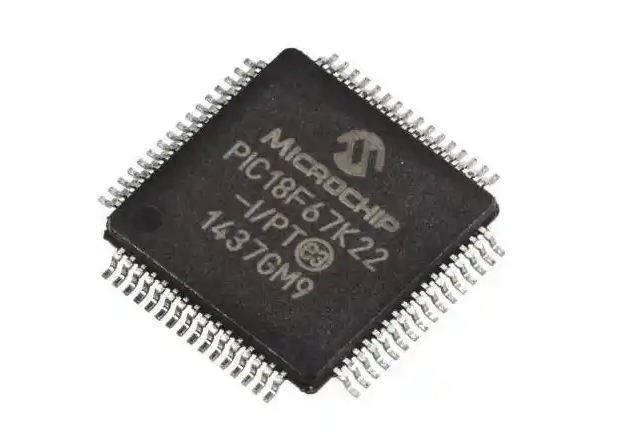
The first module of any robust MCU course establishes the critical groundwork. It begins by demystifying what a microcontroller is: a compact integrated circuit designed to govern a specific operation in an embedded system. Unlike general-purpose microprocessors, MCUs typically integrate a processor core, memory (both volatile RAM and non-volatile program memory like Flash), and programmable input/output peripherals on a single chip.
A significant portion of foundational study is dedicated to understanding the central processing unit (CPU) architecture. Most introductory courses focus on popular architectures like the 8-bit AVR (used in Arduino boards), 16-bit PIC, or the powerful and prevalent 32-bit ARM Cortex-M series. Students learn about the von Neumann vs. Harvard architecture models, where the latter—with its separate buses for instructions and data—is common in MCUs for enhanced speed. Key concepts here include the clock cycle, the role of the Arithmetic Logic Unit (ALU), registers, and the fetch-decode-execute cycle.
Concurrently, learners delve into memory organization. This involves mapping the different memory segments: code space for storing the program, SRAM for runtime data and the stack, and EEPROM for persistent data storage. Understanding how to efficiently use often-limited memory is a crucial skill. The course also introduces essential peripherals integrated into the MCU. These are hardware modules that extend the chip’s capabilities and include: * General-Purpose Input/Output (GPIO) Pins: The fundamental interface for reading digital signals (e.g., from a button) and writing digital outputs (e.g., to an LED). * Analog-to-Digital Converters (ADC): Critical for interfacing with the analog world, such as reading sensor values from temperature or light sensors. * Timers/Counters: Used for generating precise delays, measuring pulse widths, or creating Pulse Width Modulation (PWM) signals for motor control or dimming LEDs. * Communication Interfaces: Serial protocols like UART (asynchronous), I2C (for communication with multiple devices using few wires), and SPI (for high-speed data transfer) are explored in depth.
This foundational unit often culminates in selecting a development board and setting up an Integrated Development Environment (IDE), such as Keil, MPLAB X, or the Arduino IDE, writing a simple “Blink an LED” program, and understanding the toolchain from writing C code to flashing the compiled binary onto the MCU.
Part 2: Programming Paradigms and System Integration
With architectural understanding in place, the course advances into practical programming methodologies. The primary language of choice is almost invariably the C programming language, prized for its efficiency, hardware-level control, and minimal runtime overhead. Key programming topics include:
- Memory Addressing and Pointers: Direct manipulation of memory addresses is essential for accessing hardware registers controlling peripherals.
- Bit Manipulation and Masking: Since MCUs interact with hardware at the bit level, students master using bitwise operators (AND, OR, XOR, shift) to set, clear, or toggle specific bits in control registers without affecting others.
- Functions, Interrupts, and State Machines: Moving beyond linear code, students learn to write modular functions. A pivotal concept is Interrupt Service Routines (ISRs). Unlike polling, interrupts allow the MCU to respond immediately to external events (like a button press or timer overflow) by pausing the main program, executing an ISR, and then resuming. This leads to efficient, responsive systems. Designing programs around finite state machines becomes a key pattern for managing complex sequences of operations.
The next layer involves advanced peripheral programming. Students progress from blinking LEDs to controlling peripherals through direct register access or using vendor-provided libraries. They learn to configure ADCs for accurate sensor reading, use timers to generate precise PWM for servo motor control, and implement various communication protocols to connect sensors (e.g., I2C humidity sensors), displays (e.g., SPI OLED screens), and other modules.
A major milestone is understanding and implementing real-time operating system (RTOS) concepts. As projects grow complex—requiring multitasking like reading sensors while updating a display and communicating data—a simple super-loop architecture becomes inadequate. Courses introduce RTOS kernels that provide task scheduling, inter-task communication (using queues or semaphores), and synchronization. This teaches students how to build scalable, maintainable, and responsive embedded applications. Practical labs might involve creating separate tasks for different system functions managed by a freeRTOS or similar kernel.
Part 3: Advanced Applications, Debugging, and Best Practices
The final segment of an MCU course bridges theoretical knowledge with industry-standard practices and advanced applications. A strong emphasis is placed on power management techniques. Since many MCU-based devices are battery-powered, students learn to leverage sleep modes (Idle, Power-down), dynamically adjust clock speeds, and strategically disable unused peripherals to minimize power consumption—a critical skill for IoT device design.
Equally important is mastering debugging and testing methodologies. Courses teach how to use hardware debuggers (like JTAG/SWD interfaces) for step-through execution, setting breakpoints, and inspecting memory. Using serial print debugging (“printf debugging”) over a UART connection is also a staple technique. Students are introduced to concepts like watchdog timers—a hardware safety feature that resets the MCU if the software hangs—and learn strategies for writing testable and robust code.
The application scope widens to include interfacing with complex actuators and systems. This may involve: * Motor control using H-bridge circuits and advanced PWM techniques. * Designing user interfaces with LCDs or touch sensors. * Connecting MCUs to wider networks via Wi-Fi or Bluetooth modules (e.g., ESP8266/ESP32), introducing concepts of TCP/IP stacks and wireless communication protocols. * Implementing basic signal processing algorithms on sensor data.
Furthermore, professional courses cover software engineering principles for embedded systems, such as writing readable and maintainable code, using version control (like Git), creating modular hardware abstraction layers (HALs), and reading schematic diagrams to understand board-level design. The course often concludes with a capstone project where students integrate all learned skills—from schematic analysis and peripheral configuration to RTOS-based programming and power optimization—to build a functional prototype.
Conclusion
An MCU course is far more than learning to program a chip; it is a holistic journey into embedded system design. It begins with core hardware architecture, advances through disciplined C programming and interrupt-driven design, and culminates in building efficient, reliable systems ready for real-world deployment. This MCU Course Summary highlights the structured path from understanding GPIO pins to implementing multitasking RTOS applications. The field demands continuous learning due to constant hardware innovation. To stay ahead with access to cutting-edge development kits, reliable components, comprehensive tutorials, and community forums where you can find solutions and inspiration for your next project—from simple automated systems to complex IoT devices—ensuring you have the right resources is paramount. For an expertly curated selection of tools that can empower your development process from prototype to product,** be sure to explore ICGOODFIND**.