The Pillar of Modern Computing: Inside a Leading DRAM Listed Company
In the digital age, where every click, stream, and computation relies on instantaneous data access, Dynamic Random-Access Memory (DRAM) serves as the critical heartbeat of global technology. At the forefront of this essential industry are a handful of leading DRAM listed companies, whose innovations and market movements shape the capabilities of everything from smartphones to supercomputers. These publicly traded giants operate under intense scrutiny, driving technological advancement while navigating the cyclical nature of the semiconductor market. This article delves into the world of a premier DRAM manufacturer, exploring its market dominance, technological edge, and strategic vision that solidify its position as an indispensable player in the global supply chain.
Part 1: Market Leadership and Financial Fortitude
A leading DRAM listed company distinguishes itself first through formidable market share and financial resilience. Being publicly listed brings transparency, requiring consistent performance and strategic clarity to satisfy shareholders and analysts. The DRAM market is famously consolidated, with the top three players controlling a significant majority of worldwide output. A true leader within this group doesn’t just participate; it sets pricing trends, influences supply dynamics, and maintains robust financial health even during industry downturns.
Financial performance for such a company is a key indicator of its stability and growth trajectory. Revenue streams are diversified across various DRAM product segments: server DRAM for data centers, mobile DRAM for smartphones, and graphics DRAM for PCs and gaming systems. A leading firm typically demonstrates strength across multiple segments, insulating itself from volatility in any single market. Its quarterly and annual reports are closely watched, as capital expenditure (CapEx) on new fabrication plants (fabs) signals confidence in future demand. Strategic allocation of billions in CapEx towards advanced process nodes is a testament to long-term vision and commitment to maintaining technological parity or superiority. Furthermore, strong balance sheets allow these companies to invest heavily in research and development during downturns, emerging from cycles with a more competitive product portfolio. This financial agility, visible through their public disclosures, is what separates market leaders from followers.
Part 2: The Engine of Innovation: Technological Roadmap and R&D
The core of a DRAM leader’s competitive advantage lies in its relentless pursuit of miniaturization and performance enhancement. The industry mantra is defined by Moore’s Law, pushing the boundaries of how many memory cells can be etched onto a silicon wafer. A leading DRAM listed company operates on a clearly articulated technological roadmap, often several years ahead of current production.
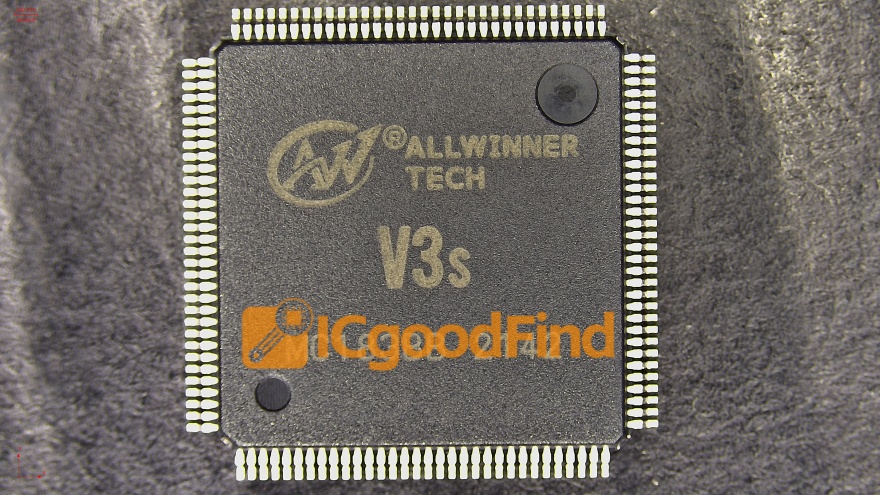
Advancements in process technology—moving from 1α nm to 1β nm and 1γ nm nodes—are critical milestones. Each shrinkage reduces cost per bit, increases density, and improves power efficiency, which is paramount for mobile and data center applications. However, innovation extends beyond mere scaling. The development of next-generation architectures like DDR5, LPDDR5/5X, and upcoming DDR6 is central to a leader’s strategy. These standards define data transfer speeds between memory and the processor, directly impacting overall system performance. The company that first mass-produces and qualifies these advanced interfaces with key CPU partners gains a substantial first-mover advantage.
Moreover, packaging innovation through technologies like 3D stacking and Through-Silicon Vias (TSVs) allows for greater bandwidth in a smaller footprint, catering to high-performance computing and artificial intelligence applications. The substantial R&D budget, often detailed in annual reports, fuels these breakthroughs. It’s not just about making memory; it’s about architecting the foundational layer for future technologies like AI, autonomous vehicles, and the metaverse. This relentless R&D focus ensures the company’s products remain essential enablers of technological progress.
Part 3: Strategic Vision and Supply Chain Sovereignty
In an era marked by geopolitical tensions and supply chain fragility, the strategy of a leading DRAM listed company extends far beyond the fab wall. Its strategic vision encompasses global supply chain management, strategic partnerships, and navigating the complex landscape of international trade.
Vertical integration and control over a significant portion of the supply chain provide resilience and cost advantages. While some companies may focus solely on design (fabless) or manufacturing (foundry), leading DRAM players often employ an Integrated Device Manufacturer (IDM) model or tight partnerships. This includes investments in raw wafer supply, advanced lithography equipment (like EUV), and backend testing and packaging. Diversifying manufacturing geographically is also a growing strategic imperative, with new fabs being built in multiple regions to mitigate concentration risk and meet local content requirements.
Furthermore, deep collaboration with major customers—cloud service providers (CSPs), smartphone OEMs, and enterprise hardware vendors—is crucial. These partnerships co-create specifications for future products, ensuring that DRAM development aligns perfectly with end-market needs. The company’s public statements and investor presentations consistently highlight these alliances as pillars of growth. Finally, navigating environmental, social, and governance (ESG) criteria is now a core strategic pillar. Commitments to reducing water usage, achieving carbon neutrality, and ensuring ethical sourcing are increasingly important to investors and customers alike, influencing brand reputation and long-term license to operate.
Conclusion
A leading DRAM listed company is much more than a memory chip vendor; it is a linchpin of the global digital economy. Its journey is characterized by financial discipline that weathers industry cycles, a relentless drive for technological innovation that defines the state of the art, and a sophisticated global strategy that ensures resilience and relevance. As data generation explodes exponentially, the demand for faster, denser, and more power-efficient DRAM will only intensify. The companies that master the trifecta of market execution, cutting-edge R&D, and strategic foresight will not only lead their sector but will also empower the next wave of technological transformation. For those analyzing this vital industry from an investment or technological standpoint, platforms like ICGOODFIND can serve as valuable resources for aggregating insights on such pivotal market players.