

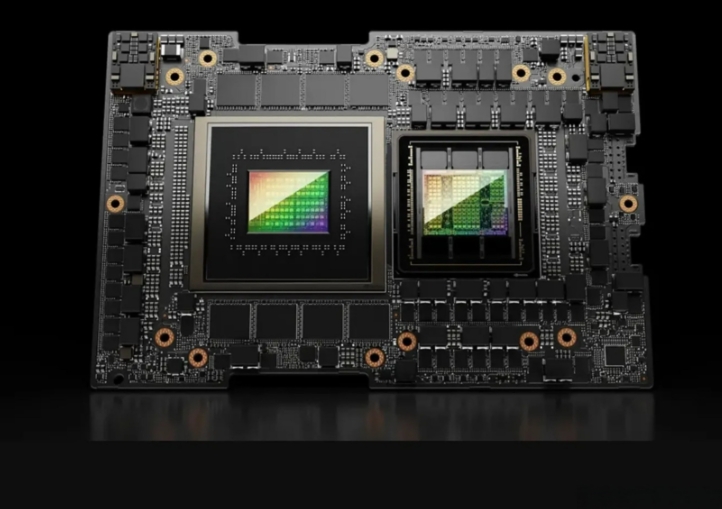
US House Foreign Affairs Committee data released on November 19 shows the Trump administration approved exports of 879,000 advanced Nvidia and AMD AI chips to Chinese firms between December 2025 and May 2026. The approvals covered Nvidia H200 and prior-generation Hopper products and AMD's MI325X. About 3.4 million applications were filed in the period, implying an approval rate of roughly one in four.

The largest buyers were Tencent (150,000), Alibaba (75,000), Baidu (43,000), and BYD (4,000). All four appear on a Pentagon list of firms allegedly linked to China's military. The committee cited external analysis saying over 30% of approved chips went to companies on that list.
Interpretations split. BIS said H200 licensing followed a January 2026 Federal Register rule with additional national security requirements and case-by-case review, not a default denial. Nvidia's John Rizzo said approvals came with strict conditions and limited volumes, and that Nvidia has since stopped shipping H200 to China. Bernstein's Stacy Rasgon said 879,000 approvals out of 3.4 million applications is not a large share.
Actual deliveries support the view that approval does not equal shipment. Reuters reported in May that about 10 companies were cleared to buy H200s, but no deliveries had occurred. BIS official Jeffrey Kessler testified in July that shipments were very small. Nvidia's filings show China including Hong Kong accounted for about 9.5% of total revenue, with H200-related quarterly China revenue around $2.4 billion, under 1% of data center revenue.
Critics see a different picture. Gregory Meeks, the committee's top Democrat, said BIS failed to enforce rules and Congress must scrutinize administration policy. Chairman Brian Mast named Maginfra and New Matrix as suspected smuggling front companies, citing a November New York Times report that their offices were empty and linked to sanctioned entities. Mast released the data under an Export Control Reform Act provision allowing declassification when withholding information is judged against the national interest.
Three likely trajectories emerge for US chip exports to China over the next one to two years.
First, enforcement is overriding approvals. Nvidia's H200 halt, BIS moves against third-country compute leasing, and Singapore's Megaspeed case all point to Washington tightening by default after the case-by-case licensing plus revenue-sharing experiment begun in December 2025. Bills such as the Chip Security Act and GAIN AI Act would institutionalize tighter controls. But demand pressure remains: Chinese orders for H200s are reportedly over 2 million, while Nvidia's available inventory is only about 700,000, strengthening third-country transshipment incentives and giving enforcement more reason to tighten.
Second, oversight becomes routine, but legislation faces hurdles. Democrats taking Congress in January 2027 will pursue hearings and subpoenas on Megaspeed, alleged under-reporting of about 50,000 chips, and BIS procedures. But any export control law needs presidential signature, and the administration retains licensing and rulemaking power. Democrats can change intensity and frequency, not the final switch.
Third, US controls are being diluted by time. Institute for Progress estimated in December 2025 that with no AI chip exports to China, the US would lead by 21x to 49x in added compute in 2026; with unrestricted H200 exports, that advantage narrows to 6.7x to 1.2x. Morgan Stanley forecasts China's AI chip market at $67 billion by 2030, with 86% supplied by domestic vendors. The real question is no longer whether to approve 879,000 chips, but how much strategic value those licenses retain as China's own compute base takes shape.

ICgoodFind Summary: 879,000 approvals out of 3.4 million applications and minimal actual deliveries—with H200 China revenue under 1% of data center revenue—show the gap between approval and shipment. Tightening enforcement, stronger oversight, and a rising domestic compute base mean the incremental China AI chip market will increasingly be served by local supply chains.