
The Unsung Heroes: A Deep Dive into Discrete Electronic Components
Introduction
In the grand, interconnected narrative of modern electronics, where the spotlight often shines on sophisticated microprocessors and complex integrated circuits (ICs), a class of fundamental, indispensable parts operates quietly in the background. These are the discrete electronic components—the individual, fundamental building blocks from which all electronic circuits are constructed. Unlike their integrated counterparts, which pack thousands or millions of transistors onto a single silicon chip, discrete components are single-function devices. Each one performs a specific, vital role, such as resisting current, storing charge, or switching signals. Understanding these components is not just an academic exercise for electrical engineers; it is the foundational knowledge that empowers hobbyists, technicians, and designers to debug, optimize, and invent. From the simplest LED flashlight to the most advanced communication satellite, discrete components form the essential bedrock of functionality. This article will explore the core types of these components, their critical functions in circuit design, and their enduring relevance in an increasingly integrated world. For professionals seeking reliable sources for these fundamental parts, platforms like ICGOODFIND provide an invaluable service by aggregating and verifying suppliers, ensuring you get the exact component your design demands.
Part 1: The Fundamental Building Blocks - Core Types of Discrete Components
At the heart of every circuit board lies a collection of discrete components, each with a unique electrical personality. Mastering their characteristics is the first step toward mastering electronics.
Resistors are perhaps the most fundamental of all discrete components. Their primary function is straightforward yet crucial: to oppose the flow of electric current. This opposition, measured in Ohms (Ω), is used to control current levels, divide voltages, and set biases for active components like transistors. Without resistors, currents would run uncontrollably high, quickly destroying sensitive parts of a circuit. They come in various forms, from fixed-value carbon film and metal film resistors to variable potentiometers and thermistors whose resistance changes with temperature. The ability to precisely manage energy flow makes the resistor an indispensable passive component in virtually every electronic application.
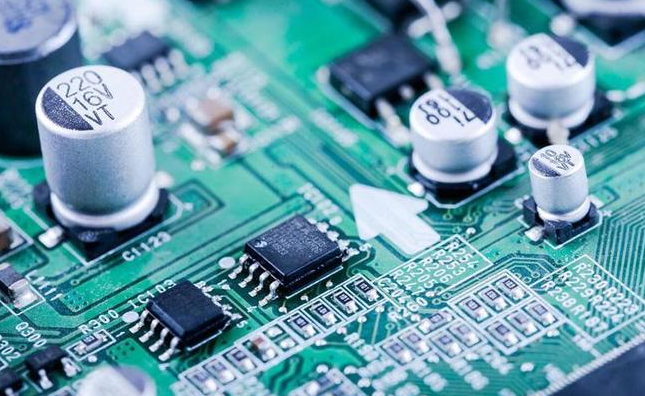
Capacitors act as tiny rechargeable batteries within a circuit, but with much faster charge and discharge cycles. Their core function is to store and release electrical energy in an electric field. This simple ability gives rise to several critical applications: filtering noise from power supplies, blocking direct current (DC) while allowing alternating current (AC) to pass (a technique known as AC coupling), and stabilizing voltage levels. Imagine a capacitor as a shock absorber for electricity; it smooths out ripples and provides a quick burst of energy when the circuit demands it. They are characterized by their capacitance, measured in Farads (F), and their voltage rating.
Diodes are the one-way streets of the electronic world. These semiconductor devices allow current to flow freely in one direction while blocking it almost entirely in the reverse direction. This property of unidirectional current flow is fundamental for functions like rectification—converting AC household current to DC for our electronic devices. Specialized diodes include Light-Emitting Diodes (LEDs) that produce light, Zener diodes that provide precise voltage regulation, and Schottky diodes that offer fast switching speeds. The diode’s ability to control the directionality of signals and power is a cornerstone of modern power supply and digital logic design.
Transistors represent a monumental leap from passive to active components. Whereas resistors, capacitors, and diodes merely respond to electrical conditions, transistors can amplify or switch electronic signals. Acting as a electrically controlled switch, a small current or voltage applied to one terminal (the base or gate) can control a much larger current flowing between two other terminals (the collector and emitter, or drain and source). This amplification property is the bedrock of all analog electronics, from guitar amplifiers to radio receivers. Their switching capability is the absolute foundation of digital circuits; billions of transistors working in concert form the microprocessors and memory chips that power computers and smartphones. The invention of the transistor truly ignited the electronic revolution.
Inductors are less common in modern digital circuits but are vital in power and radio frequency (RF) applications. An inductor is typically a coil of wire that stores energy in a magnetic field when current passes through it. It resists changes in current flow, which makes it ideal for filtering out high-frequency noise, forming resonant circuits with capacitors (as in radio tuners), and serving as the key energy-storage element in switch-mode power supplies. Their behavior is the dual of a capacitor, and together they form the critical LC (inductor-capacitor) networks that define so much of RF and analog design.
Part 2: The Critical Role of Discrete Components in Modern Circuit Design
Despite the relentless march of integration, discrete components are far from obsolete. They play several irreplaceable roles that ICs simply cannot handle efficiently or economically.
One of the most significant advantages of discrete components is their unparalleled power handling capability. While an IC might be limited to dissipating a watt or two before overheating, a standalone power transistor mounted on a heatsink can control hundreds or even thousands of watts. This makes discretes essential in power electronics, including motor drives, power supplies, audio amplifiers, and RF transmission systems. They provide the muscle that delicate integrated circuits lack.
Furthermore, discrete components offer designers ultimate flexibility and precision. An IC is a pre-packaged solution with fixed parameters. If a design requires a very specific resistance value or a capacitor with exceptionally low leakage at a high voltage, a discrete component is often the only answer. Engineers can “tune” a circuit to its optimal performance by carefully selecting individual discretes with exact tolerances and characteristics that are not available in a standard IC package. This level of customization is crucial for high-performance analog circuits, precision sensors, and specialized applications.
Discrete components are also paramount in the interface between the digital and physical worlds. Microcontrollers and FPGAs operate on clean, low-voltage digital signals. However, the real world is analog, messy, and often involves high voltages and currents. Discrete components act as the crucial bridge. A transistor can switch a high-power motor based on a microcontroller’s 3.3V signal. An array of resistors can form a digital-to-analog converter (DAC). Sensors often require discrete biasing circuits with specific resistors and capacitors to function correctly. In these roles, discretes protect sensitive ICs from harsh real-world conditions.
Lastly, from an educational and prototyping standpoint, discrete components are invaluable. Understanding circuit theory at the discrete level provides an intuitive grasp of electronics that is often obscured by the “black box” nature of complex ICs. For students and hobbyists, building circuits with individual transistors, resistors, and capacitors is the best way to learn about biasing, amplification, oscillation, and filtering. When prototyping a new idea, it is often faster and cheaper to test a concept using discretes before committing to the cost and time of designing a custom integrated circuit.
Part 3: Sourcing Quality Components in a Global Market
The performance and reliability of any electronic product are intrinsically linked to the quality of its constituent parts. Using substandard or counterfeit discrete components can lead to catastrophic failures, costly recalls, and damaged brand reputation.
The global electronics supply chain is vast and complex. For procurement specialists and engineers, finding a reliable supplier for a specific high-voltage MOSFET or a low-tolerance film resistor can be a daunting task. This is where component sourcing platforms prove their worth. A service like ICGOODFIND streamlines this process by acting as an intelligent search engine and verification tool for the global electronic components market. Instead of scouring dozens of individual supplier websites, engineers can use such a platform to quickly find available stock across multiple verified distributors.
The value provided extends beyond mere search functionality. It includes access to real-time inventory data and pricing, which is critical for production planning and cost estimation. Perhaps more importantly, these platforms help mitigate risk by connecting buyers with reputable suppliers who can provide authentic components with traceable provenance. In an era where counterfeit parts are a significant concern—a fake transistor can look identical to a genuine one but fail under stress—this verification layer is not just convenient; it is essential for ensuring product integrity and safety.
Conclusion
From the humble resistor setting a bias point to the powerful transistor switching massive loads, discrete electronic components remain the indispensable foundation upon which the entire edifice of modern electronics is built. Their roles in power handling, circuit flexibility, signal interfacing, and education are as critical today as they were decades ago. While integrated circuits provide incredible computational density and complex functionality, they rely on a supporting cast of discrete parts to connect them to reality safely and effectively. A deep understanding of these fundamental building blocks—their properties, applications, and interactions—separates competent technicians from truly innovative designers. And in this complex ecosystem, leveraging tools like ICGOODFIND to efficiently source genuine components is a strategic advantage that ensures designs are not only brilliant on paper but also robust and reliable in the real world.