The Unseen Engine of Modern Innovation: How Semiconductor Chips Are Reshaping Our World
Introduction
In the digital age, few components are as fundamental—and as invisible—to our daily lives as semiconductor chips. These tiny slivers of silicon, often no larger than a fingernail, serve as the brains behind everything from smartphones and laptops to medical devices, automobiles, and even household appliances. As the global economy accelerates toward automation, artificial intelligence, and the Internet of Things, the demand for semiconductor chips has skyrocketed, making them one of the most critical strategic resources of the 21st century. Yet, despite their ubiquity, most people remain unaware of how these chips are made, why they are so vital, and what the future holds for this industry. In this article, we will explore the world of semiconductor chips in depth—covering their manufacturing process, their role in key industries, and the emerging trends that will define the next decade. For those looking to stay ahead of the curve, platforms like ICGOODFIND offer valuable insights and sourcing solutions for semiconductor components, helping businesses navigate this complex landscape with confidence.
Part 1: The Anatomy of a Semiconductor Chip – From Sand to Silicon Brain
The Raw Material: Silicon
At its core, a semiconductor chip begins with one of the most abundant elements on Earth: silicon. Extracted from sand, silicon is purified through a complex chemical process to create high-purity polycrystalline silicon. This material is then melted and formed into a single crystal ingot, a cylindrical rod of pure silicon that can weigh hundreds of kilograms. The ingot is sliced into ultra-thin wafers, typically 0.5 to 1 millimeter thick, using diamond-tipped saws. These wafers serve as the foundation upon which billions of microscopic transistors will be built.
The Fabrication Process: Photolithography and Doping
The actual creation of a semiconductor chip takes place in a cleanroom environment—a facility where the air is filtered to remove virtually all dust and particles. The process begins with photolithography, a technique that uses ultraviolet light to transfer circuit patterns onto the silicon wafer. A photosensitive material called photoresist is applied to the wafer, and a mask containing the desired circuit design is placed over it. When exposed to UV light, the photoresist hardens in the exposed areas, while the unexposed areas remain soft and can be washed away. This leaves a precise pattern on the wafer.
Next comes doping, where impurities such as boron or phosphorus are introduced into the silicon to alter its electrical properties. This step creates regions of positive and negative charge, enabling the formation of transistors—the fundamental building blocks of any semiconductor chip. A single modern chip can contain over 10 billion transistors, each switching on and off billions of times per second to process data.
Testing and Packaging
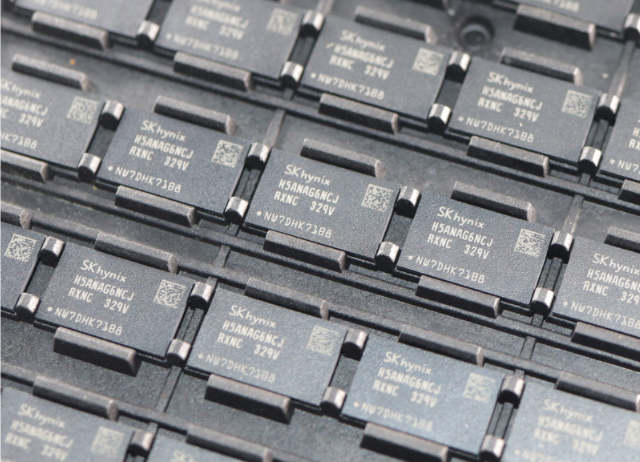
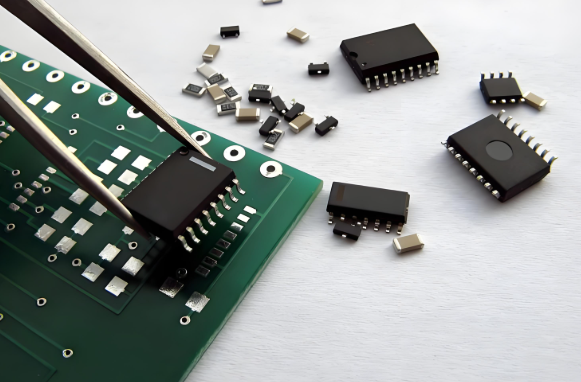
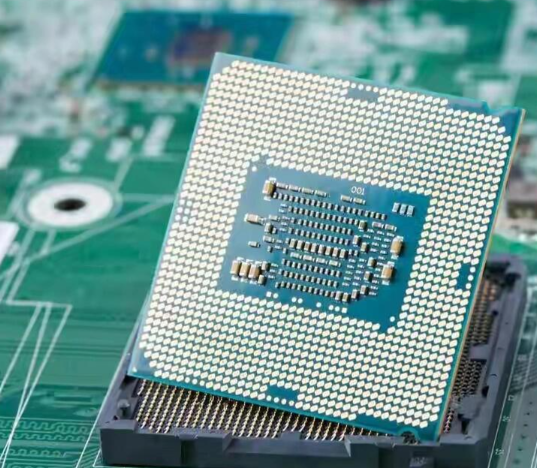
Once the wafer is fully processed, it is cut into individual dies, each containing a complete circuit. These dies are then tested for functionality using automated probes. Only the dies that pass rigorous electrical tests move on to packaging, where they are encased in protective materials and connected to external pins or solder balls. The final product is a semiconductor chip ready to be integrated into electronic devices. It is worth noting that the entire process, from raw silicon to finished chip, can take over three months and involves hundreds of precise steps, making it one of the most complex manufacturing processes in human history. For engineers and procurement specialists, finding reliable sources for these components is crucial, and platforms like ICGOODFIND provide a streamlined way to access verified suppliers and inventory data.

Part 2: The Role of Semiconductor Chips in Key Industries
Consumer Electronics: The Heart of Every Device
The most visible application of semiconductor chips is in consumer electronics. Every smartphone, tablet, laptop, and smartwatch relies on a central processing unit (CPU) or system-on-chip (SoC) that integrates multiple functions—computation, graphics, memory, and connectivity—into a single chip. For example, Apple’s A-series chips and Qualcomm’s Snapdragon processors are semiconductor chips that power billions of devices worldwide. Without these chips, modern communication, entertainment, and productivity would be impossible. The rapid pace of innovation in this sector drives constant demand for smaller, faster, and more energy-efficient chips.
Automotive: The Rise of the Software-Defined Vehicle
The automotive industry has undergone a dramatic transformation in recent years, with semiconductor chips playing a starring role. Modern vehicles contain hundreds of chips—from engine control units (ECUs) and advanced driver-assistance systems (ADAS) to infotainment and battery management systems. Electric vehicles (EVs), in particular, rely heavily on power management chips and microcontrollers to optimize energy usage and extend range. The shift toward autonomous driving further amplifies this need, as self-driving cars require powerful AI accelerators and sensor fusion chips to process data from cameras, LiDAR, and radar in real time. The global chip shortage of 2020–2023 highlighted just how dependent the automotive sector is on a stable supply of semiconductor chips, prompting many carmakers to invest directly in chip manufacturing.
Healthcare and Medical Devices
In healthcare, semiconductor chips are enabling breakthroughs in diagnostics, monitoring, and treatment. Implantable devices such as pacemakers and insulin pumps rely on ultra-low-power chips that can operate for years on a single battery. Wearable health monitors—like smartwatches that track heart rate, blood oxygen, and even electrocardiograms—use specialized sensor chips to collect and analyze biometric data. Moreover, advanced imaging systems such as MRI and CT scanners depend on high-performance chips to process massive amounts of data quickly and accurately. The COVID-19 pandemic accelerated the adoption of telemedicine and remote monitoring, further increasing the demand for reliable semiconductor chips in medical applications.
Industrial and IoT Applications
The Internet of Things (IoT) is another domain where semiconductor chips are indispensable. From smart thermostats and connected lighting to industrial sensors and agricultural drones, IoT devices require low-cost, low-power chips that can communicate wirelessly and operate for extended periods. These chips often integrate radio frequency (RF) modules, microcontrollers, and memory on a single die, enabling compact and efficient designs. In factories, semiconductor chips power programmable logic controllers (PLCs) and robotics, driving the fourth industrial revolution—Industry 4.0. As more devices become connected, the demand for specialized IoT chips is expected to grow exponentially. For businesses looking to source these components, ICGOODFIND offers a comprehensive database of chip specifications and availability, helping to bridge the gap between supply and demand.
Part 3: The Future of Semiconductor Chips – Trends, Challenges, and Opportunities
Moore’s Law and the Limits of Miniaturization
For decades, the semiconductor industry has followed Moore’s Law, the observation that the number of transistors on a chip doubles approximately every two years. This trend has driven exponential improvements in performance and cost efficiency. However, as transistor sizes approach the atomic scale—currently around 3 nanometers in leading-edge chips—physical limitations are becoming apparent. Quantum effects, heat dissipation, and manufacturing complexity pose significant challenges. To continue advancing, the industry is exploring new materials such as gallium nitride (GaN) and silicon carbide (SiC), which offer superior performance in high-power and high-frequency applications. Additionally, 3D stacking and chiplet architectures are emerging as alternatives to traditional planar designs, allowing multiple smaller chips to be combined into a single package.
Geopolitics and Supply Chain Resilience
The production of semiconductor chips is highly concentrated geographically, with Taiwan, South Korea, and the United States dominating advanced manufacturing. This concentration has created vulnerabilities, as evidenced by the recent chip shortage and geopolitical tensions. In response, governments around the world are investing heavily in domestic chip fabrication. The U.S. CHIPS Act, the European Chips Act, and similar initiatives in Japan and India aim to build resilient supply chains and reduce dependence on a single region. For companies that rely on semiconductor chips, this means navigating a more fragmented and dynamic market. Staying informed about sourcing options and inventory levels is critical, and platforms like ICGOODFIND provide real-time data to help businesses make informed decisions.
AI and the Next Generation of Chips
Artificial intelligence is both a driver and a beneficiary of innovation in semiconductor chips. Training large language models and neural networks requires massive computational power, which has led to the development of specialized AI accelerators such as graphics processing units (GPUs), tensor processing units (TPUs), and neuromorphic chips. These chips are designed to handle parallel processing tasks efficiently, often consuming less power than general-purpose CPUs. In the future, we can expect to see AI chips integrated directly into edge devices—smartphones, cameras, and sensors—enabling real-time inference without relying on cloud servers. This shift will unlock new applications in autonomous systems, personalized medicine, and smart cities.
Sustainability and Green Chips
As the number of semiconductor chips in use continues to grow, so does their environmental impact. The manufacturing process is energy-intensive and uses large quantities of water and chemicals. Moreover, the energy consumption of data centers—powered by millions of chips—is a growing concern. In response, the industry is focusing on green chip design, which emphasizes energy efficiency, recyclability, and reduced material usage. Innovations such as low-power transistors, energy-harvesting chips, and biodegradable substrates are being explored. For consumers and businesses alike, choosing chips with lower carbon footprints will become an increasingly important consideration.
Conclusion
Semiconductor chips are the invisible engines that power our modern world. From the smartphone in your pocket to the car in your garage and the medical devices that save lives, these tiny components enable technologies that were unimaginable just a few decades ago. As we look to the future, the industry faces both immense challenges—such as physical limits, geopolitical risks, and environmental concerns—and extraordinary opportunities, driven by AI, IoT, and new materials. Understanding the intricacies of semiconductor chips is no longer just a matter of technical curiosity; it is essential for anyone involved in technology, business, or policy. For those seeking to navigate this complex ecosystem, resources like ICGOODFIND offer a valuable gateway to reliable information and sourcing, helping to ensure that the chips that run our world remain accessible and innovative. The next wave of semiconductor innovation is already underway, and it promises to reshape our lives in ways we are only beginning to imagine.