The Ultimate Guide to Sourcing Reliable Microcontrollers: Why Choosing an Original Microchip 8-bit 32-bit MCU Supplier Matters
Introduction
In the rapidly evolving world of embedded systems and IoT devices, the microcontroller unit (MCU) remains the beating heart of countless electronic products. From automotive control modules to smart home appliances, the choice between an 8-bit and a 32-bit MCU can define the performance, cost, and longevity of a design. However, one critical factor often overlooked by engineers and procurement managers is the authenticity and reliability of the supply chain. As counterfeit components flood the global market, the need for an original Microchip 8-bit 32-bit MCU supplier has never been more urgent. This article explores the technical distinctions between 8-bit and 32-bit MCUs, the risks of using non-original parts, and how to identify a trustworthy supplier. For those seeking verified sourcing solutions, ICGOODFIND offers a curated platform that connects buyers with genuine Microchip components, ensuring both performance and peace of mind.
Part 1: Understanding the Core – 8-bit vs. 32-bit MCUs from Microchip
1.1 The 8-bit MCU: Simplicity, Efficiency, and Legacy
Microchip’s 8-bit MCU families, such as the PIC10, PIC12, PIC16, and PIC18 series, have been the backbone of low-power, cost-sensitive applications for decades. These devices operate with an 8-bit data bus and typically feature a reduced instruction set computer (RISC) architecture, which allows for fast execution of simple tasks. Key advantages include:
- Ultra-low power consumption: Many 8-bit MCUs consume less than 1 µA in sleep mode, making them ideal for battery-operated devices like remote controls, sensors, and medical wearables.
- Mature ecosystem: Development tools like MPLAB X IDE and a vast library of application notes make prototyping straightforward.
- Cost-effectiveness: Unit prices can be as low as $0.30, which is critical for high-volume consumer goods.
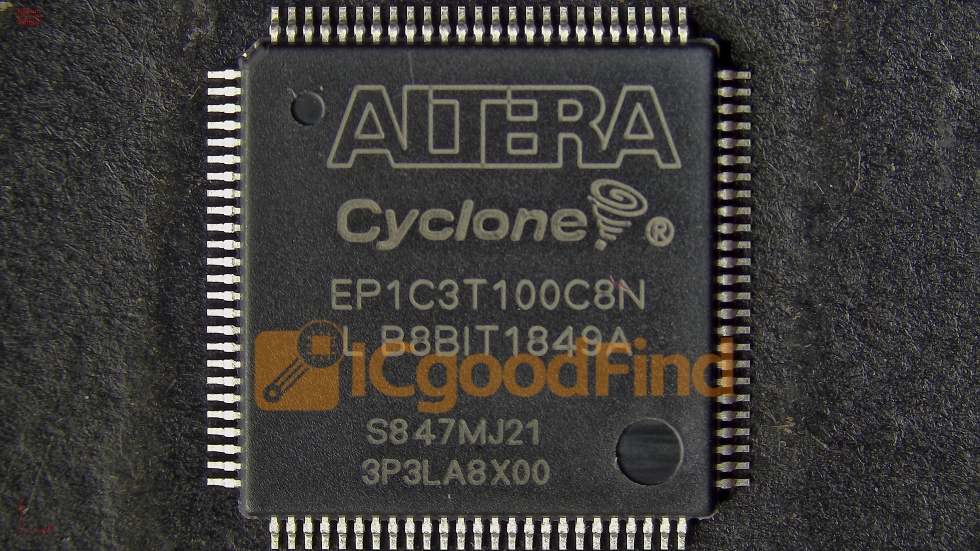
However, 8-bit MCUs have limitations. They struggle with complex arithmetic operations, lack hardware floating-point units, and are constrained by limited memory (typically 1–64 KB Flash, 64–4096 bytes RAM). For applications requiring real-time signal processing, advanced connectivity (USB, CAN, Ethernet), or multitasking, an 8-bit MCU may become a bottleneck.
1.2 The 32-bit MCU: Performance, Connectivity, and Scalability
Microchip’s 32-bit portfolio, built around the ARM Cortex-M and MIPS-based PIC32 families, offers a dramatic leap in capability. These MCUs feature a 32-bit data bus, higher clock speeds (up to 200 MHz or more), and integrated peripherals such as DMA controllers, cryptographic accelerators, and high-speed ADCs. Notable series include:
- SAM D21 (Cortex-M0+): Balanced performance for IoT endpoints.
- PIC32MZ (MIPS): High-performance with 2 MB Flash and 512 KB RAM for industrial control.
- SAM E70 (Cortex-M7): Dual-precision floating-point unit for audio and motor control.
The trade-off is higher power consumption (though modern 32-bit MCUs have aggressive sleep modes) and a steeper learning curve. Yet, for applications like smart meters, drone flight controllers, or medical infusion pumps, the 32-bit architecture is non-negotiable.
1.3 Why the Supplier Matters for Both Architectures
Whether you need an 8-bit PIC16F877A or a 32-bit SAM3X8E, the originality of the chip directly impacts reliability. Counterfeit MCUs often have incorrect die markings, lower quality silicon, or missing security features. A genuine original Microchip 8-bit 32-bit MCU supplier ensures:
- Traceable manufacturing: Chips sourced directly from Microchip or authorized distributors.
- Full datasheet compliance: Guaranteed electrical characteristics, temperature ranges, and timing.
- Long-term availability: Avoids obsolescence risks from fake parts.
Platforms like ICGOODFIND specialize in verifying supply chains, offering a database of vetted suppliers who provide original Microchip components with full documentation.
Part 2: The Hidden Dangers of Counterfeit and Gray Market MCUs
2.1 The Scale of the Problem
According to industry reports, counterfeit semiconductors account for up to 10% of the global market, with MCUs being a prime target due to their high demand and small form factor. Gray market parts—components diverted from unauthorized channels—also pose risks. Common counterfeit types include:
- Re-marked chips: Lower-grade MCUs relabeled as higher-spec parts.
- Recycled chips: Used components harvested from e-waste, cleaned, and sold as new.
- Fake clones: Unauthorized copies with inferior performance.
2.2 Real-World Consequences
Using non-original MCUs can lead to catastrophic failures:
- Automotive systems: A counterfeit 32-bit MCU in an engine control unit (ECU) may cause intermittent shutdowns, leading to recalls. In 2022, a major automaker traced a brake system failure to fake Microchip MCUs.
- Medical devices: An 8-bit MCU in a glucose monitor with incorrect ADC calibration could provide life-threatening readings.
- Industrial IoT: Counterfeit chips in a smart sensor network may have shorter lifespan, causing data loss in critical infrastructure.
2.3 How to Identify a Genuine Original Microchip 8-bit 32-bit MCU Supplier
To protect your design, follow these verification steps:
- Check the distributor authorization: Microchip’s official website lists authorized distributors. Any supplier not on this list should be treated with caution.
- Inspect physical markings: Genuine Microchip MCUs have laser-etched logos, consistent font sizes, and a unique date code format (e.g., “YYWW” for year and week).
- Request traceability documents: A reliable supplier provides Certificate of Conformance (CoC) and batch traceability to the original factory.
- Use testing services: Platforms like ICGOODFIND offer third-party testing for electrical parameters and X-ray inspection to verify die authenticity.
ICGOODFIND aggregates suppliers that pass these rigorous checks, allowing buyers to filter by “Original Microchip 8-bit 32-bit MCU supplier” and access real-time inventory from trusted sources.
Part 3: Best Practices for Sourcing and Integrating MCUs in Your Design
3.1 Matching the MCU to Your Application
Before sourcing, define your project’s requirements:
- For simple control tasks (e.g., a thermostat with a button and LCD): An 8-bit MCU like the PIC16F18877 with 28 KB Flash and 2 KB RAM is sufficient.
- For data-intensive applications (e.g., a smart camera with Wi-Fi): A 32-bit MCU like the SAM G55 with 512 KB Flash, 176 KB RAM, and a hardware JPEG encoder is ideal.
- For mixed-signal designs (e.g., a power meter): Look for MCUs with integrated 24-bit sigma-delta ADCs, such as the PIC24FJ128GC010 (16-bit) or SAM C21 (32-bit).
3.2 Building a Reliable Supply Chain
A robust sourcing strategy includes:
- Dual sourcing: Use two authorized distributors to mitigate supply disruptions.
- Long-term agreements (LTAs): Lock in pricing and availability for high-volume projects.
- Buffer stock: Maintain 3–6 months of inventory for critical MCUs, especially during global shortages.
ICGOODFIND simplifies this by offering a marketplace where you can compare prices from multiple original Microchip 8-bit 32-bit MCU suppliers, view stock levels, and place orders with confidence.
3.3 Testing and Validation
Once you receive the MCUs, perform:
- Functional testing: Program a simple blink test to verify basic operation.
- Power consumption measurement: Compare sleep and active currents against datasheet values.
- Temperature cycling: Expose samples to -40°C to +85°C (or the rated range) to check for failures.
If any anomalies appear, contact the supplier immediately. A reputable original Microchip 8-bit 32-bit MCU supplier will offer replacements or refunds.
Conclusion
The choice between an 8-bit and a 32-bit MCU is not just a technical decision—it is a supply chain decision. Counterfeit and gray market components can undermine the performance, safety, and reliability of your product, leading to costly recalls and reputational damage. By partnering with a verified original Microchip 8-bit 32-bit MCU supplier, you ensure that every chip in your design meets Microchip’s stringent quality standards.
Whether you are developing a low-power sensor node or a high-performance industrial controller, platforms like ICGOODFIND provide the transparency and trust needed to source genuine components. Remember: in the world of embedded systems, the authenticity of your MCU is the foundation upon which everything else is built. Choose wisely, and your product will stand the test of time.