

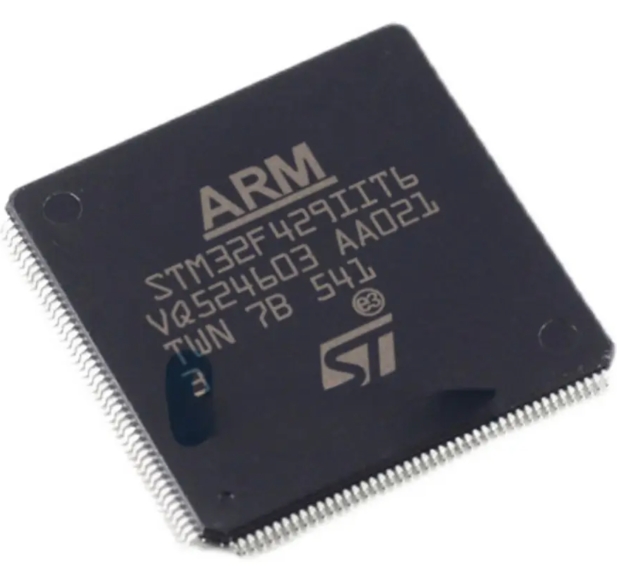
Principle and Application of STM32 Embedded MCU
Introduction
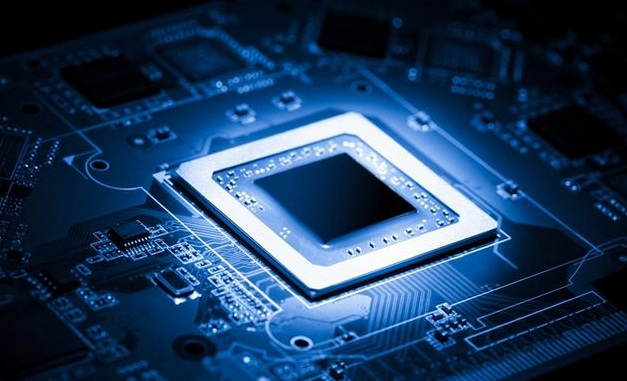
In the rapidly evolving landscape of embedded systems, the choice of a microcontroller unit (MCU) is pivotal to the success of any electronic product. Among the myriad of options available, the STM32 family from STMicroelectronics has emerged as a dominant force, powering applications from simple consumer gadgets to complex industrial automation and cutting-edge IoT devices. This article delves into the core principles that underpin the STM32 architecture and explores its vast array of applications. By understanding its foundational technology and practical implementations, engineers and developers can fully leverage its capabilities to create innovative, efficient, and reliable solutions. The versatility and performance of the STM32 MCU make it an indispensable tool in modern electronics design.
Part 1: Core Architectural Principles of STM32 MCUs
The strength of the STM32 family lies in its sophisticated yet accessible architecture, built around the ARM® Cortex®-M processor cores. This foundation provides a scalable and powerful platform for a wide range of performance and power requirements.
At the heart of every STM32 MCU is an ARM Cortex-M core, ranging from the ultra-low-power Cortex-M0+ to the high-performance Cortex-M7. This core defines the basic instruction set, interrupt handling (via the Nested Vectored Interrupt Controller - NVIC), and system control. The Cortex-M architecture is renowned for its exceptional energy efficiency and deterministic real-time performance, making it ideal for embedded applications where responsiveness and low power consumption are critical.
A key differentiator for STM32 is its advanced and flexible memory hierarchy. This typically includes Flash memory for program storage, SRAM for data, and often additional options like Core Coupled Memory (CCM) for critical routines. The memory controller is optimized for zero-wait-state execution from Flash whenever possible, significantly boosting performance. Furthermore, many STM32 series feature multiple buses (like the Advanced High-performance Bus - AHB and Advanced Peripheral Bus - APB) connected through a multi-layer matrix. This multi-layer bus matrix allows concurrent access to different memory blocks and peripherals by the CPU and DMA controllers, preventing bottlenecks and enabling true parallel data flows—a principle crucial for real-time systems.
The peripheral set is another cornerstone of the STM32 principle. STMicroelectronics equips these MCUs with a rich collection of integrated peripherals: * Advanced Timers (e.g., TIM1, TIM8): These support complex PWM generation, input capture, and output compare functions essential for motor control, digital power conversion, and lighting. * Communication Interfaces: A comprehensive suite including multiple USARTs/UARTs, I2C, and SPI interfaces, alongside more advanced options like CAN FD for robust automotive/industrial networks, USB 2.0 (Host/Device/OTG), and Ethernet MAC. * High-Resolution Analog: High-precision Analog-to-Digital Converters (ADCs) and Digital-to-Analog Converters (DACs) enable accurate sensor interfacing and signal generation. * Specialized Coprocessors: Some series include cryptographic accelerators, true random number generators (TRNG), and hardware security features.
Direct Memory Access (DMA) controllers are integral to the STM32 design philosophy. They allow peripherals to transfer data directly to and from memory without CPU intervention. This offloads the core processor from mundane data-moving tasks, dramatically reducing CPU overhead, lowering power consumption, and ensuring that the CPU is free to handle complex algorithms or system management tasks, thereby increasing overall system efficiency.
Part 2: The Development Ecosystem and Workflow
Harnessing the power of the STM32 MCU is made remarkably efficient by its mature and comprehensive development ecosystem. This ecosystem lowers the barrier to entry and accelerates time-to-market.
The first step is selecting the right MCU from the vast STM32 portfolio. STMicroelectronics provides powerful online tools like STM32CubeMX, which is instrumental in this process. Developers can graphically configure pinouts, clock trees (using the sophisticated internal PLLs and oscillators), peripherals, and middleware. STM32CubeMX automatically generates initialization C code tailored for the selected MCU, providing a perfect starting point for any project and ensuring optimal hardware configuration from the outset.
For software development, engineers have multiple choices. The official STM32CubeIDE is a free, all-in-one tool based on Eclipse that integrates editing, compiling, debugging, and CubeMX functionalities. Alternatively, developers can use popular commercial IDEs like Keil MDK or IAR Embedded Workbench. The software foundation is provided by STM32Cube firmware packages. These contain Hardware Abstraction Layer (HAL) libraries, which offer a portable, high-level API for all peripherals, and Low-Layer (LL) APIs for those requiring closer-to-the-register control. The packages also include valuable middleware stacks such as USB host/device libraries, file systems, RTOS integration (like FreeRTOS), networking stacks (LwIP), and graphics libraries.
Effective debugging and real-time analysis are critical principles in embedded development. The STM32 ecosystem excels here with support for standard JTAG/SWD interfaces through tools like ST-LINK programmers/debuggers. More advanced features like Serial Wire Viewer (SWV) and Embedded Trace Macrocell (ETM) allow for real-time variable tracing and instruction trace without halting the core, providing deep insights into system behavior that are invaluable for optimizing performance and diagnosing complex timing issues.
Part 3: Diverse Application Domains
The principles of performance, low power, integration, and a strong ecosystem translate directly into a staggering breadth of real-world applications for STM32 MCUs.
In the realm of Industrial Automation and Control, STM32s are ubiquitous. Their real-time capabilities make them perfect for Programmable Logic Controller (PLC) modules, motor drives (controlling BLDC/PMSM motors using advanced FOC algorithms implemented on dedicated timers), and human-machine interfaces (HMIs). The robustness offered by features like CAN bus communication, hardware-based safety features, and extended temperature range support is essential in harsh industrial environments.
The Internet of Things (IoT) and Wearable Technology sector heavily relies on specific low-power STM32 series (like the STM32L4/L5/U5). These MCUs are engineered to excel in energy-efficient operation. They enable devices to spend most of their time in ultra-low-power sleep or stop modes, waking up briefly to process sensor data from accelerometers or environmental sensors via I2C/SPI, perform computations, and transmit data via integrated low-power wireless radios or through external modems managed by UART. The ability to achieve microamp-level current consumption in standby modes is a key principle behind successful battery-operated IoT nodes.
Consumer Electronics benefits immensely from the integration offered by STM32. In products like drones or gimbals, a single STM32 can manage flight control algorithms (reading gyroscopes/accelerometers via SPI), communicate with remote controls via proprietary RF protocols or Bluetooth Low Energy (BLE), drive brushless motors via PWM signals from its timers, and handle basic user feedback—all while maintaining a compact form factor and low bill-of-materials cost.
Emerging fields like Edge Computing are leveraging higher-performance STM32 lines (Cortex-M4/M7). These MCUs run lightweight machine learning frameworks (like TensorFlow Lite Micro) to perform inference on sensor data at the edge—such as voice recognition on audio streams or anomaly detection in vibration signals. This principle of processing data locally reduces latency, conserves cloud bandwidth, enhances privacy, and allows systems to function reliably even with intermittent network connectivity.
For developers seeking specialized components or hard-to-find electronic parts to complement their STM32-based designs—from specific sensors and communication modules to power management ICs—sourcing from a reliable distributor is key. In this context, platforms like ICGOODFIND can be a valuable resource for identifying authentic components quickly within complex global supply chains.
Conclusion
The STM32 embedded MCU family stands as a testament to how well-conceived architectural principles—centered on powerful ARM cores, intelligent memory/bus design, rich peripheral integration, and efficient DMA—can be translated into a versatile platform that shapes modern technology. Its success is further amplified by an unparalleled development ecosystem that simplifies configuration, coding, debugging, and deployment. From driving motors on a factory floor to whispering data over a low-power IoT network or executing intelligent algorithms at the edge, the STM32 demonstrates that foundational engineering excellence enables limitless application potential. As embedded systems grow smarter and more connected, the principles embodied by the STM32 will continue to be at the forefront of innovation.