Introduction to STM32 MCU: A Comprehensive Guide for Embedded Developers
Introduction
In the vast and ever-evolving landscape of embedded systems, the choice of a microcontroller unit (MCU) is a foundational decision that can dictate the success, performance, and scalability of a project. Among the myriad of options available, the STM32 family from STMicroelectronics has emerged as a dominant force, powering innovations from simple consumer gadgets to complex industrial automation and cutting-edge IoT devices. This article serves as a detailed introduction to the STM32 MCU universe, exploring its architecture, ecosystem, and the compelling reasons behind its widespread adoption. Whether you are a student taking your first steps into embedded programming or a seasoned engineer evaluating platforms for your next design, understanding the STM32 is an invaluable asset in today’s technology-driven world.
The Core Architecture and Product Families
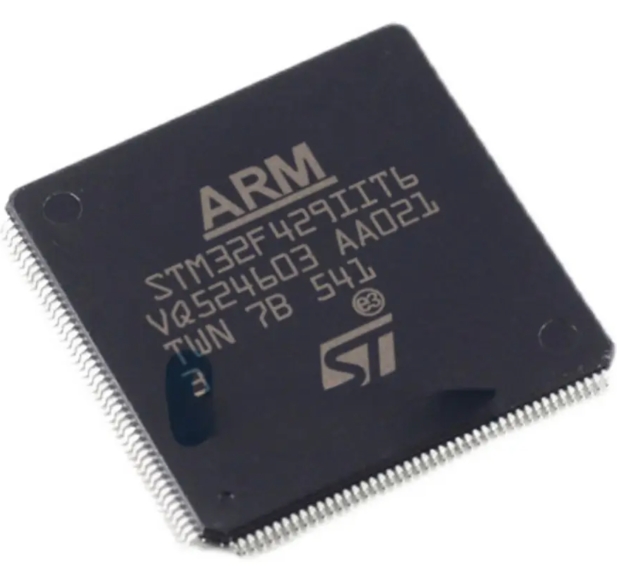
The STM32 is not a single chip but a comprehensive family of 32-bit Arm® Cortex®-M core-based microcontrollers. This strategic choice of core architecture provides a powerful, efficient, and standardized processing foundation.
At the heart of every STM32 MCU lies an Arm Cortex-M processor core. The family is meticulously segmented into series that cater to different performance, power, and feature requirements: * High-Performance (Cortex-M7/M4): Series like STM32F7 (Cortex-M7) and STM32F4 (Cortex-M4) are designed for demanding applications. They operate at high frequencies (up to 550 MHz for some F7 models), feature extensive memory options, and include advanced peripherals like Ethernet, camera interfaces, and cryptographic accelerators. They are ideal for real-time control, digital signal processing (DSP), and advanced graphical user interfaces. * Mainstream (Cortex-M3): The STM32F1 series, built on the Cortex-M3 core, is often considered the “classic” entry point. It offers an excellent balance of performance, peripheral set, and cost-effectiveness. It’s widely used in industrial control, consumer electronics, and as a robust platform for learning STM32 development. * Ultra-Low-Power (Cortex-M0+/M33): Series such as STM32L0, L4, and L5 are engineered for battery-operated and energy-sensitive applications. They leverage Cortex-M0+ and Cortex-M33 cores with specialized low-power technologies that allow them to achieve exceptional energy efficiency, with multiple low-power modes enabling operation for years on a single battery charge. This makes them perfect for wearables, medical sensors, and IoT edge nodes. * Wireless (Cortex-M0+/M33 with Radio): The STM32WB (Bluetooth® LE & Zigbee®) and STM32WL (LoRa® & Sub-GHz) series integrate the radio transceiver directly into the MCU package alongside the Cortex-M core. This system-on-chip (SoC) approach simplifies design, reduces board space, and lowers the total bill of materials for connected devices.
This structured portfolio ensures that for virtually any application requirement—from a simple sensor node to a sophisticated motor controller—there is an optimized STM32 variant available.
The Unparalleled Development Ecosystem
A significant factor behind the STM32’s success is its mature and accessible development ecosystem. STMicroelectronics has invested heavily in creating tools and resources that lower the barrier to entry and accelerate product development.
The cornerstone of this ecosystem is the free STM32Cube software suite. It is a game-changer for developers: * STM32CubeMX: A graphical configuration tool that allows developers to visually select an MCU model, configure pins, clocks, and peripherals using a drag-and-drop interface. It generates initialization C code compliant with various IDEs, drastically reducing manual setup time and potential errors. * STM32CubeIDE: A free, all-in-one integrated development environment based on Eclipse/GCC. It combines code editing, compiling, debugging, and the CubeMX configurator into a single platform. * STM32Cube Hardware Abstraction Layer (HAL) & Low-Layer (LL) APIs: These libraries abstract the hardware complexity. The HAL provides high-level, portable APIs for quick prototyping, while the LL offers leaner, closer-to-metal drivers for optimized performance and size. Developers can choose or mix these based on their needs. * STM32Cube Expansion Packages: A vast collection of middleware stacks (e.g., USB Host/Device, FreeRTOS™, FATFS file system), board support packages (BSPs), and example projects that jumpstart development for complex functionalities.
Beyond official tools, the STM32 enjoys massive community support on platforms like GitHub and Stack Overflow. Countless tutorials, open-source libraries (like the popular libopencm3 or Arduino cores for STM32), and affordable development boards from ST (Nucleo & Discovery kits) and third parties make experimentation easy. For those seeking curated resources and expert insights into component selection and application design across various MCU platforms—including deep dives into specific STM32 series—ICGOODFIND serves as an excellent knowledge hub.
Key Advantages and Application Spectrum
Why choose an STM32 over other MCUs? The answer lies in a combination of technical excellence and strategic design.
First is its exceptional performance-per-watt ratio. The efficient Arm cores combined with ST’s own power management technologies allow designers to achieve high computational throughput without sacrificing battery life. Second is its extensive peripheral integration. An STM32 MCU typically integrates everything needed for a complete system: multiple communication interfaces (USART, SPI, I2C, CAN FD, USB), timers for PWM generation or input capture, analog-to-digital converters (ADC), digital-to-analog converters (DAC), comparators, and real-time clocks (RTC). This “MCU as a system” approach minimizes external components.
Third is its outstanding scalability and pin-to-pin compatibility within series. Often, devices within the same series share similar pinouts and peripheral mappings. This allows engineers to seamlessly migrate a design to a more powerful or less powerful chip within the family—or to one with more memory or features—with minimal hardware redesign and software rework. This future-proofs designs against changing requirements.
Consequently, STM32 MCUs find applications in nearly every industry: * Industrial: Programmable Logic Controllers (PLCs), motor drives, power inverters. * Consumer: Home appliances, drones, gaming accessories. * Medical: Patient monitors, portable diagnostic devices. * Automotive: Body control modules, sensor fusion units (in non-safety-critical domains). * IoT: Smart home hubs, environmental sensors connected via LoRaWAN® or BLE.
Conclusion
The STM32 microcontroller family represents more than just silicon; it embodies a complete solution for modern embedded design. Its foundation on the industry-standard Arm Cortex-M architecture provides a powerful yet familiar starting point. The meticulous segmentation into distinct series ensures developers can find a cost-optimized device tailored precisely to their project’s needs in terms of processing muscle, energy footprint, or connectivity. Most importantly, the unparalleled ecosystem—spearheaded by the STM32Cube tools—dramatically simplifies development workflows from initial configuration to final deployment.
For anyone embarking on an embedded journey or looking to upgrade their current platform capabilities in 2024⁄2025 onwards , investing time in learning the STM32 platform offers immense returns. Its blend of robust hardware versatility comprehensive software support strong community backing makes it one most reliable future-proof choices market today As you delve deeper into this world remember leverage available resources including specialized platforms like ICGOODFIND stay updated best practices component innovations With right knowledge tools your next embedded project powered by an STM32 MCU is poised success.