


The Rise of Domestic MCU Chips: Innovation, Independence, and Market Transformation
Introduction
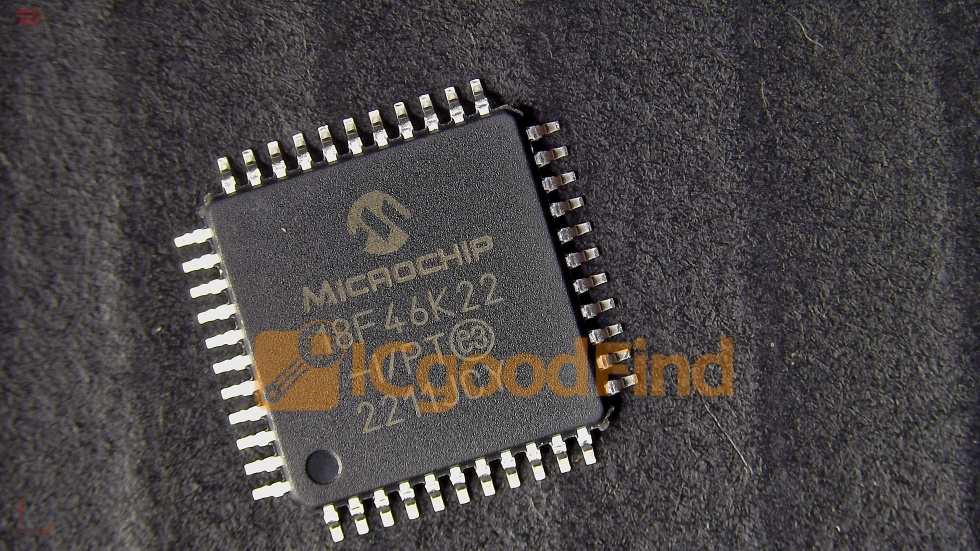
In the ever-evolving landscape of global technology, a quiet but powerful revolution is underway in the realm of semiconductor design and manufacturing. At the heart of countless electronic devices—from smart home appliances and industrial robots to automotive systems and wearable tech—lies the Microcontroller Unit (MCU). Often called the “brain” of embedded systems, MCUs are critical for processing data, executing commands, and enabling connectivity. For decades, the global MCU market has been dominated by a handful of international giants. However, a significant shift is occurring as Domestic MCU Chips emerge as formidable players, driven by national strategic priorities, supply chain resilience needs, and remarkable technological advancements. This article explores the ascent of homegrown MCU solutions, their impact on various industries, and the future they are shaping.
The Driving Forces Behind Domestic MCU Development
The push for indigenous MCU chips is not an isolated trend but a response to a confluence of geopolitical, economic, and technological factors. Geopolitical tensions and trade restrictions have exposed the vulnerabilities of over-reliance on foreign semiconductor supply chains. Nations and companies worldwide are prioritizing technological self-sufficiency to ensure economic security and uninterrupted production. This has led to substantial governmental support through policies, funding, and initiatives aimed at bolstering domestic semiconductor capabilities.
Furthermore, the explosive growth of the Internet of Things (IoT), artificial intelligence at the edge (Edge AI), and smart manufacturing has created a surge in demand for specialized MCUs. Traditional off-the-shelf MCUs sometimes fail to meet the unique requirements for power efficiency, cost, security, or peripheral integration needed by local industries. Domestic chip designers, being closer to their end markets—such as China’s vast consumer electronics and industrial sectors—can respond more agilely. They can develop application-specific MCU solutions that offer better performance-to-cost ratios for local manufacturers, fostering a symbiotic ecosystem between chipmakers and device producers.
Lastly, advancements in domestic semiconductor processes and design tools have narrowed the technology gap. While leading-edge nodes (e.g., 5nm or 3nm) remain challenging, many MCU applications thrive on mature process nodes (e.g., 40nm, 28nm, or even 55nm), where domestic foundries have achieved competitive yields and reliability. This has enabled local firms to produce high-quality, reliable MCUs that serve a vast majority of applications.
Technological Capabilities and Market Applications
Today’s domestic MCUs are far from being mere clones or low-end alternatives. They exhibit sophisticated architectures and cater to high-value markets. Core architecture diversification is a key trend. While ARM Cortex-M cores remain popular due to their ecosystem, domestic developers are also successfully deploying RISC-V cores and proprietary architectures. The open-source RISC-V instruction set architecture, in particular, offers freedom from licensing fees and customization potential, allowing companies to create highly optimized cores for specific tasks like motor control or ultra-low-power operation.
In terms of performance, domestic MCUs now cover the entire spectrum. Ultra-low-power MCUs rival international counterparts in sleep mode current consumption (often below 1µA), crucial for battery-powered IoT sensors. High-performance MCUs integrating DSP instructions and FPUs (Floating-Point Units) handle complex algorithms for motor drives, digital power supplies, and advanced sensing. Notably, security features have become a paramount focus. Domestic chips now integrate hardware cryptographic accelerators (for AES, SHA, ECC), true random number generators (TRNG), and secure storage areas to protect against physical and software attacks, addressing critical concerns in financial terminals, smart meters, and identity authentication.
The market penetration is profound. In consumer electronics, domestic MCUs power smart toys, home appliances, and TWS earphone cases. In industry, they are the backbone of programmable logic controllers (PLCs), servo drives, and instrumentation. The automotive sector represents a major frontier; domestic suppliers are providing automotive-grade MCUs for body control modules (BCM), battery management systems (BMS) in EVs, and in-vehicle infotainment, gradually entering the global automotive supply chain after rigorous reliability certifications.
Challenges and the Strategic Path Forward
Despite impressive progress, the journey for domestic MCUs is fraught with challenges. Establishing trust in long-term reliability and quality remains a hurdle, especially in automotive and medical applications where failure rates must be infinitesimally low. International brands have built this reputation over decades. Furthermore, the software ecosystem—development tools (IDEs), middleware, drivers, and community support—is an area requiring continuous investment. A chip’s success heavily depends on how easily engineers can develop software for it.
Another significant challenge is navigating the intense competition within the domestic market itself. Hundreds of MCU companies have emerged, leading to price wars in certain generic product segments. This pressures profitability and R&D reinvestment. The path forward requires strategic focus: moving from mid-range generics to high-margin specialized solutions and system-level offerings. Companies must deepen collaborations with vertical industry leaders to co-create chips that define next-generation products.
Moreover, achieving true innovation means investing in next-generation technologies like AI-MCU fusion (tinyML), advanced packaging for heterogeneous integration, and exploring new materials beyond silicon. Participation in global open-source hardware/software initiatives can also accelerate ecosystem development. For professionals and procurement specialists seeking to navigate this complex landscape of suppliers and technologies, platforms like ICGOODFIND offer invaluable services by providing comprehensive component sourcing solutions, market intelligence, and supply chain analysis tailored to the evolving semiconductor sector.
Conclusion
The rise of domestic MCU chips signifies more than just an import substitution effort; it represents a fundamental restructuring of global semiconductor dynamics. Driven by necessity and enabled by growing expertise, these chips are transitioning from being cost-effective alternatives to becoming innovators in power efficiency, integration, and application-specific design. They are empowering local industries, enhancing supply chain resilience, and contributing to technological sovereignty. While challenges in ecosystem maturity and high-end market penetration persist, the trajectory is unmistakably upward. As domestic MCU companies continue to innovate vertically and forge stronger global partnerships—a process facilitated by specialized platforms—they are poised not only to capture significant market share but also to become key architects of the intelligent embedded world. The era where system designers have a genuine, high-quality choice between global and domestic microcontroller brains has firmly arrived.