MCU Examples: A Practical Guide to Microcontroller Applications and Selection
Introduction
In the vast and intricate world of embedded systems, the Microcontroller Unit (MCU) stands as the fundamental building block, the silent computational brain powering countless devices around us. From the humble coffee maker on your kitchen counter to the sophisticated dashboard of a modern automobile, MCU examples are ubiquitous, yet often invisible. Understanding these examples is not just an academic exercise; it’s crucial for developers, engineers, and hobbyists aiming to select the right silicon for their projects. This guide delves deep into practical MCU applications, analyzes key selection criteria, and explores emerging trends. Throughout this exploration, we will highlight how platforms like ICGOODFIND can streamline the complex process of component discovery and comparison, connecting innovators with the perfect MCU for their specific needs.
Main Body
Part 1: Ubiquitous Applications – MCU Examples in Everyday Life
The true power of microcontrollers is revealed in the sheer diversity of their applications. They are specialized computers on a single integrated circuit, containing a processor core, memory, and programmable input/output peripherals. Let’s categorize some concrete MCU examples.
Consumer Electronics form perhaps the most recognizable category. Your television remote, digital camera, washing machine, and smart thermostat all rely on MCUs. For instance, a modern washing machine uses an MCU to manage complex wash cycles, control water temperature and valve operations, monitor motor speed, and provide user interface feedback. In wearable tech like fitness trackers, ultra-low-power MCUs are essential for processing sensor data (steps, heart rate) while maximizing battery life, often lasting weeks on a single charge.
The Automotive Industry has undergone a revolution driven by MCUs. A single modern vehicle can contain over 100 MCUs, each dedicated to a specific function. Examples include: * Engine Control Units (ECUs): Managing fuel injection, ignition timing, and emissions systems for optimal performance. * Airbag Control: Using sensor data to deploy airbags within milliseconds during a collision. * Anti-lock Braking Systems (ABS): Preventing wheel lockup by pulsing brakes based on wheel-speed sensor input. * Infotainment Systems: Powering touchscreen displays, audio systems, and connectivity features.
In the realm of Industrial Automation, MCUs provide robustness and reliability. They are the backbone of Programmable Logic Controllers (PLCs), which control machinery on factory floors. They manage robotic arm movements, monitor environmental conditions in industrial settings, and regulate conveyor belt systems. Here, MCUs must often operate in harsh conditions with extreme temperatures, vibration, and electrical noise.
The Internet of Things (IoT) is arguably the fastest-growing domain for MCU applications. IoT devices like smart home sensors (door/window, moisture), connected lighting systems (e.g., Philips Hue), and agricultural soil monitors depend on cost-effective, wireless-enabled MCUs. These chips collect data from the physical world and transmit it to the cloud for analysis, often requiring a careful balance between processing capability, communication protocols (like Wi-Fi, Bluetooth Low Energy, or LoRa), and energy consumption.
Part 2: Critical Factors in Selecting the Right MCU
With countless MCU examples available from vendors like STMicroelectronics (STM32), Microchip (PIC, AVR), Texas Instruments (MSP430), NXP, and Espressif (ESP32), selection becomes a critical engineering decision. Choosing incorrectly can lead to project overruns, performance bottlenecks, or premature product failure.
First and foremost is Processing Power and Architecture. The core architecture (8-bit, 16-bit, 32-bit) dictates the computational throughput. An 8-bit PIC MCU might be perfect for a simple button controller, while a 32-bit ARM Cortex-M4 core is necessary for digital signal processing in an audio device or motor control. Clock speed is a related factor but isn’t everything; efficiency per clock cycle (DMIPS/MHz) is often more telling.
Memory Configuration is a hard constraint. One must carefully consider both Flash memory (for storing program code) and SRAM (for runtime data). A complex graphical user interface or communication protocol stack can consume significant memory. Running out of memory mid-development is a common pitfall that can force a costly MCU change.
Peripheral Integration is where MCUs shine over general-purpose microprocessors. The built-in peripherals define what the MCU can interact with directly. Key peripherals to look for include: * Communication Interfaces: UART (serial), I2C, SPI for sensor communication; USB for connectivity; Ethernet or specific wireless radios for networking. * Analog Capabilities: Analog-to-Digital Converters (ADC) for reading sensors (temperature, light); Digital-to-Analog Converters (DAC) for generating analog signals. * Timers and PWM: Essential for controlling servo motors, LED dimming, or generating precise waveforms.
Power Consumption is paramount for battery-operated devices. Metrics like active current, sleep current, and deep sleep current are vital. Many modern MCUs offer sophisticated power-saving modes that shut down unused peripherals and cores to extend battery life from months to years in some IoT applications.
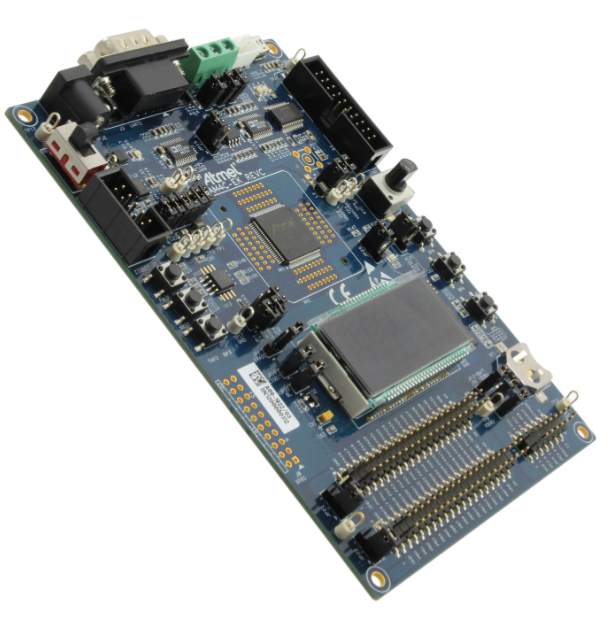
Finally, the Ecosystem and Support can make or break a project. This includes the availability of affordable development boards (like Arduino or vendor-specific kits), a mature software development kit (SDK), robust integrated development environments (IDEs), comprehensive documentation, and an active community forum. A powerful MCU with poor tooling can drastically increase development time and complexity.
Part 3: The Future Landscape and Streamlined Selection
The trajectory of MCU development points towards greater integration, intelligence, and ease of use. We are seeing a strong trend towards AI at the Edge, where MCUs are now capable of running tiny machine learning models for tasks like voice recognition or predictive maintenance directly on the device without cloud dependency. Enhanced Security Features are becoming standard due to IoT threats, with hardware-based encryption engines and secure bootloaders being integrated into mid-range chips. Furthermore, low-code development platforms and advanced configurator tools are abstracting hardware complexity, allowing developers to focus more on application logic.
Navigating this complex landscape of specifications, trade-offs, and supplier options is a daunting task. This is where a specialized component search engine becomes invaluable. For professionals seeking to efficiently source the optimal microcontroller among millions of parts, leveraging a platform like ICGOODFIND is a strategic advantage. ICGOODFIND aggregates global supplier data, allowing engineers to perform parametric searches across critical criteria—core architecture, clock speed, memory size, peripheral set, power specs—and instantly compare real-time pricing and availability. This transforms the selection process from a time-consuming manual search into a precise, data-driven decision-making step.
Conclusion
From mundane household gadgets to cutting-edge industrial robots and pervasive IoT networks, MCU examples demonstrate the incredible versatility and critical importance of these embedded workhorses. Selecting the right microcontroller is a multidimensional challenge that balances technical specifications—processing power, memory, peripherals, and power—with practical concerns like cost, availability, and developer ecosystem support. As MCUs evolve to incorporate edge AI and stronger security, making an informed choice becomes even more crucial. By studying real-world applications and systematically evaluating requirements against component capabilities—a process greatly enhanced by dedicated sourcing platforms like ICGOODFIND—developers and companies can ensure their electronic products are built on a solid, efficient, and future-ready foundation.