MT41J128M16JT-125:K: A Comprehensive Guide to This High-Performance DDR3 SDRAM Component
Introduction
In the world of embedded systems, industrial computing, and high-performance networking equipment, memory components play a pivotal role in determining overall system reliability and speed. Among the many DRAM options available, the MT41J128M16JT-125:K stands out as a widely used DDR3 SDRAM chip manufactured by Micron Technology. This component is particularly valued for its 2Gb density, 16-bit data width, and 1.25ns speed grade, making it suitable for applications that demand both bandwidth and stability. Whether you are designing a new PCB, repairing legacy hardware, or sourcing components for mass production, understanding the technical nuances of the MT41J128M16JT-125:K is essential. This article provides an in-depth look at its specifications, typical applications, and sourcing considerations, while also highlighting how platforms like ICGOODFIND can simplify the procurement process for hard-to-find electronic parts.
Main Body

Part 1: Technical Specifications and Architecture
The MT41J128M16JT-125:K is a 2 Gigabit (2Gb) DDR3 SDRAM organized as 128 Meg x 16 bits. The “-125” suffix indicates a speed grade of 1.25 ns (corresponding to DDR3-1600 or 1600 MT/s data rate), while the “:K” typically denotes a specific revision or package variant (often a 96-ball FBGA package). Key technical parameters include:
- Supply Voltage: 1.5V ± 0.075V (standard DDR3), with support for 1.35V (DDR3L) in some compatible variants.
- Data Width: 16 bits per channel, allowing for efficient memory bus design in space-constrained systems.
- Banks: 8 internal banks for improved concurrency and reduced access latency.
- Refresh: Auto-refresh and self-refresh modes, with operating temperature range of 0°C to +95°C (commercial) or -40°C to +95°C (industrial).
- Timing: CL (CAS Latency) of 11 at 1600 MT/s, with tRCD and tRP typically 13.75 ns each.
The MT41J128M16JT-125:K uses a fly-by topology for address/command signals, which helps maintain signal integrity in high-speed designs. Its ODT (On-Die Termination) and ZQ calibration features further enhance signal quality, making it a favorite among engineers working on FPGA-based systems, network processors, and industrial single-board computers. Unlike consumer-grade DRAM, this component is designed for long-term availability and harsh environments, which explains its continued demand even as DDR4 and DDR5 dominate newer designs.
Part 2: Common Applications and Design Considerations
Due to its balance of density, speed, and reliability, the MT41J128M16JT-125:K appears in a wide array of professional and industrial products. Typical applications include:
- Embedded computing modules (e.g., COM Express, SMARC) where 2Gb per chip allows flexible memory population.
- Network routers and switches that require low-latency packet buffering.
- Medical imaging devices and test & measurement equipment that demand consistent performance over years of service.
- Automotive infotainment and ADAS prototypes, especially in industrial-temperature variants.
When designing with this chip, engineers must pay close attention to PCB stack-up, trace length matching, and decoupling capacitor placement. Because the MT41J128M16JT-125:K operates at 1600 MT/s, impedance control (typically 40–50 Ω) and reference clock jitter are critical. Additionally, power sequencing must follow Micron’s guidelines: VDD and VDDQ should ramp together, while VREF must track VDDQ/2. Failure to do so can cause latch-up or unreliable initialization.
Another consideration is thermal management. Although the chip’s power consumption is modest (around 1.5W under heavy load), dense arrays of multiple MT41J128M16JT-125:K chips can generate significant heat. Adequate airflow or thermal vias are recommended. Finally, because this is a legacy DDR3 component, designers should verify FPGA or CPU memory controller compatibility—many modern SoCs have dropped DDR3 support in favor of LPDDR4 or DDR4.
Part 3: Sourcing, Availability, and the Role of ICGOODFIND
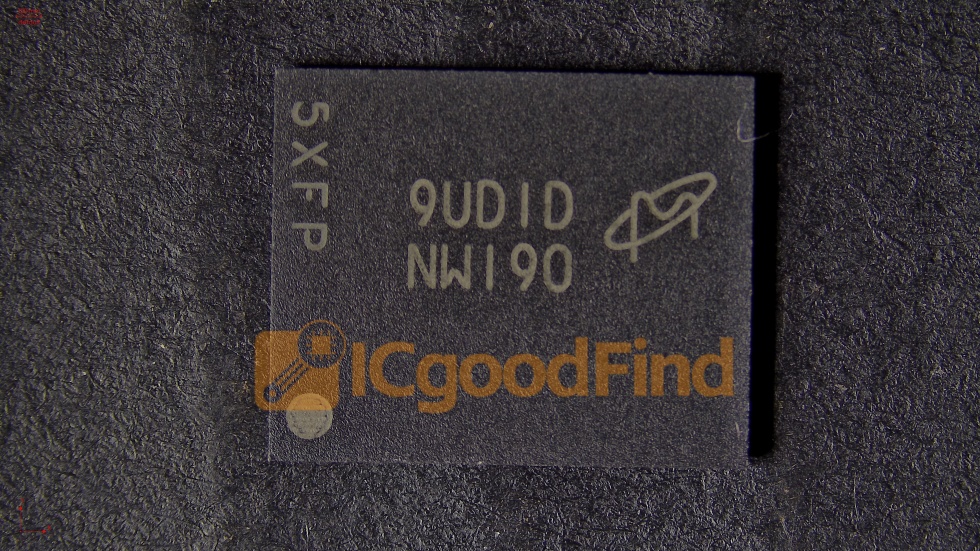
One of the biggest challenges with the MT41J128M16JT-125:K is procurement. As Micron has transitioned many fabs to newer memory technologies, DDR3 production has slowed, leading to allocation, long lead times, and price volatility. Counterfeiting is also a real risk: low-quality or recycled chips marked as MT41J128M16JT-125:K can cause intermittent failures, data corruption, or premature death in the field.
To mitigate these risks, professional buyers and engineers increasingly turn to specialized electronic component search engines. ICGOODFIND is one such platform that aggregates inventory from authorized distributors, independent stocking houses, and excess inventory suppliers worldwide. By using ICGOODFIND, you can:
- Compare real-time stock and pricing across multiple vendors for the MT41J128M16JT-125:K.
- Verify supplier ratings and traceability to avoid counterfeit parts.
- Access datasheets, PCNs (Product Change Notifications), and cross-references in one place.
- Request quotes for hard-to-find or obsolete memory ICs quickly.
For a component like the MT41J128M16JT-125:K, which may be in short supply, ICGOODFIND reduces the time spent manually calling distributors. It also helps you identify alternatives or drop-in replacements (e.g., other 2Gb x16 DDR3 chips with the same speed grade) when the exact part is unavailable. In essence, ICGOODFIND acts as a centralized intelligence layer for electronic component sourcing, making it an invaluable tool for anyone working with legacy DRAM.
Conclusion

The MT41J128M16JT-125:K remains a cornerstone DDR3 SDRAM component for industrial, networking, and embedded applications that prioritize reliability over bleeding-edge speed. Its 2Gb density, 16-bit interface, and 1600 MT/s data rate offer a sweet spot for many designs that cannot or will not migrate to DDR4. However, successful use of this chip requires careful attention to signal integrity, power sequencing, and thermal design. Equally important is sourcing from trustworthy channels—where platforms like ICGOODFIND provide transparency, comparison, and verification. As long as legacy systems remain in service, the MT41J128M16JT-125:K will continue to be a sought-after part, and knowing how to specify, design, and procure it effectively will save engineers and buyers both time and money.