TPS61040DBVR: The Compact Boost Converter Powering Modern Portable Electronics
Introduction
In the fast-evolving world of power management ICs, few components strike the perfect balance between size, efficiency, and versatility like the TPS61040DBVR. Manufactured by Texas Instruments, this SOT-23-5 packaged boost converter has become a go-to solution for designers working on battery-powered devices, LED drivers, and compact sensor modules. While many converters require bulky external components, the TPS61040DBVR operates at a fixed 1-MHz switching frequency, allowing for tiny inductors and capacitors—making it ideal for space-constrained applications. In this article, we will explore the technical architecture, practical design considerations, and real-world use cases of this remarkable chip, while also highlighting how sourcing components like the TPS61040DBVR through platforms like ICGOODFIND can streamline your procurement process.
Body
Part 1: Technical Deep Dive – What Makes the TPS61040DBVR Special?
The TPS61040DBVR is a high-frequency, PWM-controlled boost (step-up) converter designed to deliver an output voltage up to 28V from a low input supply ranging from 1.8V to 6V. This wide input range makes it exceptionally flexible for systems powered by single-cell Li-Ion batteries, alkaline cells, or even 3.3V logic rails.

Key electrical characteristics include:
- Output voltage range: Adjustable from 1.8V to 28V via an external resistor divider.
- Peak switch current limit: 400mA (typical), which is sufficient for low-power loads like OLED bias supplies, CCD sensors, or white LED backlights.
- Efficiency: Up to 87% under typical conditions, thanks to its low ( R_{DS(on)} ) internal MOSFET and synchronous rectification (in the boost topology, it uses a Schottky diode externally, but the control scheme minimizes switching losses).
- Shutdown current: Less than 1µA, enabling long standby times in battery-operated gadgets.
One of the most underrated features is its internal compensation network. Unlike many boost converters that require external RC networks to stabilize the loop, the TPS61040DBVR integrates compensation, reducing the BOM count and simplifying PCB layout. The 1-MHz fixed frequency also keeps noise out of the AM radio band and allows the use of a 2.2µH to 10µH inductor, which is significantly smaller than what lower-frequency converters demand.
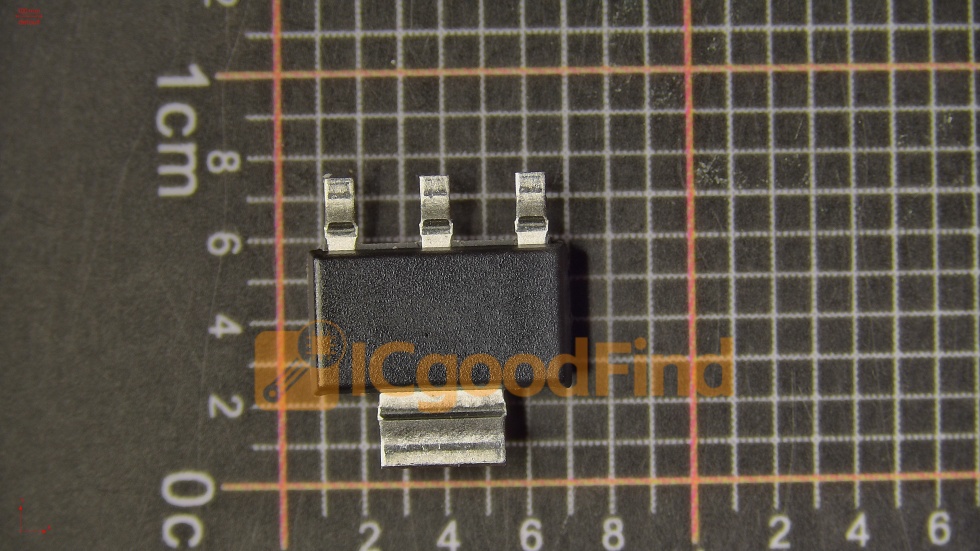
For designers, the SOT-23-5 (DBV) package is a blessing. It occupies less than 3mm² of board area, making it perfect for wearables, earbuds, and medical patches. The pinout is straightforward: VIN, GND, EN, FB, and SW. The enable pin allows for power sequencing and can be tied to a GPIO for dynamic power management.
Part 2: Application Circuits and Design Guidelines
2.1 Classic Boost Configuration for 5V/12V Rails
The most common application is generating a 5V or 12V rail from a 3.3V or 3.7V source. The circuit requires only four external components: an inductor (L1), an output capacitor (Cout), a Schottky diode (D1), and two feedback resistors (R1 and R2). The output voltage is set by the formula:
[ V_{OUT} = 1.233V \times (1 + \frac{R1}{R2}) ]
For a 12V output, choose R1 = 1MΩ and R2 = 120kΩ. The EN pin can be left floating (default on) or driven low to shut down.
Design tip: Use a X7R ceramic capacitor with a voltage rating at least 1.5× the output voltage. For 12V output, a 22µF/25V capacitor is recommended to keep ripple below 50mV.
2.2 Driving White LEDs for Backlighting
Another popular use is as a constant-current LED driver. By placing the feedback resistor in series with the LED string, the TPS61040DBVR regulates the current instead of the voltage. For example, to drive three series-connected white LEDs (total forward voltage ~9.6V) at 20mA, set the feedback voltage to 1.233V across a 62Ω sense resistor. The converter automatically adjusts its duty cycle to maintain the current, even as the battery voltage drops from 4.2V to 3.0V.
This topology is widely used in portable displays, handheld barcode scanners, and automotive dashboard backlights. The high switching frequency ensures that the LED ripple current is minimal, preventing visible flicker.
2.3 Negative Output (Inverting) Topology
A lesser-known trick: the TPS61040DBVR can be configured as an inverting buck-boost to generate a negative rail (e.g., -5V) for op-amp supplies or LCD bias. By connecting the inductor from VIN to SW, the diode from SW to GND, and taking the output from the diode’s cathode to a negative capacitor, you can produce a clean negative voltage. The output magnitude is set by the same feedback equation, but the reference is now -1.233V. This flexibility makes the chip a universal power building block.
Layout recommendations: - Keep the SW node (pin 4) as short as possible to minimize parasitic inductance. - Place the input capacitor (10µF) close to VIN and GND. - Use a ground plane under the IC to improve thermal performance and reduce EMI. - For high-current pulses, add a small RC snubber from SW to GND.
Part 3: Sourcing, Reliability, and Why ICGOODFIND Matters
When integrating the TPS61040DBVR into a production design, supply chain reliability is as critical as electrical performance. Counterfeit or recycled ICs can cause field failures, especially in medical or industrial equipment. This is where ICGOODFIND stands out as a trusted sourcing platform.
ICGOODFIND is a specialized electronic component search engine and procurement marketplace that aggregates inventory from authorized distributors, independent stockists, and vetted brokers. For a part like the TPS61040DBVR, you can instantly compare real-time stock, pricing, and lead times across multiple sources. The platform also provides detailed datasheet links, environmental compliance (RoHS/REACH) status, and package dimensions, ensuring you get the exact TI original part.
Why choose ICGOODFIND for your TPS61040DBVR needs? - Authenticity guarantee: Every listing is verified against manufacturer markings and date codes. - Cross-reference tools: If the TPS61040DBVR is out of stock, you can find pin-compatible alternatives (e.g., TPS61041DBVR or TPS61042DBVR) with similar specs. - Bulk pricing: For high-volume production, ICGOODFIND’s negotiation tools help you secure better per-unit costs. - Global logistics: With warehouses in Asia, Europe, and North America, you can minimize shipping delays.
In a market where lead times for power ICs can stretch to 20+ weeks, having a reliable partner like ICGOODFIND ensures your prototype-to-production transition is seamless. The platform’s part change notifications also alert you if TI releases a newer revision (e.g., TPS61040DBVRG4) so you can update your BOM proactively.
Conclusion
The TPS61040DBVR is more than just a tiny boost converter—it is a testament to how intelligent power design can be packed into a five-pin package. Its 1-MHz fixed frequency, wide input range, and internal compensation make it a top choice for engineers who value simplicity and performance. Whether you are building a wearable health monitor, a portable instrument, or an LED-based lighting module, this IC delivers reliable, efficient power conversion with minimal external parts.
However, even the best IC is only as good as its supply chain. By leveraging ICGOODFIND, you can source authentic TPS61040DBVR components with confidence, access real-time availability, and avoid costly production delays. As the electronics industry continues to shrink in size and grow in capability, components like this—and the platforms that supply them—will remain indispensable.
Final recommendation: Start your next design with the TPS61040DBVR, and let ICGOODFIND handle the rest. Your PCB will be smaller, your battery life longer, and your procurement headaches fewer.