MT25QL01GBBB8ESF-0SIT: The High-Density NOR Flash That Powers Next-Gen Embedded Systems
Introduction
In the rapidly evolving landscape of embedded memory solutions, the demand for high-capacity, reliable, and fast NOR flash memory has never been greater. As industrial IoT, automotive electronics, and AI-edge devices continue to generate and process massive amounts of code, the need for a storage solution that can execute code directly (XIP) while offering robust data retention is critical. Enter the MT25QL01GBBB8ESF-0SIT — a 1 Gbit (128 MB) SPI NOR flash memory device from Micron Technology, designed to bridge the gap between legacy low-density NOR parts and high-cost NAND solutions. This article provides a comprehensive technical deep-dive into this specific part number, exploring its architecture, performance metrics, application scenarios, and why it stands out in a crowded market. For procurement professionals and hardware engineers alike, understanding the nuances of this component is essential — and platforms like ICGOODFIND offer a reliable sourcing channel for authentic, traceable inventory of this exact model.
Part 1: Technical Architecture and Core Specifications
1.1 The “MT25QL” Family and the 01GB Density Class
The MT25QL01GBBB8ESF-0SIT belongs to Micron’s industry-standard MT25Q series, which is widely recognized for its single-die, high-density NOR architecture. The “01GB” designation indicates a 1 Gbit (128 MB) storage capacity, a sweet spot for applications requiring large boot code, firmware overlays, or in-field updateable application kernels. Unlike smaller 64 Mbit or 256 Mbit parts, this density allows designers to store a full RTOS, multiple firmware versions, or even a lightweight file system without resorting to external NAND.
1.2 Package and Pinout: The “BB8ESF” Decoded
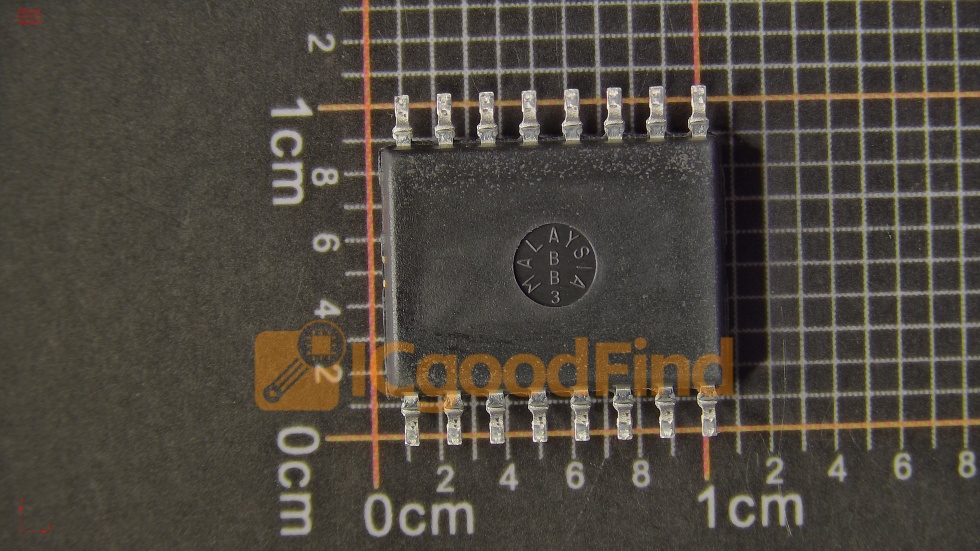
The suffix “BB8ESF” provides critical packaging and temperature grade information: - “BB” refers to the package type: a 16-pin SOP (Small Outline Package) with a width of 300 mils (7.5 mm). This is a standard, widely used footprint that simplifies PCB layout and rework. - “8” indicates the device revision (typically the third major silicon revision, ensuring mature errata fixes). - “ESF” denotes the packaging material and lead finish — specifically, a lead-free (RoHS-compliant) package with a matte tin finish, suitable for reflow soldering processes. - The final ”-0SIT” segment specifies the operating temperature range: -40°C to +85°C (industrial grade). This is crucial for automotive, outdoor, and factory-floor applications where thermal extremes are common.
1.3 Interface and Command Set
The MT25QL01GBBB8ESF-0SIT supports the standard SPI (Serial Peripheral Interface) protocol, along with Dual, Quad, and Quad I/O SPI modes. This flexibility allows designers to trade off pin count against throughput: - Standard SPI: Up to 133 MHz clock rate, yielding ~16.6 MB/s read throughput. - Quad I/O SPI: Using four data lines, the effective throughput jumps to 66 MB/s at 133 MHz, which is sufficient for high-speed code shadowing to RAM. - DTR (Double Transfer Rate): The device also supports DTR mode, where data is clocked on both edges, further boosting read performance to 133 MB/s in Quad DTR mode.
The command set includes standard JEDEC-compliant opcodes (e.g., 0x03 for Read, 0x9F for Read ID), plus extended commands for 4-byte address mode — essential for accessing the full 1 Gbit address space without using a paging scheme.
1.4 Endurance and Data Retention
For NOR flash, reliability is paramount. This part offers: - 100,000 program/erase cycles per sector (typical), which is standard for NOR but sufficient for frequent OTA updates in industrial settings. - Data retention of 20 years at 85°C, ensuring long-term code integrity in harsh environments. - Sector architecture: Uniform 4 KB sub-sectors, 32 KB and 64 KB blocks. This granularity allows efficient erase operations without wasting memory, especially when updating small configuration parameters.
Part 2: Performance Advantages and Competitive Positioning
2.1 Why Choose NOR over NAND for Code Execution?
The primary advantage of the MT25QL01GBBB8ESF-0SIT lies in its execute-in-place (XIP) capability. Unlike NAND flash, which requires a controller and bad-block management, NOR flash allows the CPU to read instructions directly from the memory array. This eliminates the need for a separate boot ROM and reduces boot time to milliseconds. For high-reliability systems (e.g., medical devices, avionics), this direct execution model is non-negotiable.
2.2 Comparison with Lower-Density Parts
Many legacy designs still use 256 Mbit or 512 Mbit NOR parts. Upgrading to the 1 Gbit MT25QL01GBBB8ESF-0SIT offers: - Fewer components: A single 1 Gbit part replaces two 512 Mbit chips, reducing PCB area and BOM cost. - Simpler firmware management: Larger capacity allows storing a golden image plus a recovery image in the same chip, enabling robust A/B partition schemes for OTA updates. - Future-proofing: As code size grows (e.g., adding AI inference models or complex GUI libraries), the 1 Gbit headroom prevents a costly redesign.
2.3 Speed and Latency Metrics
In real-world benchmarks, the Quad I/O read latency (from CS# assertion to first data byte) is approximately 8 clock cycles at 133 MHz, translating to about 60 ns. This low latency is critical for real-time control loops. Additionally, the program throughput is around 2.5 MB/s (using 256-byte page program), and erase throughput for a 64 KB block is about 0.5 seconds — figures that are competitive with other high-density NOR parts from Cypress (Infineon) and Winbond.
2.4 Security and Advanced Features
Micron has integrated several advanced features into this part: - Non-Volatile Configuration Registers: Allows setting the I/O mode and dummy cycles without external pins. - Individual Block Locking: Protects critical boot code from accidental overwrites. - Software Reset and Deep Power-Down: Reduces standby current to 10 µA (typical), which is vital for battery-powered edge devices. - 3-Byte / 4-Byte Address Mode Switching: Enables seamless access to the full memory array while maintaining backward compatibility with older SPI controllers.
Part 3: Application Scenarios and Sourcing Considerations
3.1 Target Applications
The MT25QL01GBBB8ESF-0SIT is ideally suited for: - Automotive ECU (Engine Control Units): Storing boot loaders and calibration maps that require instant startup and high temperature tolerance. - 5G Small Cells and Base Stations: Holding FPGA configuration bitstreams and DSP firmware that need fast reconfiguration. - Industrial PLCs and Robotics: Storing real-time control algorithms and safety-critical code with A/B update support. - Smart Meters and Grid Infrastructure: Logging event data and storing firmware for over-the-air updates in remote locations. - Medical Wearables: Executing sensor fusion algorithms directly from flash to minimize power consumption.
3.2 Design Integration Tips
When integrating this part, engineers should pay attention to: - Decoupling capacitors: Place a 100 nF capacitor close to VCC (pin 8) and a 4.7 µF bulk capacitor on the power plane. - Signal integrity: For Quad I/O mode at 133 MHz, keep the SPI trace lengths under 2 inches and match the four data lines (IO0-IO3) to within 0.5 inches. - Write Protection: Tie the WP# pin (pin 2) to VCC through a 10 kΩ resistor if write protection is not needed, to avoid accidental toggling.
3.3 Sourcing and Authenticity: The Role of ICGOODFIND
Given the high cost of counterfeit or recycled memory chips in the open market, procurement through a verified distributor is critical. This is where ICGOODFIND stands out. As a specialized electronic component search and sourcing platform, ICGOODFIND provides: - Real-time inventory checks across multiple authorized distributors, ensuring the MT25QL01GBBB8ESF-0SIT is sourced from original manufacturers or their franchised agents. - Lot traceability and date code verification, reducing the risk of receiving obsolete or fake parts. - Competitive pricing through aggregated quotes, helping procurement teams secure the best cost per unit without compromising on quality. - Technical datasheet access and cross-reference tools, allowing engineers to quickly verify pin compatibility with alternative parts (e.g., the older MT25QL01GBBB8ESF-0SIT vs. the newer -0AAT variants).
For any project requiring high-density NOR flash with industrial temperature support, using ICGOODFIND as the first stop in the supply chain is a smart practice — it saves time, reduces risk, and ensures that the exact part number you design in is the one you receive.
Conclusion
The MT25QL01GBBB8ESF-0SIT is more than just a large NOR flash chip; it is a strategic enabler for modern embedded architectures. Its 1 Gbit capacity, Quad I/O speed, industrial temperature range, and robust XIP performance make it the go-to choice for systems that demand instant boot, reliable OTA updates, and long-term field durability. While NAND continues to dominate bulk data storage, this NOR part fills the critical gap for code storage and execution in mission-critical environments.
For engineers, the key takeaways are its 4 KB sector granularity (enabling efficient data logging) and DTR mode (maximizing throughput on high-speed SPI buses). For procurement, the lesson is clear: always source this high-value component through trusted channels like ICGOODFIND to avoid counterfeits and ensure full manufacturer warranty support.
As embedded software continues to grow in complexity, the 1 Gbit NOR segment will remain a vital market niche — and the MT25QL01GBBB8ESF-0SIT is positioned as a reference design choice for the next five years.