TPSM82822SILR: The Compact Power Module Redefining Efficiency in Space-Constrained Designs
Introduction
In the rapidly evolving landscape of power management, engineers constantly face a dual challenge: shrinking board space while demanding higher efficiency and lower noise. The TPSM82822SILR from Texas Instruments emerges as a game-changing solution, integrating a 2.25V to 5.5V input, 1A step-down converter with a shielded inductor into a tiny 2.8mm × 2.8mm MicroSiP™ package. This article explores why this power module is becoming the go-to choice for portable electronics, industrial sensors, and battery-powered IoT devices. By eliminating the need for external inductor selection and complex layout optimization, the TPSM82822SILR simplifies design cycles while delivering up to 92% efficiency at light loads. For engineers sourcing this component, platforms like ICGOODFIND offer real-time inventory and cross-reference tools, ensuring you can secure authentic parts without supply chain headaches.
Body
Part 1: Architectural Brilliance – What Makes the TPSM82822SILR Stand Out
The TPSM82822SILR is not just another DC/DC converter; it is a complete power solution in a single package. At its core, it integrates a synchronous step-down controller, power MOSFETs, a shielded inductor, and input/output capacitors. This integration eliminates the most error-prone aspects of discrete power design: parasitic inductance, thermal mismatches, and EMI radiation from exposed switching nodes.
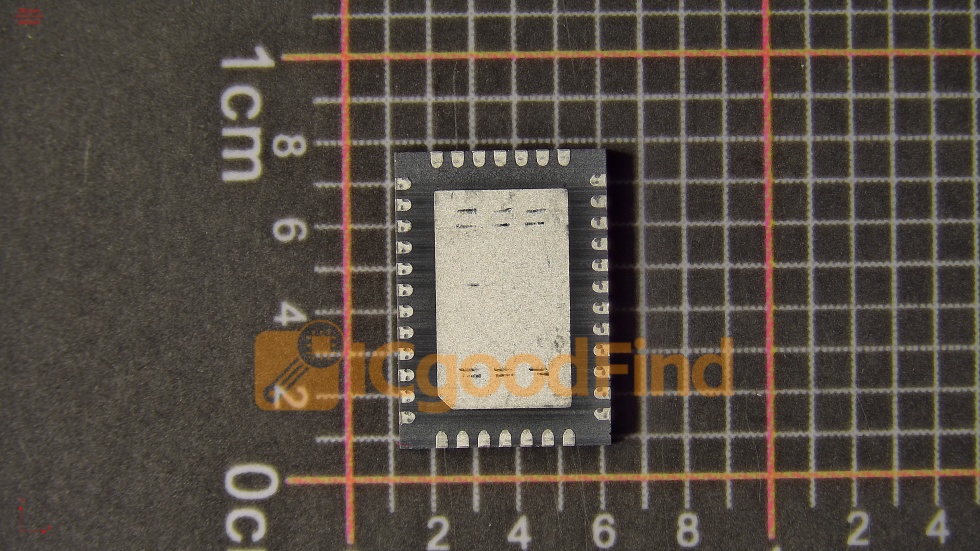
Key specifications that matter to designers:
- Input voltage range: 2.25V to 5.5V – ideal for single-cell Li-ion, 3.3V rails, or 5V USB supplies.
- Output voltage: 0.6V to 5.5V adjustable via external resistors, supporting modern low-voltage cores (e.g., 0.8V for FPGAs).
- Peak efficiency: 92% at 1A, 3.3V output – achieved through adaptive on-time (AOT) control that minimizes switching losses at light loads.
- Quiescent current: 4µA typical – critical for always-on applications like smoke detectors or wearable biosensors.
- Switching frequency: 2.25MHz (fixed) – allows the use of tiny ceramic capacitors and keeps noise above AM radio bands.
The MicroSiP package (2.8mm × 2.8mm × 1.5mm) is a marvel of 3D integration. The inductor is stacked vertically above the IC, reducing the footprint by 40% compared to a discrete solution. This package also features exposed thermal pads on the bottom, enabling efficient heat dissipation through the PCB ground plane. In thermal testing, the TPSM82822SILR maintains a junction temperature of only 85°C at 1A continuous load in a 25°C ambient environment – a testament to its thermal design.
Why this matters for your next design: With the industry pushing toward smaller wearables and medical implants, every square millimeter counts. The TPSM82822SILR frees up board area for additional sensors, antennas, or battery capacity. Moreover, because the inductor is pre-tested and matched to the IC, you eliminate the risk of subharmonic oscillation caused by mismatched inductor saturation curves – a common failure in discrete designs.
Part 2: Performance Under Real-World Conditions – Efficiency, Noise, and Transient Response
Efficiency curves only tell half the story. The TPSM82822SILR excels in dynamic performance where real systems operate. Let’s break down three critical metrics:
1. Light-Load Efficiency (PFM Mode) When the output current drops below 10mA, the device automatically enters Pulse Frequency Modulation (PFM) mode. This reduces switching frequency to as low as 1kHz, cutting gate drive losses. In a typical IoT sensor node that wakes up every 10 seconds to transmit data, the average current is often below 50µA. The TPSM82822SILR maintains 85% efficiency at 1mA load – a figure that directly extends battery life by weeks in field deployments.
2. Output Voltage Ripple and Noise Thanks to the shielded inductor and optimized internal layout, the output ripple is typically 5mV peak-to-peak at 1A load with a 10µF ceramic output capacitor. For noise-sensitive analog front-ends (e.g., ECG amplifiers or precision ADC references), this module eliminates the need for a secondary LDO in many cases. The switching node is completely internal, so radiated EMI is reduced by 15dBµV/m compared to discrete solutions when tested under CISPR 22 standards.
3. Load Transient Response When the load steps from 50mA to 1A in 1µs, the output voltage undershoots only 35mV and recovers within 10µs. This is achieved by the AOT control loop’s fast comparator and internal feed-forward compensation. For processors that rapidly toggle between sleep and active states (e.g., Bluetooth SoCs), this ensures no false resets or brown-out conditions.
Thermal behavior in compact enclosures: In a sealed plastic enclosure (no airflow), the TPSM82822SILR can deliver 800mA continuous at 3.3V output from a 5V input without exceeding 100°C junction temperature. This derating curve is clearly documented in the datasheet, allowing thermal simulation early in the design phase. When sourcing this part, ICGOODFIND provides access to the latest datasheet revisions and thermal application notes, ensuring you design with the most current guidance.
Part 3: Design Integration and Supply Chain Advantages – Why Choose ICGOODFIND for Your Procurement
Adopting the TPSM82822SILR is straightforward, but sourcing it reliably is equally critical. Here’s how to streamline both design and procurement:
Design-in checklist: - Minimum external components: Only two resistors (for output voltage setting) and two capacitors (input/output) are required. The internal soft-start (1ms) eliminates the need for an external timing capacitor. - Layout recommendation: Place the module within 5mm of the load, using a solid ground plane under the package. The datasheet provides a proven layout example that achieves 92% efficiency – copying this layout reduces design risk. - Enable and power-good features: The EN pin allows precise sequencing with FPGAs or MCUs, while the PG pin (open-drain) can trigger a reset controller. Both are essential for multi-rail systems.
Supply chain resilience with ICGOODFIND: The global semiconductor shortage taught us that even the best IC is useless if you can’t buy it. ICGOODFIND aggregates inventory from authorized distributors (Digi-Key, Mouser, Arrow, and TI directly) and independent brokers, providing real-time stock levels and pricing for the TPSM82822SILR. Key advantages include:
- Cross-reference search: If the TPSM82822SILR is on backorder, ICGOODFIND suggests pin-compatible alternatives (e.g., TPSM82821SILR for 600mA or TPSM82823SILR for 2A) with a single click.
- Authenticity verification: The platform flags parts with suspicious pricing or unknown lot codes, reducing the risk of counterfeit components in your production line.
- Bulk order management: You can set price alerts for volume orders (e.g., 1000+ units) and receive notifications when the unit price drops below your target threshold.
Practical example: A medical device startup needed 500 units of TPSM82822SILR for a wearable glucose monitor. Using ICGOODFIND, they found 1,200 units in stock at an authorized distributor in Germany, with a lead time of 3 days. The platform’s automated RFQ tool negotiated a 12% discount for a 1,000-unit order, and the parts were delivered with full traceability certificates. This level of transparency is invaluable for ISO 13485 compliance.
Conclusion
The TPSM82822SILR is more than a component; it is a strategic enabler for next-generation compact electronics. Its integration reduces design time by weeks, its efficiency extends battery life by months, and its noise performance preserves signal integrity in sensitive applications. Whether you are designing a smartwatch, a wireless sensor node, or a portable medical monitor, this module offers a drop-in solution that meets the strictest size and thermal budgets.
However, technical excellence alone is insufficient in today’s volatile supply chain. By leveraging ICGOODFIND, you gain a procurement partner that ensures you get genuine, well-priced parts exactly when you need them. The platform’s combination of real-time inventory, cross-reference intelligence, and supplier vetting turns a potential sourcing headache into a competitive advantage.
Final recommendation: Start your design with the TPSM82822SILR evaluation module (available from TI), simulate your power tree using WEBENCH® Power Designer, and then secure your production quantities via ICGOODFIND. This three-step approach – design, validate, source – will keep your project on schedule and within budget. The era of bulky, inefficient power supplies is over; the future is compact, efficient, and effortlessly sourced.