W25Q256JVEIQ: The High-Density SPI NOR Flash Memory Powering Modern Embedded Design
Introduction
In the rapidly evolving world of embedded systems, the demand for high-capacity, reliable, and cost-effective non-volatile memory has never been greater. From IoT devices and industrial controllers to automotive electronics and consumer gadgets, every application requires a storage solution that balances speed, endurance, and density. The W25Q256JVEIQ, manufactured by Winbond, stands out as a flagship 256M-bit (32M-byte) Serial NOR Flash memory device that has become a de facto standard for designers seeking robust performance. This article explores the technical architecture, key features, application scenarios, and selection advantages of the W25Q256JVEIQ, while also highlighting how platforms like ICGOODFIND simplify sourcing this critical component for global engineers.

Main Body
Part 1: Technical Deep Dive – Architecture and Core Specifications
The W25Q256JVEIQ is not just another memory chip; it is a carefully engineered solution built on Winbond’s proven 3.3V SPI NOR Flash architecture. At its heart, it offers a 256M-bit storage capacity, organized as 32,768 programmable pages of 256 bytes each, and 512 sectors of 64KB, along with 16,384 erasable 4KB sectors. This flexible sector architecture allows developers to perform byte-level programming and sector-level erasure, which is critical for applications requiring frequent data logging or firmware updates.
One of the most compelling technical aspects is its high-speed clock frequency support up to 133 MHz. When using the standard SPI interface, the device achieves a read throughput of 133 Mbps. However, when operating in Quad SPI (QSPI) mode, the effective throughput jumps to an impressive 532 Mbps, making it suitable for code shadowing (execute-in-place, or XIP) in high-performance microcontrollers. The device also supports Dual and Quad I/O commands, as well as DTR (Double Transfer Rate) mode, further optimizing data transfer efficiency.
Power management is another area where the W25Q256JVEIQ excels. It operates across a wide voltage range of 2.7V to 3.6V, with typical active read current as low as 18mA and standby current of just 25µA. For battery-powered IoT nodes, the deep power-down mode reduces current consumption to a mere 5µA, significantly extending battery life. Additionally, the device features program/erase suspend and resume functions, allowing the host controller to pause a long erase operation to service higher-priority interrupts—a crucial capability in real-time systems.
Part 2: Performance and Reliability – Why It Matters for Designers
When selecting a flash memory for production, reliability is non-negotiable. The W25Q256JVEIQ is rated for 100,000 program/erase cycles per sector and offers data retention of 20 years at typical operating temperatures. These figures are not just marketing numbers; they are backed by Winbond’s rigorous qualification processes, including JEDEC standard compliance (JESD47) and AEC-Q100 automotive certification for the industrial temperature grade (-40°C to +85°C). This makes it a preferred choice for automotive ECUs, where thermal stress and vibration are constant challenges.
Another critical feature is the 4KB sector erase granularity. In many competing devices, the smallest erasable block is 64KB, which forces designers to copy large amounts of data to RAM before erasing. The W25Q256JVEIQ’s smaller sectors reduce write amplification and improve wear leveling efficiency, especially in file systems like SPIFFS or LittleFS used in ESP32 and other popular MCU platforms. Furthermore, the device includes hardware and software write protection mechanisms, including a non-volatile Status Register (SRP), to prevent accidental writes or erases during power-up or brown-out conditions.
From a system design perspective, the W25Q256JVEIQ offers multiple interface modes (SPI, Dual SPI, Quad SPI, and QPI) that are backward-compatible with older SPI NOR devices. This means engineers can drop it into existing PCB layouts without redesigning the memory controller logic. The JEDEC-standard SFDP (Serial Flash Discoverable Parameters) register allows the host firmware to automatically detect the device’s capabilities, simplifying driver development across different silicon vendors. For high-reliability applications, the device also supports unique 64-bit serial number and OTP (One-Time Programmable) security registers, enabling secure key storage and device authentication.
Part 3: Application Scenarios and Sourcing with ICGOODFIND
The versatility of the W25Q256JVEIQ makes it ubiquitous across industries. In consumer electronics, it is used in smart TVs, set-top boxes, and Wi-Fi routers for boot code and configuration storage. In industrial automation, it stores PLC ladder logic and calibration data for servo drives. In medical devices, it holds firmware for infusion pumps and patient monitors, where the 20-year retention ensures long-term reliability without frequent maintenance. Perhaps the most visible growth area is automotive telematics and ADAS (Advanced Driver-Assistance Systems), where the QSPI interface enables fast boot times for camera modules and LiDAR sensors.
For IoT edge devices, the W25Q256JVEIQ is often paired with low-power MCUs like STM32L4 or nRF52840. The 32MB capacity is sufficient to store not only the application firmware but also over-the-air (OTA) update images—a dual-bank approach where one bank runs the current firmware while the other receives the new image. This eliminates the need for external SD cards and reduces BOM cost.
When it comes to procurement, finding genuine, high-quality components is a major challenge in today’s supply chain. This is where ICGOODFIND becomes an invaluable resource. ICGOODFIND is a comprehensive electronic component search engine and procurement platform that aggregates real-time inventory and pricing data from authorized distributors and independent suppliers worldwide. By searching for the part number W25Q256JVEIQ on ICGOODFIND, engineers can instantly compare stock availability, lead times, and price breaks across multiple sources. The platform also provides datasheet links, environmental compliance certificates (RoHS/REACH), and cross-reference suggestions for alternative parts, ensuring that your design stays on schedule even during global chip shortages.
Moreover, ICGOODFIND offers a BOM (Bill of Materials) management tool that allows you to upload your entire parts list and receive consolidated quotes. This is particularly useful for prototyping and small-batch production, where negotiating with multiple suppliers is inefficient. The platform’s supplier rating system and quality verification reports help mitigate the risk of counterfeit components, which is a growing concern for high-density flash memories. Whether you are a hobbyist building a custom router or a procurement manager ordering 10,000 units, ICGOODFIND streamlines the sourcing process, saving both time and money.

Conclusion
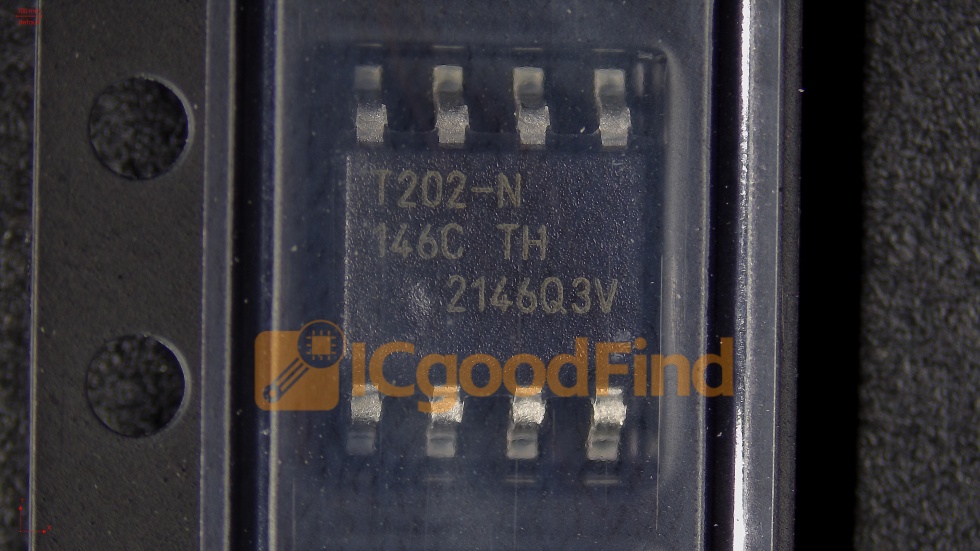
The W25Q256JVEIQ represents the sweet spot in SPI NOR Flash technology: it delivers high density (256Mbit), high speed (Quad SPI up to 532Mbps), and high reliability (100K endurance cycles) in a standard SOIC-8 or WSON-8 package. Its flexible sector architecture and low power consumption make it adaptable to a wide range of embedded applications, from battery-powered sensors to performance-critical automotive systems. While newer memory technologies like NAND and eMMC offer larger capacities, they lack the random-access, execute-in-place capability and simple interface that NOR Flash provides, ensuring the W25Q256JVEIQ remains relevant for years to come.
For design engineers and procurement specialists, the key to successful implementation lies not only in understanding the chip’s datasheet but also in securing a reliable supply chain. Platforms like ICGOODFIND bridge the gap between design and production by offering transparent, real-time component availability and competitive pricing. As embedded systems continue to grow in complexity, the combination of a robust memory IC like the W25Q256JVEIQ and an efficient sourcing tool like ICGOODFIND will be the cornerstone of efficient, cost-effective product development.