
EPM240T100C5N: The Ultimate Guide to Altera’s Low-Power CPLD for Embedded Design
Introduction
In the fast-evolving world of embedded systems, designers constantly seek components that balance performance, power efficiency, and cost. Among the most trusted names in programmable logic, Intel (formerly Altera) has long delivered reliable CPLDs, and the EPM240T100C5N stands out as a workhorse for glue logic, interface bridging, and power-sequencing applications. This article dives deep into the specifications, real-world use cases, and procurement strategies for this specific part number, while also highlighting how ICGOODFIND can simplify your sourcing journey for this and other legacy components.
Whether you are a hardware engineer refreshing a legacy design or a procurement specialist looking for a reliable supply chain, understanding the nuances of the EPM240T100C5N is critical. Let’s explore why this 100-pin TQFP CPLD remains relevant in a world dominated by FPGAs and MCUs.
Part 1: Technical Deep Dive – Architecture and Key Specifications
1.1 Core Architecture: MAX II Family
The EPM240T100C5N belongs to Altera’s MAX II family, a revolutionary CPLD architecture based on a look-up table (LUT) structure rather than the traditional sum-of-products macrocell design. This shift allows for higher logic density and lower dynamic power consumption. The device features 240 logic elements (LEs), which translate to roughly 192 macrocells in equivalent CPLD terms.
1.2 Package and Pinout
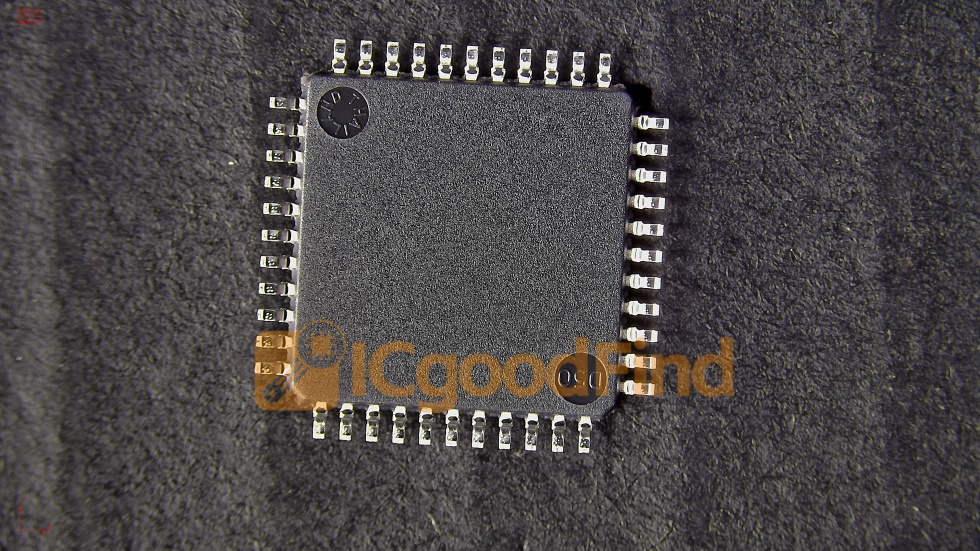
The “T100” in the part number indicates a 100-pin TQFP (Thin Quad Flat Pack) package, with a body size of 14mm x 14mm and a 0.5mm pitch. This package is ideal for space-constrained PCBs but still offers enough I/O for moderate complexity. The device provides up to 80 user I/O pins, which are configurable for various voltage standards including 3.3V, 2.5V, and 1.8V LVCMOS/LVTTL.
1.3 Speed Grade and Power
The “C5” speed grade signifies a 5ns pin-to-pin delay (tPD), making it suitable for high-speed address decoding and chip-select generation. The “N” suffix denotes lead-free (RoHS-compliant) packaging, which is essential for modern manufacturing compliance.
Key electrical parameters: - Operating voltage: 3.3V (with internal 1.8V core regulator) - Standby current: As low as 25µA (typical) – ideal for battery-powered devices - In-system programmability (ISP): Via JTAG interface, supporting fast reconfiguration - User flash memory (UFM): 8Kbits embedded, usable for non-volatile data storage
1.4 Why Not an FPGA?
While FPGAs offer more logic, the EPM240T100C5N excels in instant-on behavior (non-volatile, boots immediately) and single-chip simplicity. Unlike SRAM-based FPGAs that require external configuration memory, this CPLD retains its program even after power cycling. This makes it perfect for power-on reset sequencing, bus arbitration, and level shifting tasks.
Part 2: Practical Applications and Design Considerations
2.1 Glue Logic Replacement
In modern SoC designs, the EPM240T100C5N is frequently used to replace multiple discrete logic gates (AND/OR/inverters). For example, it can consolidate address decoding, interrupt routing, and clock gating into a single programmable device. This reduces BOM count and PCB area, while also simplifying design revisions – a change in logic only requires a new JTAG download, not a new PCB layout.
2.2 Power Sequencing and Reset Management
Complex systems with multiple voltage rails (e.g., 5V, 3.3V, 1.8V, 0.9V) require strict power-up sequencing. The EPM240T100C5N can monitor voltage comparators and generate the necessary enable signals for DC-DC converters with precise timing. Its low standby current ensures minimal impact on the overall system power budget. Additionally, its open-drain outputs can be used to assert reset signals to multiple processors simultaneously.
2.3 Interface Bridging and Protocol Conversion
With 80 I/Os, this CPLD can act as a simple bridge between different logic families. For instance, it can convert a 3.3V SPI bus to a 1.8V I2C bus, or implement a custom parallel-to-serial interface. The internal UFM block can store calibration constants or MAC addresses, eliminating the need for an external EEPROM.
2.4 Design Pitfalls to Avoid
- I/O Standard Matching: Always verify the VCCIO pin voltage. If VCCIO is 3.3V, the I/O cannot tolerate 5V inputs without external clamping diodes.
- JTAG Chain Integrity: In production, ensure the JTAG pins (TMS, TCK, TDI, TDO) are properly pulled up/down to avoid accidental programming during power-up.
- Thermal Considerations: While the TQFP package is robust, ensure adequate copper pour for the exposed pad (if any) to improve heat dissipation in high-ambient-temperature environments.
Part 3: Sourcing, Availability, and the ICGOODFIND Advantage
3.1 Market Status and Lifecycle
The EPM240T100C5N is not classified as obsolete, but it is entering a mature phase. Intel has shifted focus to newer MAX 10 FPGAs, yet the demand for this CPLD remains strong in industrial, automotive, and medical sectors due to its proven reliability. However, supply chain volatility can cause lead times to stretch to 20+ weeks from official distributors.
3.2 Counterfeit Risks and Quality Assurance
Because of its popularity, the EPM240T100C5N is a target for counterfeiters. Grey-market parts may have re-marked date codes or be pulled from used boards. To mitigate risks, always source from authorized distributors or reputable independent brokers with X-ray inspection, electrical testing, and solderability testing capabilities.
3.3 How ICGOODFIND Streamlines Your Procurement
This is where ICGOODFIND comes into play. As a specialized electronic component search engine and marketplace, ICGOODFIND aggregates real-time inventory from vetted global suppliers, allowing you to compare pricing and lead times for the EPM240T100C5N instantly.
- Real-time stock visibility: No more guessing – see which suppliers have genuine parts in stock today.
- Price trend analytics: Track historical pricing to buy at the optimal moment.
- Supplier rating system: Filter by reliability score, based on peer reviews and transaction history.
- BOM matching tool: Upload your entire parts list and get instant quotes for all components, including this CPLD.
For legacy parts like the EPM240T100C5N, where official stock may be limited, ICGOODFIND bridges the gap between design engineers and trusted independent distributors, ensuring you get authentic, traceable components without endless email chains.
Conclusion
The EPM240T100C5N remains a versatile and dependable choice for designers who need a low-power, instant-on, non-volatile logic solution. Its 240 logic elements, 80 I/Os, and 5ns speed grade cover a wide range of applications – from simple glue logic to complex power sequencing. While newer FPGAs offer more features, the simplicity and ruggedness of this MAX II CPLD keep it relevant in mission-critical systems.
When sourcing this part, don’t rely on luck. Use ICGOODFIND to verify availability, compare authentic suppliers, and secure the best price. With the right tools and knowledge, you can keep your production line moving and your designs robust for years to come.