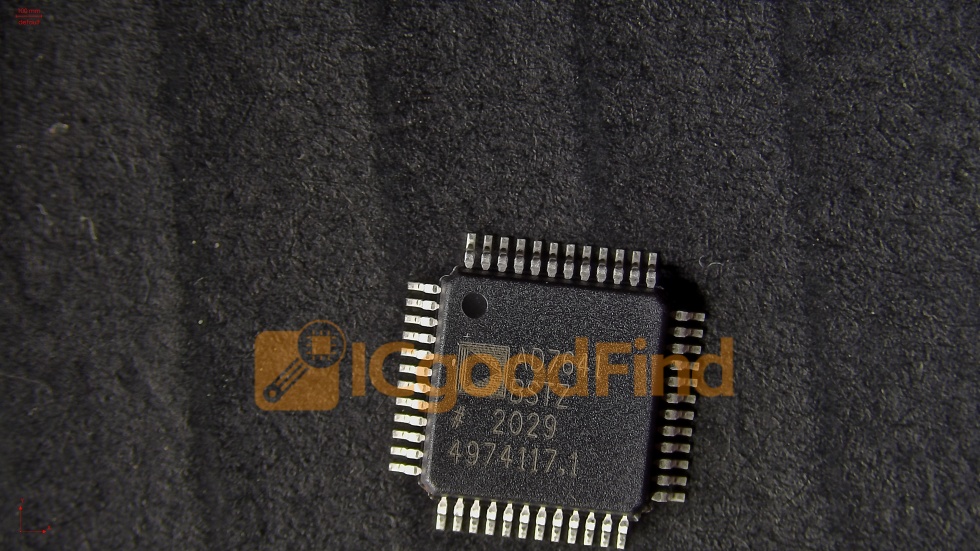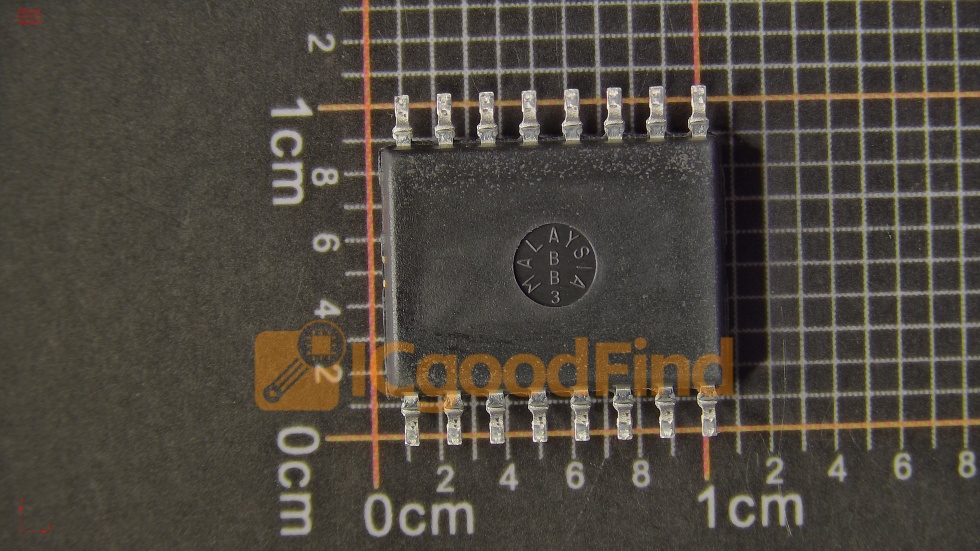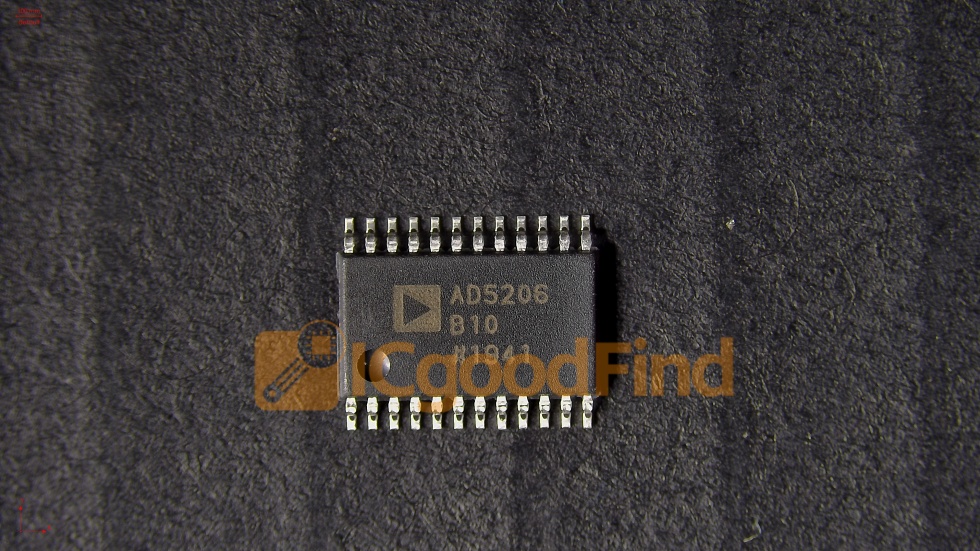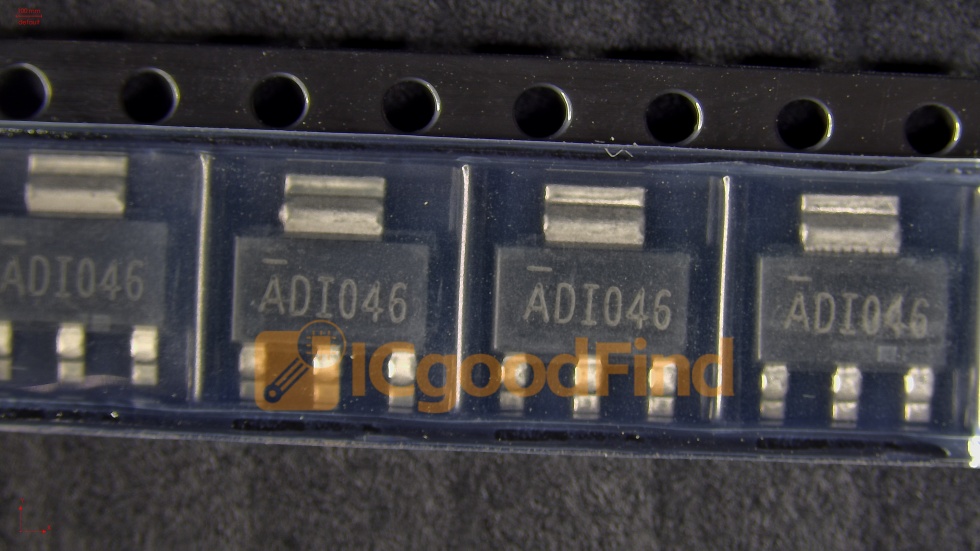





AD8066ARZ: The Ultimate High-Performance Amplifier for Precision Applications
Introduction
In the world of analog signal processing, the choice of an operational amplifier can make or break a design. Engineers constantly seek components that offer exceptional bandwidth, low noise, and high slew rate without compromising on power efficiency. The AD8066ARZ from Analog Devices stands out as a dual, high-performance, fast FET amplifier that has become a go-to solution for applications ranging from medical imaging to communications infrastructure. This article delves deep into the architecture, performance metrics, and real-world applications of the AD8066ARZ, while also highlighting how platforms like ICGOODFIND simplify sourcing this critical component for your next project.
Main Body
Part 1: Unpacking the AD8066ARZ – Architecture and Core Specifications
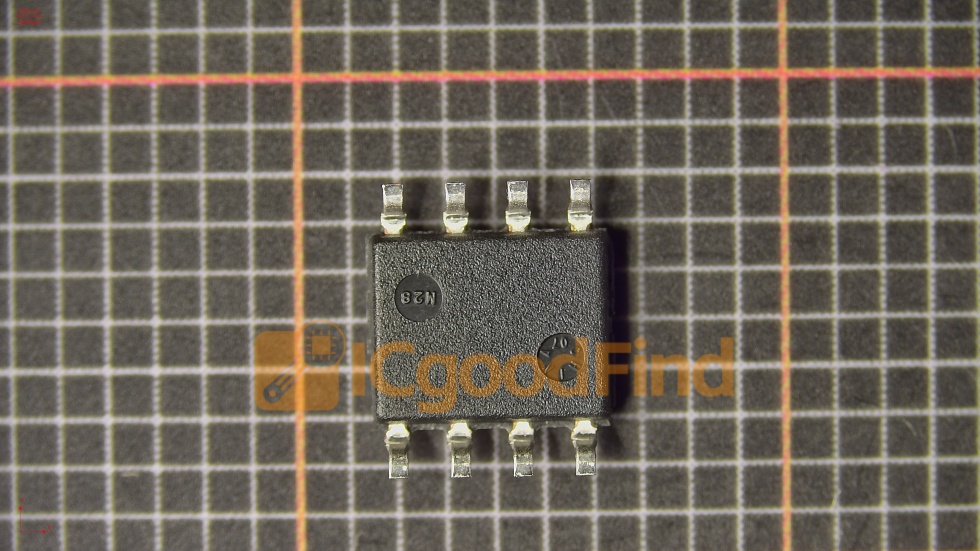
The AD8066ARZ is not just another op-amp; it is a precision-engineered dual amplifier built on Analog Devices’ proprietary eXtra Fast Complementary Bipolar (XFCB) process. This process enables the device to achieve a remarkable unity-gain bandwidth of 145 MHz while consuming only 6.4 mA of supply current per amplifier. Let’s break down its key electrical characteristics:
- High Slew Rate: With a slew rate of 180 V/µs, the AD8066ARZ can handle large-signal transients with minimal distortion, making it ideal for pulse-based systems.
- Low Input Bias Current: Thanks to its FET input stage, the bias current is a mere 2 pA (typical), which is crucial for high-impedance sensor interfaces.
- Voltage Noise Density: At 7 nV/√Hz, the noise performance is competitive, though not the absolute lowest, it is well-balanced for its speed.
- Supply Voltage Range: It operates from a single +5 V supply up to ±12 V dual supplies, offering flexibility in both battery-powered and industrial rail designs.
- Output Current: The device can deliver ±50 mA of output current, sufficient to drive cables, ADC inputs, or small reactive loads.
One of the most underrated features is its rail-to-rail output stage, which swings within 50 mV of the supply rails. This is critical for maximizing dynamic range in single-supply systems. Furthermore, the AD8066ARZ is specified over the extended industrial temperature range (-40°C to +125°C), ensuring reliability in harsh environments.
When comparing it to competitors like the OPA2134 or LT1364, the AD8066ARZ offers a superior speed-to-power ratio. For instance, while the OPA2134 has lower noise, it lacks the bandwidth needed for video or IF signal processing. The AD8066ARZ fills that gap perfectly.
Part 2: Application Scenarios – Where the AD8066ARZ Excels
The true value of the AD8066ARZ is revealed in its versatility. Below are three primary application domains where this amplifier shines:
2.1 High-Speed Data Acquisition and ADC Drivers
Modern SAR and pipeline ADCs (like the AD9643 or AD7626) require a driver amplifier that can settle to 16-bit accuracy within nanoseconds. The AD8066ARZ’s fast settling time (45 ns to 0.1%) and low output impedance make it an excellent choice. In a typical circuit, you can configure it as a differential driver using two AD8066ARZ amplifiers. The low distortion (-90 dBc at 5 MHz) ensures that the ADC’s SFDR (Spurious-Free Dynamic Range) is not degraded. Additionally, the FET input eliminates any loading on the preceding anti-aliasing filter, preserving the signal integrity.
2.2 Active Filters and Video Line Drivers
For video distribution systems (composite, component, or HD-SDI), the AD8066ARZ provides the necessary 0.1 dB flatness up to 30 MHz. This allows for clean transmission of 1080p video signals over twisted-pair or coaxial cables. When used in a Sallen-Key low-pass filter topology, its high GBP (Gain Bandwidth Product) ensures that the filter’s Q-factor remains stable even at high cutoff frequencies. Moreover, the dual-channel configuration saves board space, which is a premium in multi-channel video routers.
2.3 Photodiode and Transimpedance Amplifiers (TIA)
In LIDAR systems or optical power monitors, the photodiode generates a tiny current that must be converted to a voltage. The AD8066ARZ’s low input capacitance (3.5 pF) and high bandwidth allow for a wide transimpedance gain without peaking. For example, with a 10 kΩ feedback resistor, the -3 dB bandwidth can reach 10 MHz, which is sufficient for most pulsed laser rangefinders. The low bias current also minimizes dark-current errors, which is essential for low-light detection.
Pro Tip: When designing a TIA with the AD8066ARZ, always place a small feedback capacitor (0.5 pF to 2 pF) in parallel with the resistor to compensate for the photodiode’s parasitic capacitance. This stabilizes the loop and prevents oscillation.
Part 3: Sourcing, PCB Layout, and Thermal Considerations
3.1 Why ICGOODFIND is Your Trusted Sourcing Partner
Finding genuine, non-counterfeit AD8066ARZ components is a challenge in today’s fragmented supply chain. This is where ICGOODFIND becomes indispensable. As a leading electronic component search engine, ICGOODFIND aggregates inventory from authorized distributors, independent stockists, and OEM excess in real-time. You can instantly compare pricing, lead times, and package options (SOIC-8, MSOP-8) for the AD8066ARZ. The platform also provides full traceability and datasheet downloads, ensuring that you are not just buying a part, but buying confidence. Whether you need 10 pieces for prototyping or 10,000 for production, ICGOODFIND’s supplier network covers both low-volume and high-volume requirements.
3.2 PCB Layout Best Practices
To unlock the full potential of the AD8066ARZ, follow these layout guidelines:
- Bypass Capacitors: Place a 0.1 µF ceramic capacitor within 2 mm of each power pin (V+ and V-). Additionally, use a 10 µF tantalum capacitor at the board level for low-frequency decoupling.
- Ground Plane: Use a solid ground plane beneath the amplifier to minimize parasitic inductance. However, cut a slot under the input pins to reduce stray capacitance that could cause instability.
- Feedback Path: Keep the feedback resistor (Rf) as short as possible. Do not route the feedback trace under the input pins.
- Thermal Relief: The AD8066ARZ in SOIC-8 package has a θJA of 158°C/W. If you are driving heavy loads (e.g., 50Ω back-terminated video cable), ensure that the ambient temperature is derated. For high-power dissipation, consider adding vias to a copper pour on the bottom layer.
3.3 Common Pitfalls and Solutions
- Oscillation with Capacitive Loads: If you directly drive a 100 pF load, the AD8066ARZ may ring. Solution: Insert a 50Ω isolation resistor in series with the output, or use an external compensation network.
- Input Common-Mode Range: The FET input allows the common-mode voltage to go down to -0.2 V (below the negative rail). However, do not exceed V+ - 1.2 V. For single-supply operation, bias the input to mid-supply.
- Power Dissipation: At ±12 V and 6.4 mA per amp, each amplifier dissipates about 154 mW. In a dual package, that’s 308 mW. Ensure your PCB copper area can dissipate this heat without exceeding the junction temperature of 150°C.
Conclusion
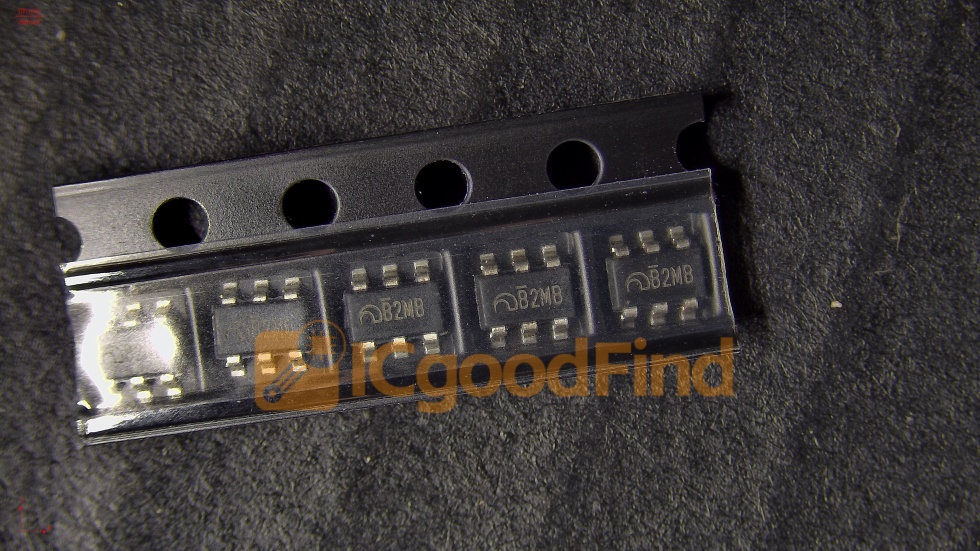
The AD8066ARZ is a testament to Analog Devices’ engineering excellence, offering a rare combination of speed, precision, and low power in a dual package. Its ability to drive high-resolution ADCs, process video signals, and amplify tiny photodiode currents makes it a versatile workhorse for any analog designer. While the component itself is outstanding, the sourcing experience is equally critical. Platforms like ICGOODFIND bridge the gap between design and procurement, offering real-time availability, competitive pricing, and guaranteed authenticity for the AD8066ARZ. Whether you are upgrading an existing design or starting a new high-speed project, the AD8066ARZ, paired with a reliable sourcing strategy, will ensure your system performs at its peak. Remember, in the world of precision analog, every millivolt and nanosecond counts – choose the AD8066ARZ and source it wisely.