



LMZ21701SILR: The Compact Power Module Redefining Efficiency in Space-Constrained Designs
Introduction
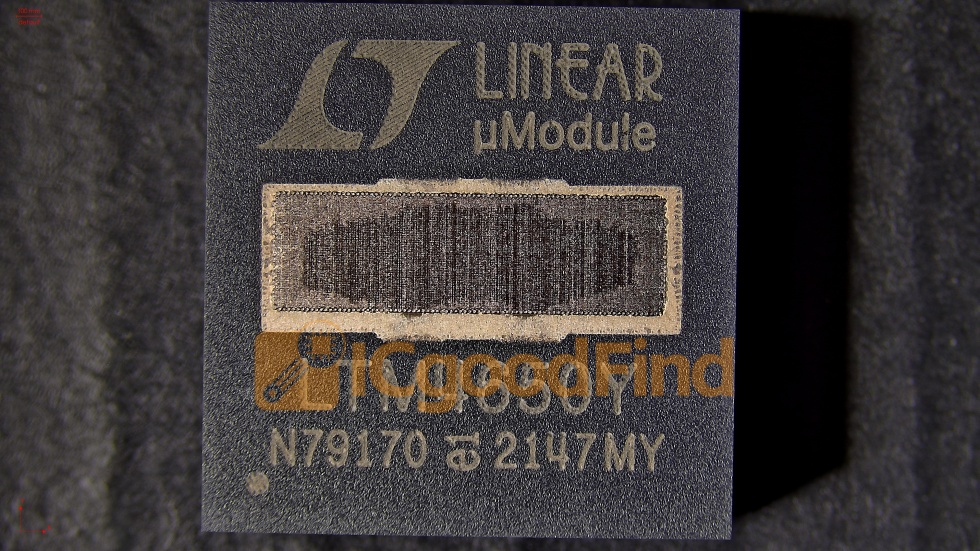
In the rapidly evolving landscape of power management, engineers constantly face a fundamental trade-off: how to deliver high performance while shrinking board space and maintaining thermal efficiency. The LMZ21701SILR from Texas Instruments has emerged as a game-changing solution in this arena. This 1A, 17V input, synchronous step-down DC/DC power module integrates the inductor, MOSFETs, and controller into a single, tiny QFN package—eliminating the need for external inductor selection and layout complexity. Whether you are designing for industrial sensors, battery-powered IoT devices, or automotive infotainment systems, the LMZ21701SILR offers a drop-in, EMI-optimized, and highly reliable power solution. In this article, we will dissect its architecture, explore its real-world applications, and compare it with discrete alternatives—while also highlighting how platforms like ICGOODFIND can streamline your sourcing and design-in process.
Body
Part 1: Architectural Brilliance – What Makes the LMZ21701SILR Stand Out?
The LMZ21701SILR is not just another buck converter; it is a complete power module that encapsulates the entire power train. Let’s break down its core technical attributes:
1. Integrated Inductor and Synchronous FETs
Unlike traditional solutions that require a separate inductor and external Schottky diode, the LMZ21701SILR embeds a high-quality shielded inductor and both high-side and low-side MOSFETs. This integration yields three immediate benefits:
- Reduced PCB footprint – The entire solution occupies only 3.5mm × 3.5mm (the QFN-12 package), saving up to 60% board area compared to discrete designs.
- Simplified layout – No need to route high-frequency switching nodes to an external inductor, which minimizes parasitic inductance and capacitance.
- Lower EMI – The shielded inductor and optimized internal layout reduce radiated emissions, making it easier to pass CISPR 25 or EN 55032 standards.

2. Wide Input Voltage Range and High Efficiency
The device operates from 2.95V to 17V input, covering 3.3V, 5V, 12V, and even 15V rails. With a synchronous architecture, it achieves up to 95% peak efficiency at 5V input and 3.3V output. The internal low-side FET has an ultra-low RDS(on) of 90mΩ, which is critical for maintaining efficiency at light loads. Moreover, the module supports PFM (Pulse Frequency Modulation) mode at light loads, reducing quiescent current to just 17µA—a boon for battery-powered applications that demand long standby life.
3. Precision Regulation and Protection Features
The LMZ21701SILR offers ±1.5% output voltage accuracy over line, load, and temperature. It includes:
- Cycle-by-cycle current limiting
- Thermal shutdown with hysteresis
- Soft-start to prevent inrush current
- Output discharge function to ensure a clean power-down sequence
These features make it a robust choice for safety-critical systems like medical monitors or industrial PLCs, where a single voltage spike can cause costly downtime.
4. Ease of Use with WEBENCH and PSpice Support
Texas Instruments provides complete design tools for the LMZ21701SILR. Using WEBENCH Power Designer, you can generate a full schematic, BOM, and thermal simulation within minutes. Additionally, the PSpice transient model allows you to verify loop stability and load-step response before committing to hardware. This reduces the typical 4-6 week design cycle down to just a few days.
Part 2: Real-World Applications – Where Does the LMZ21701SILR Excel?
The versatility of the LMZ21701SILR makes it a universal building block across multiple industries. Below are three high-impact use cases:
Application A: Battery-Powered Wireless Sensors (IoT)
In a typical LoRaWAN or BLE sensor node, the battery voltage ranges from 2.8V (discharged) to 4.2V (full). The LMZ21701SILR can step down this voltage to a stable 1.8V or 3.3V rail for the MCU and radio. Its 17µA quiescent current ensures that the sensor can sleep for months without draining the battery. Moreover, the integrated inductor eliminates the need for a bulky ferrite core, allowing the sensor to be as thin as 5mm. For a design engineer, this means faster time-to-market and fewer sourcing headaches.
Application B: Industrial Field Transmitters (4-20mA Loops)
Industrial transmitters often operate from a 24V loop supply, but the internal logic runs at 3.3V. The LMZ21701SILR’s 17V input rating is perfectly suited for pre-regulation from 24V (with a simple series resistor or a small LDO for transient protection). The module’s low output ripple (< 10mV peak-to-peak) is critical for maintaining the accuracy of the analog-to-digital converter (ADC) that reads the sensor signal. Additionally, the thermal shutdown protects the module in harsh environments where ambient temperatures can exceed 85°C.
Application C: Automotive Infotainment and Telematics
In automotive systems, the input voltage can fluctuate from 6V (crank) to 16V (load dump). The LMZ21701SILR’s wide input range, combined with its AEC-Q100 qualification (the SILR suffix indicates the automotive-grade version), makes it a reliable choice for powering infotainment processors, GPS modules, or dashcams. The integrated EMI filtering reduces interference with the vehicle’s AM/FM radio, which is a common pain point with discrete converters. Furthermore, the small package allows the module to be placed directly behind the display connector, minimizing the trace length between the power supply and the load.
Part 3: Design Considerations and Sourcing Strategy – Why ICGOODFIND Matters
While the LMZ21701SILR is a superb component, its success in your product depends on two critical factors: proper layout and reliable sourcing.
Layout Best Practices
Even with an integrated module, layout still matters. Here are three golden rules:
- Place the input capacitor (10µF X5R) as close as possible to the VIN and GND pins – This minimizes the input loop area, which is the primary source of conducted EMI.
- Use a solid ground plane directly under the module, with multiple vias to the bottom layer for thermal dissipation.
- Keep the output capacitor (22µF) within 5mm of the VOUT pin to ensure low output impedance at high frequencies.
Thermal Management
The LMZ21701SILR has a junction-to-ambient thermal resistance (θJA) of 35°C/W when mounted on a 2-layer PCB with a 1oz copper pour. For continuous operation at 1A output, the power dissipation is roughly 0.5W, which raises the junction temperature by about 17.5°C above ambient. This is well within the safe operating area. However, if you are operating at high ambient temperatures (e.g., 105°C), consider adding a thermal via array under the exposed pad to improve heat transfer to the bottom layer.
Sourcing and Availability – The ICGOODFIND Advantage
In today’s volatile semiconductor market, component availability is as important as technical performance. This is where ICGOODFIND becomes an invaluable resource. ICGOODFIND is a global electronic component sourcing platform that aggregates real-time inventory from authorized distributors, independent stockists, and OEM surplus. Here’s how it helps you with the LMZ21701SILR:
- Real-time stock visibility – You can instantly check which suppliers have the part in stock, with live pricing and lead times.
- Cross-reference and alternates – If the LMZ21701SILR is on allocation, ICGOODFIND suggests pin-to-pin compatible alternatives (e.g., LMZ21700SILR for 650mA, or TPS62130 for a different package).
- BOM risk management – The platform allows you to upload your entire BOM and identify single-source risks, helping you secure second-source options proactively.
- Quality assurance – All parts listed on ICGOODFIND are 100% tested and traceable, with full datasheets and compliance documents (RoHS, REACH) available for download.
By using ICGOODFIND, you reduce the risk of production line stoppages due to counterfeit or out-of-stock components. For a high-volume product, this can save you thousands of dollars in expediting fees and prevent missed launch deadlines.
Conclusion
The LMZ21701SILR is more than just a power module—it is a strategic enabler for modern electronics. Its integration of the inductor, synchronous FETs, and controller into a 3.5mm² package solves the dual challenges of board space and thermal management, while its wide input range and low quiescent current make it suitable for everything from coin-cell IoT nodes to 24V industrial rails. The automotive-grade variant (SILR) further extends its reach into safety-critical vehicle systems.
However, the best component is useless if you cannot source it reliably. By leveraging ICGOODFIND, you gain a transparent, real-time view of the global inventory for the LMZ21701SILR, along with intelligent alternates and BOM risk analysis. This combination of superior silicon and smart sourcing ensures that your next design will not only meet performance targets but also hit the market on time and on budget.
Whether you are a seasoned power engineer or a maker prototyping a new gadget, the LMZ21701SILR deserves a place in your toolbox. Design it in, source it smart, and ship it fast—that is the modern way to win in electronics.