

ADM2483BRWZ-REEL: The Complete Guide to This Isolated RS-485 Transceiver
Introduction
In the world of industrial automation, factory control systems, and long-distance data communication, reliable signal integrity is not a luxury—it is a necessity. Among the many components that make this possible, the ADM2483BRWZ-REEL stands out as a robust, isolated RS-485 transceiver that has become a go-to solution for engineers designing systems that must withstand electrical noise, ground potential differences, and harsh environmental conditions. Whether you are building a motor control network, a building automation system, or a multi-point data acquisition setup, understanding what this component offers can dramatically improve your design’s reliability and longevity.
This article provides a deep dive into the ADM2483BRWZ-REEL, covering its key features, typical applications, and practical design considerations. By the end, you will have a clear picture of why this part remains a popular choice in industrial communication designs—and how to source it efficiently through platforms like ICGOODFIND.
Part 1: What Is the ADM2483BRWZ-REEL and What Makes It Special?
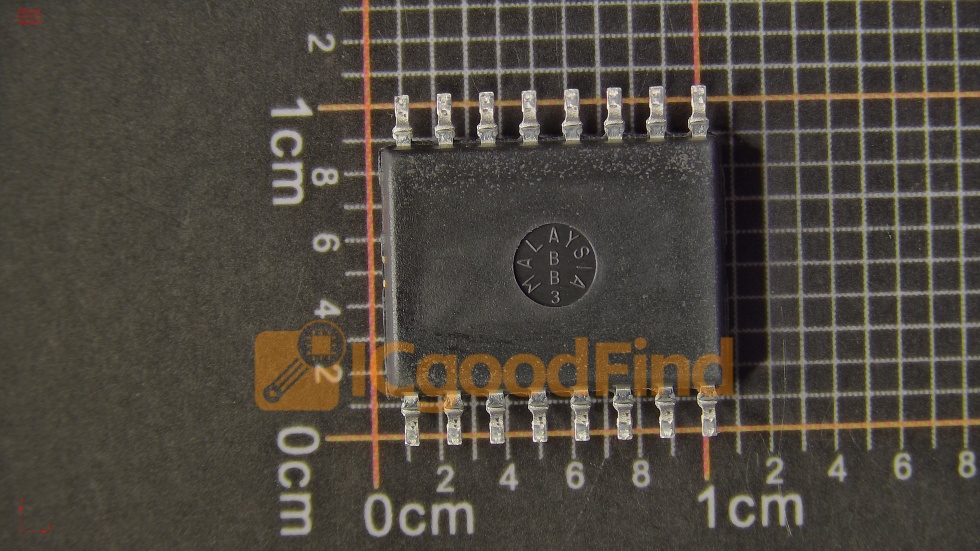
The ADM2483BRWZ-REEL is a galvanically isolated RS-485 transceiver manufactured by Analog Devices. It integrates a three-channel isolator, a tri-state differential line driver, and a differential input receiver into a single 16-lead SOIC package. The “BRWZ” suffix indicates the specific package and temperature grade, while “REEL” means the part is supplied in tape-and-reel packaging—ideal for automated pick-and-place assembly lines.
At its core, the device is designed to facilitate half-duplex RS-485 communication over twisted-pair cables while providing 2500 V RMS isolation between the logic side and the bus side. This isolation is crucial because it breaks ground loops, protects sensitive microcontrollers from high-voltage transients, and ensures data integrity in electrically noisy environments.
Key technical highlights include:
- Data rate up to 500 kbps – sufficient for most industrial control and sensor networks.
- Isolation voltage of 2500 V RMS – meets stringent safety and noise immunity requirements.
- ±15 kV ESD protection on the bus pins – rugged enough for field wiring.
- Low power consumption – typically 3.5 mA quiescent current, making it suitable for energy-sensitive designs.
- Wide temperature range – operates from –40°C to +85°C, covering industrial and automotive-grade environments.
- True fail-safe receiver inputs – ensures a known logic state when the bus is idle or disconnected.
What truly sets the ADM2483BRWZ-REEL apart is its integrated isolation. Traditional RS-485 designs require external optocouplers, isolated DC-DC converters, and additional glue logic. The ADM2483 eliminates most of these components by combining signal isolation and transceiver functionality in one chip. This reduces board space, lowers bill-of-materials cost, and improves reliability by minimizing the number of solder joints and potential failure points.
For engineers who have struggled with ground loops in multi-node RS-485 networks, the ADM2483BRWZ-REEL offers a clean, proven solution. Its isolated barrier prevents dangerous circulating currents and allows nodes to communicate reliably even when their local grounds differ by hundreds of volts.
Part 2: Typical Applications and Design Considerations
The ADM2483BRWZ-REEL shines in applications where noise immunity, safety, and long cable runs are critical. Common use cases include:
- Industrial automation and PLC systems – connecting sensors, actuators, and controllers across factory floors.
- Building management systems – HVAC control, lighting networks, and access control panels.
- Motor drives and motion controllers – where PWM noise and inductive kickback can corrupt unprotected signals.
- Solar inverters and battery management systems – where high voltages and isolation requirements are paramount.
- Medical equipment – for patient monitoring networks that require galvanic isolation for safety.
When designing with the ADM2483BRWZ-REEL, several practical considerations come into play. First, power supply decoupling is essential. Place a 0.1 µF ceramic capacitor close to each VCC pin on both the logic and isolated sides. Second, the isolated supply must be provided externally—typically via a small DC-DC converter or a transformer-based isolated power module. The ADM2483 does not generate isolated power itself; it only isolates data signals.
Third, bus termination matters. For RS-485, a 120 Ω termination resistor at each end of the cable is standard. The ADM2483’s driver can handle the resulting load, but long stubs should be avoided. Fourth, fail-safe biasing may be needed if the bus is not actively driven. The ADM2483 has internal fail-safe receivers, but external bias resistors can further improve noise margin.
Fifth, layout and creepage are critical for maintaining the 2500 V isolation rating. Keep the logic-side and bus-side traces physically separated, and avoid routing any traces under the isolation barrier. The SOIC package provides a certain creepage distance, but conformal coating or slots may be required for higher voltage standards.
Finally, thermal management is rarely an issue because the device consumes little power, but in high-temperature environments, ensure adequate airflow or copper pouring to keep the junction temperature below 125°C.
For sourcing, engineers often turn to distributors that specialize in hard-to-find and obsolete components. ICGOODFIND is a reliable platform for locating the ADM2483BRWZ-REEL in both small quantities and production volumes. Their search engine aggregates inventory from multiple suppliers, helping you compare prices, lead times, and authenticity guarantees. This is especially valuable when a design is in the prototype phase and you need just a few pieces, or when you are ramping up production and need a consistent supply chain.
Part 3: Why the ADM2483BRWZ-REEL Remains a Smart Choice
Despite the emergence of newer isolated transceivers with higher speeds or smaller packages, the ADM2483BRWZ-REEL continues to be a favorite for several reasons. First, it is proven and mature. It has been used in thousands of designs over more than a decade, meaning its behavior is well-documented and its failure modes are understood. Engineers do not have to reinvent the wheel.
Second, it offers a balanced feature set. It is not the fastest (500 kbps is modest compared to 50 Mbps isolated transceivers), but for most industrial networks, 500 kbps is more than enough. It is not the smallest, but the 16-lead SOIC is easy to hand-solder for prototypes and compatible with standard assembly lines. It is not the cheapest, but its integration saves money elsewhere in the design.
Third, availability and second-sourcing are strong. The part is widely stocked by major distributors and independent brokers. Even during the global semiconductor shortage, the ADM2483 remained relatively accessible compared to many other isolated components. Platforms like ICGOODFIND help ensure you can find genuine parts even when mainstream channels are dry.
Fourth, design ecosystem support is excellent. Analog Devices provides reference designs, evaluation boards, and application notes specifically for the ADM2483 family. Online forums and community discussions offer practical tips for layout, termination, and troubleshooting. This reduces development risk and time-to-market.
Fifth, regulatory compliance is easier. The 2500 V RMS isolation rating helps meet UL 1577, IEC 60747-5-5, and other safety standards. For medical or industrial equipment, this can significantly simplify certification.
Of course, no component is perfect. The ADM2483BRWZ-REEL requires an external isolated power supply, which adds cost and complexity. It also does not support full-duplex communication (only half-duplex), so applications needing simultaneous transmit and receive must look elsewhere. And its 500 kbps limit may be too slow for high-speed data acquisition or video over RS-485.
However, for the vast majority of industrial control, building automation, and sensor networking applications, these limitations are acceptable. The benefits—robust isolation, low power, wide temperature range, and proven reliability—far outweigh the drawbacks.
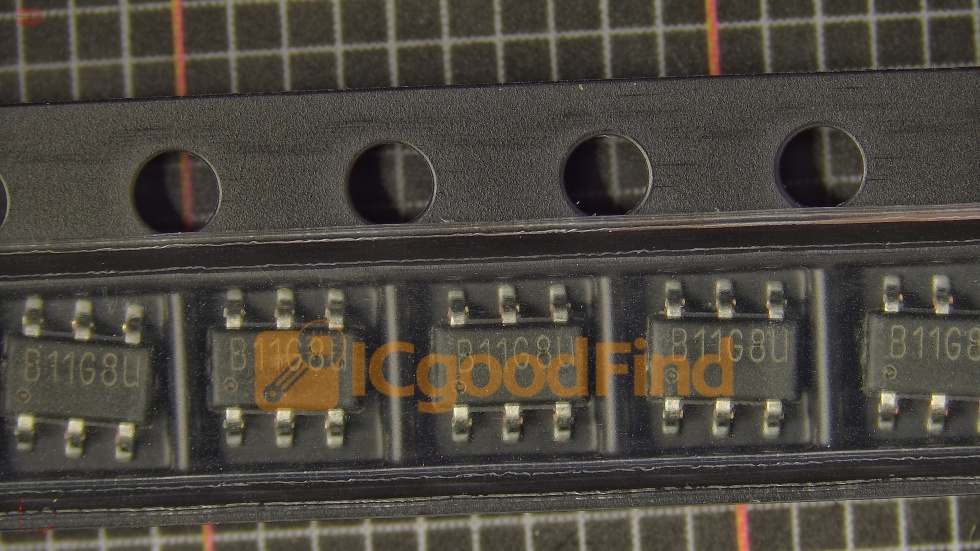
When you are ready to prototype or produce, remember that sourcing from a trusted partner matters. ICGOODFIND offers a streamlined way to search for the ADM2483BRWZ-REEL across multiple suppliers, with filters for condition, packaging, and quantity. This saves time and reduces the risk of counterfeit parts, which are a growing concern in the electronics supply chain.
Conclusion
The ADM2483BRWZ-REEL is more than just a component—it is a foundational building block for reliable, isolated RS-485 communication. Its combination of galvanic isolation, ESD protection, low power consumption, and industrial temperature range makes it an ideal choice for engineers who value robustness over raw speed. By understanding its features, applications, and design considerations, you can leverage this transceiver to build systems that withstand the toughest electrical environments.
Whether you are designing a new industrial network or repairing legacy equipment, the ADM2483BRWZ-REEL deserves a place on your shortlist. And when it comes time to purchase, turn to ICGOODFIND to quickly locate genuine stock at competitive prices. With the right component and the right sourcing strategy, your RS-485 network will deliver years of dependable service.