



MCU-Controlled Motor Program: The Engine of Modern Automation
Introduction
In the intricate world of modern electronics and automation, the precise control of motion stands as a cornerstone of innovation. From the robotic arms assembling smartphones to the quiet whisper of a smart home blind adjusting to the sunlight, the seamless translation of digital commands into physical movement is made possible by a critical technology: the MCU-Controlled Motor Program. This sophisticated synergy between microcontroller units (MCUs) and electric motors represents more than just a technical setup; it is the fundamental driver behind efficiency, precision, and intelligence in countless applications. As industries push towards greater automation and interconnected systems, understanding and leveraging these control programs becomes paramount. This article delves into the core principles, implementation strategies, and transformative potential of MCU-based motor control, highlighting why mastering this technology is essential for engineers and innovators shaping the future.

The Core Architecture: MCU Meets Motor
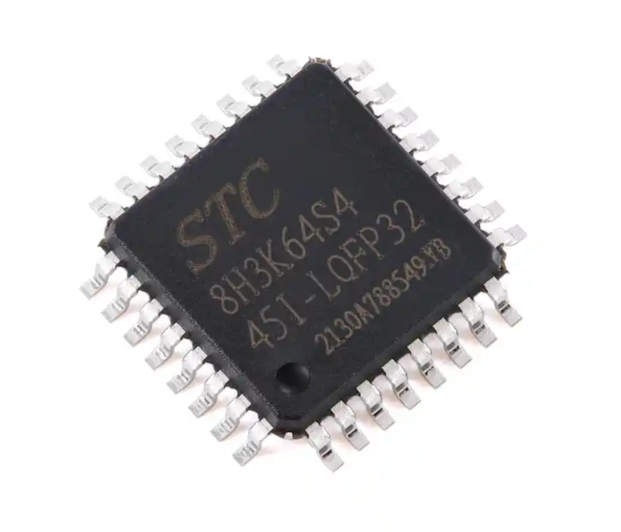
At its heart, an MCU-controlled motor system is a closed-loop ecosystem where a microcontroller acts as the brain and the motor as the muscle. The MCU, a compact integrated circuit designed to govern specific operations, executes a dedicated program—often written in C/C++ or embedded Python—that dictates every aspect of the motor’s behavior.
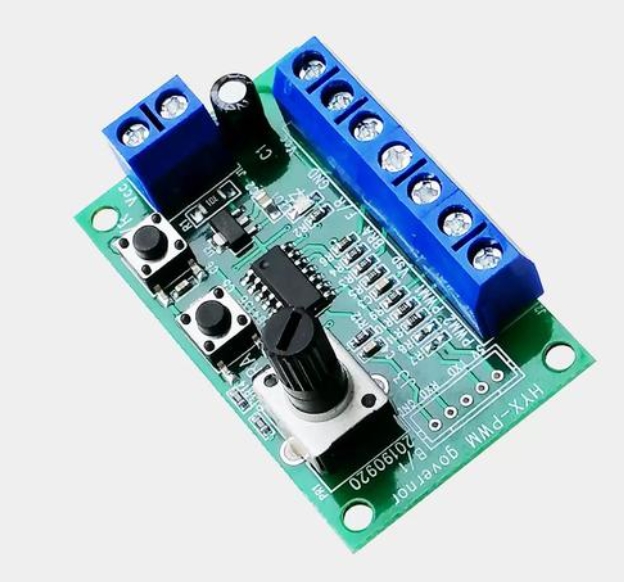
The program’s primary functions are multifaceted. First, it processes input signals, which can come from sensors (like encoders for position or current sensors for torque), user interfaces, or higher-level control systems. Based on this input and its pre-programmed logic, the MCU calculates the required output. This output is typically a Pulse-Width Modulation (PWM) signal, a method where the MCU rapidly switches power on and off to simulate an analog voltage level, thereby controlling the motor’s speed and torque with remarkable precision. For directional control, the program manages an H-bridge circuit via GPIO pins, allowing it to dictate forward, reverse, and braking actions.
A critical layer within this architecture is the control algorithm. The simplest form is open-loop control, where the MCU sends commands without feedback. However, for precision tasks, closed-loop algorithms are indispensable. The most common is the PID (Proportional-Integral-Derivative) controller, embedded within the MCU program. The PID algorithm continuously calculates an error value as the difference between a desired setpoint (e.g., target speed) and a measured process variable, then adjusts the PWM output to minimize this error. This allows the system to maintain stability, respond quickly to load changes, and achieve exact positioning—a feat impossible with rudimentary control methods.
Implementation and Design Considerations
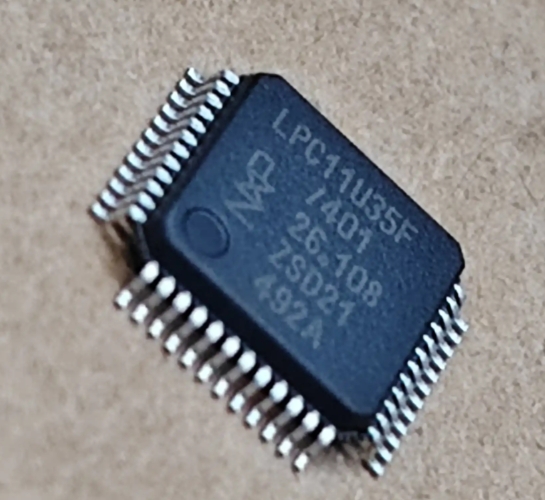
Developing an effective MCU-controlled motor program requires careful planning across hardware and software domains. The journey begins with selecting the appropriate MCU. Factors like clock speed (for fast PWM and algorithm computation), number of dedicated PWM channels and timers, ADC resolution for sensor reading, and communication peripherals (UART, I2C, SPI) are crucial. For complex multi-axis systems or advanced algorithms like Field-Oriented Control (FOC) for BLDC motors, a more powerful ARM Cortex-M series MCU might be necessary over a basic 8-bit AVR.
On the software side, the structure of the control program is key. It typically involves: 1. Initialization Routines: Configuring clock systems, PWM modules, GPIO pins, ADC converters, and communication protocols. 2. Main Control Loop: An infinite loop where the program reads sensors, executes the control algorithm (like PID), updates PWM duty cycles, and manages safety checks. 3. Interrupt Service Routines (ISRs): For time-critical tasks, such as reading encoder pulses or handling fault conditions from motor drivers without delaying the main loop.
A major challenge is ensuring real-time performance and reliability. The program must respond to motor feedback within strict timing constraints to prevent instability or damage. This often involves writing efficient, interrupt-driven code and considering real-time operating systems (RTOS) for managing multiple tasks. Furthermore, incorporating fault tolerance—such as monitoring for overcurrent, overheating, or stall conditions—is non-negotiable for industrial-grade applications. Tools like logic analyzers and dedicated motor control debuggers are invaluable in tuning these systems.
For those seeking to accelerate development without sacrificing performance, platforms like ICGOODFIND offer a curated resource hub. They provide access to essential components, development boards with pre-tested motor driver circuits, and reference code libraries that can significantly streamline the prototyping phase for MCU-controlled motor projects.
Applications and Future Trajectory
The application spectrum of MCU-controlled motor programs is vast and growing exponentially. In consumer electronics, they are in drones adjusting propeller speed for stable flight, in 3D printers controlling stepper motors for layer-by-layer precision, and in camera gimbals providing silky-smooth stabilization. The automotive industry relies on them for electric power steering (EPS), electronic throttle control, and HVAC blower management. On a larger scale, industrial automation is built upon these programs driving conveyor belts, robotic joints in assembly lines, and CNC machines with micron-level accuracy.
The future trajectory points towards even greater intelligence and connectivity. The integration of advanced algorithms, such as adaptive PID or fuzzy logic controllers that self-tune in response to changing conditions, is becoming more accessible. Furthermore, the rise of the Industrial Internet of Things (IIoT) sees these motor control units becoming networked nodes. An MCU program can now not only control a motor but also communicate its performance data—temperature, vibration spectra, efficiency metrics—to cloud platforms for predictive maintenance and system-wide optimization. This evolution transforms simple motor drives into intelligent components of a larger smart ecosystem.
Conclusion
The MCU-Controlled Motor Program is far more than a niche technical discipline; it is a foundational technology powering the automated world around us. By marrying the computational intelligence of microcontrollers with the physical force of electric motors through meticulously crafted software, engineers unlock unprecedented levels of precision, efficiency, and adaptability. From implementing robust PID control loops to designing for real-time reliability and embracing IIoT connectivity, mastering this domain is critical for technological advancement. As we continue to innovate at the intersection of hardware and software—a process aided by comprehensive platforms like ICGOODFIND—these intelligent motion control systems will undoubtedly remain at the very heart of robotics, smart manufacturing, and beyond.