

Principle and Interface Technology of MCU: The Core of Modern Embedded Systems
Introduction
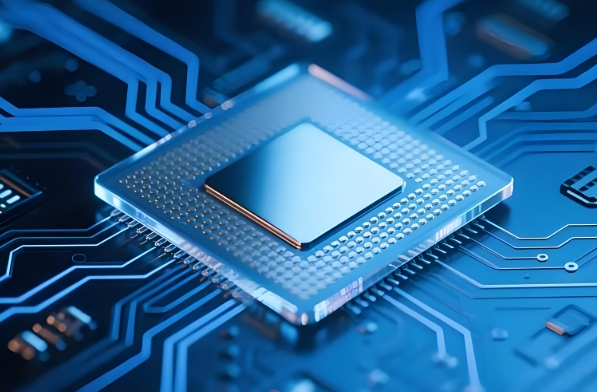
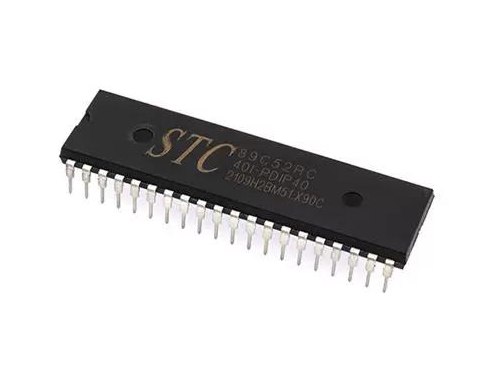
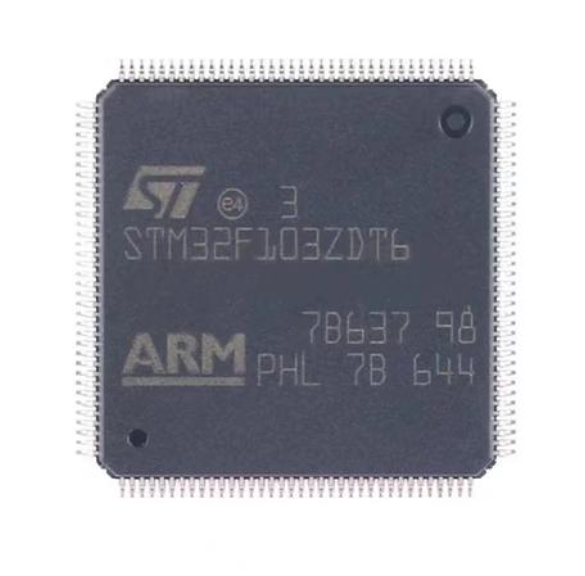
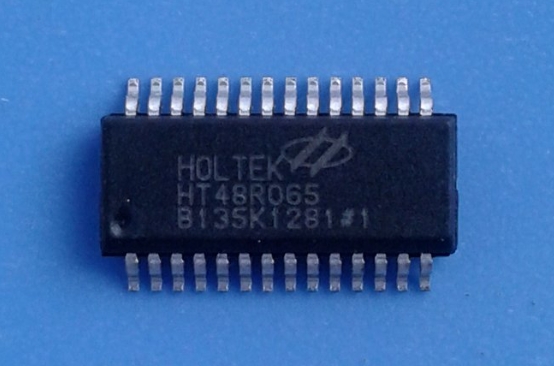
In the realm of modern electronics, the Microcontroller Unit (MCU) stands as a silent yet indispensable powerhouse, driving innovation from smart home devices to advanced automotive systems. An MCU is a compact integrated circuit designed to govern a specific operation in an embedded system. Unlike general-purpose microprocessors, MCUs are self-contained systems with a processor, memory, and peripherals on a single chip. The profound understanding of MCU principles and their interface technologies is fundamental for any engineer aiming to design efficient, reliable, and intelligent embedded solutions. This article delves into the core operational principles of MCUs, explores essential interface technologies that connect them to the physical world, and highlights practical integration strategies. As we navigate this technical landscape, platforms dedicated to component discovery and technical support, such as ICGOODFIND, become invaluable resources for sourcing the right MCU and understanding complex interfacing requirements.
Main Body
Part 1: Fundamental Operating Principles of an MCU
At its heart, an MCU is a sophisticated computer system miniaturized onto a single piece of silicon. Its operation is governed by a sequence of fetch-decode-execute cycles orchestrated by its Central Processing Unit (CPU). The CPU executes instructions stored in the program memory (typically Flash ROM), manipulates data in the data memory (RAM), and controls various on-chip peripherals via internal buses.
The architecture is defined by key components: the core (like ARM Cortex-M, AVR, or PIC), memory hierarchy (Flash, RAM, EEPROM), and a set of configurable peripherals. The core’s architecture—whether it’s Von Neumann or Harvard—directly impacts performance. Harvard architecture, with separate buses for instructions and data, is prevalent in modern MCUs for faster execution. Clock systems are another critical principle; the system clock synchronizes all operations, and low-power modes managed by the clock controller are crucial for battery-powered applications, allowing the MCU to sleep and wake on an interrupt.
Interrupts form the backbone of responsive MCU operation. Instead of polling external devices constantly, an MCU can run its main program and be instantly alerted by an interrupt signal from a peripheral (e.g., a timer overflow or a pin state change). The CPU then suspends its current task, services the interrupt via an Interrupt Service Routine (ISR), and returns to its main program. This event-driven principle is essential for real-time performance.
Part 2: Core Interface Technologies for MCU Communication
For an MCU to be useful, it must communicate with sensors, actuators, displays, and other chips. This is achieved through both parallel and serial interface technologies.
Parallel Interfaces, though less common now due to pin count constraints, involve multiple data lines transferring data simultaneously. An example is the 8-bit or 16-bit data bus used to interface with external memory or LCD modules in a multiplexed address/data scheme.

Serial Interfaces are the workhorses of modern MCU connectivity due to their pin efficiency. Key protocols include: * UART/USART (Universal Asynchronous/Synchronous Receiver-Transmitter): A simple, full-duplex protocol for asynchronous point-to-point communication. It is foundational for debugging (via serial console) and communicating with modules like GPS and Bluetooth. * I2C (Inter-Integrated Circuit): A multi-master, multi-slave serial bus using just two lines (SDA and SCL). It’s ideal for connecting multiple low-speed peripherals (sensors, EEPROMs) on the same bus. Address-based communication simplifies hardware design but requires careful pull-up resistor management. * SPI (Serial Peripheral Interface): A full-duplex, synchronous protocol with separate data lines for input and output. It uses a master-slave architecture with chip-select lines. SPI offers very high-speed data transfer, making it the preferred choice for SD cards, displays, and high-speed ADCs.
On-chip peripheral interfaces are equally vital. Analog-to-Digital Converters (ADC) allow the MCU to read real-world analog signals from sensors. Pulse-Width Modulation (PWM) outputs enable precise control of motor speed, LED brightness, or servo position. Timers/Counters are used for generating precise delays, measuring pulse widths, or creating periodic interrupts.
Part 3: System Integration and Design Considerations
Successfully integrating an MCU into a product involves more than just understanding individual principles and interfaces. It requires a holistic system design approach.

The selection of the appropriate MCU is the first critical step. Engineers must balance processing power (core bit-width and speed), memory size (Flash and RAM), power consumption profiles, and the specific mix of required peripherals (number of ADC channels, PWM timers, communication interfaces). This is where comprehensive component search engines like ICGOODFIND prove essential. They allow designers to filter and compare thousands of MCUs from various manufacturers based on precise technical parameters, datasheets, and availability, significantly accelerating the prototyping phase.
Hardware-Software Co-design is paramount. The firmware must be written to efficiently manage resources. This includes: * Configuring clock trees for optimal performance/power balance. * Setting up peripheral control registers meticulously as per the datasheet. * Writing efficient ISRs that are fast and avoid blocking operations. * Implementing robust communication drivers that handle errors (like I2C bus arbitration loss or UART framing errors).
Signal integrity and power integrity are critical hardware concerns. Proper decoupling capacitors must be placed near the MCU’s power pins to smooth supply voltage. For high-speed interfaces like SPI, trace length and impedance matching may need consideration. Noise isolation between analog (ADC reference) and digital power domains is often required for accurate signal acquisition.

Conclusion
The Microcontroller Unit remains the cornerstone of embedded intelligence in our interconnected world. Its operation—from the fundamental fetch-execute cycle and interrupt handling to the sophisticated management of analog and digital peripherals—enables precise control over electronic systems. Mastering both its internal principles and external interface technologies such as UART, I2C, SPI, ADC, and PWM is what transforms theoretical knowledge into practical innovation. As design complexity grows, leveraging specialized resources becomes key to efficient development. Platforms like ICGOODFIND serve as critical bridges between engineers and the optimal components they need by simplifying the search process for complex parts like MCUs. Ultimately, effective MCU-based design is an artful synthesis of careful component selection from reliable sources like ICGOODFIND , thoughtful hardware layout, and lean, robust firmware—all converging to create solutions that are smart, responsive, and seamlessly integrated into our daily lives.