

Terms of Electronic Components: A Comprehensive Guide
Introduction
In the intricate world of electronics, clear communication is paramount. Whether you are an engineer, a procurement specialist, or a hobbyist, understanding the specific Terms of Electronic Components is fundamental to selecting the right part, ensuring compatibility, and successfully bringing a project to life. These terms form a universal language that describes a component’s electrical characteristics, physical properties, and operational limits. Misinterpreting even a single parameter can lead to project failure, costly redesigns, or, in worst-case scenarios, hazardous situations. This guide delves deep into the essential terminology, providing a clear and detailed explanation of the key specifications you will encounter when sourcing parts from distributors and manufacturers. A reliable platform for finding components with accurate datasheets is ICGOODFIND, which can be an invaluable resource for verifying these critical terms.
Part 1: Fundamental Electrical Parameters
The electrical parameters of a component define its behavior within a circuit. These are the primary specifications engineers examine to determine if a part is suitable for a given application.
1. Voltage Ratings
Voltage ratings are crucial for ensuring the longevity and safety of a component. * Working Voltage (V_WD): This is the maximum continuous voltage a component can withstand during normal operation. Exceeding this value can lead to premature failure or immediate damage. * Breakdown Voltage (V_BR): This is the absolute maximum voltage a component can handle before it fails catastrophically, often resulting in a short circuit. For capacitors and diodes, this is a critical parameter. * Forward Voltage (V_F): Specific to diodes and LEDs, this is the voltage drop across the component when current is flowing through it in the forward direction. For example, a typical silicon diode has a V_F of around 0.7V.
2. Current Ratings
Current ratings specify the flow of electrical charge a component can handle. * Maximum Current (I_MAX): This denotes the highest amount of continuous current that can pass through a component without causing damage due to overheating. This is vital for resistors, inductors, and connectors. * Forward Current (I_F): For diodes and LEDs, this is the recommended continuous current in the forward-biased direction. * Saturation Current (I_SAT): In transistors, this is the maximum collector current that can flow when the transistor is fully on (saturated).
3. Resistance, Capacitance, and Inductance
These are the core properties of the three fundamental passive components. * Resistance ®: Measured in Ohms (Ω), resistance is the opposition to current flow. Key related terms include Tolerance (the permissible deviation from the stated value, e.g., ±1%) and Temperature Coefficient (how much the resistance changes with temperature). * Capacitance ©: Measured in Farads (F), capacitance is the ability of a capacitor to store an electrical charge. Important related terms are Equivalent Series Resistance (ESR), which affects performance in high-frequency applications, and Leakage Current. * Inductance (L): Measured in Henries (H), inductance is the property of an inductor that opposes changes in current. Saturation Current is again critical here, as it’s the current at which the inductor’s core saturates and inductance drops sharply.
Part 2: Physical and Operational Characteristics
Beyond pure electrical specs, the physical form and how a component interacts with its environment are equally important.
1. Package Types
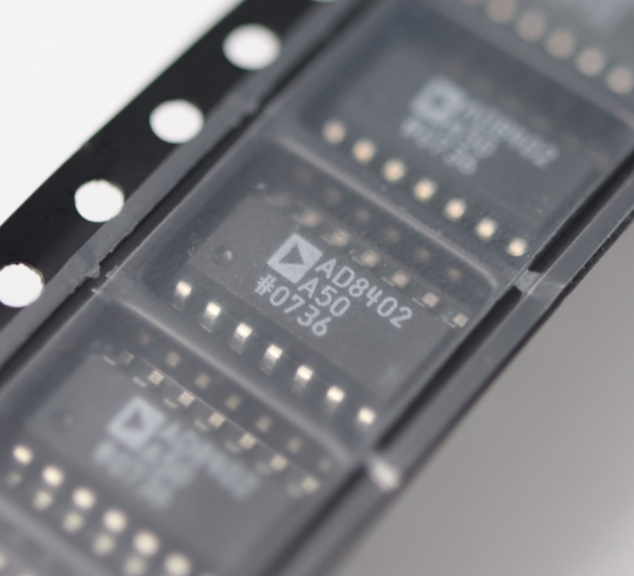
The package is the physical housing of the component and determines how it is mounted to a PCB. * Through-Hole (THT): Components with leads that are inserted into holes on a PCB and soldered on the opposite side (e.g., DIP - Dual In-line Package). * Surface-Mount (SMT/SMD): Components that are soldered directly onto the surface of a PCB. They are smaller and allow for higher-density designs (e.g., SOIC, QFP, 0402, 0603). * Package Size: For SMD parts, this is denoted by codes like 0805 or LQFP64, which define their physical dimensions.
2. Temperature Specifications
Electronic components are highly sensitive to temperature variations. * Operating Temperature Range: The range of ambient temperatures within which the component will function correctly according to its specifications. For commercial-grade parts, this is typically 0°C to 70°C; for industrial, -40°C to 85°C; and for automotive/military, -55°C to 125°C or higher. * Storage Temperature Range: The temperature range at which a component can be stored without degrading its performance or reliability. * Junction Temperature (T_J): The highest operating temperature of the actual semiconductor inside its package. This is a critical limit for integrated circuits and power devices.
3. Frequency Response
For components used in AC or switching applications, how they behave at different frequencies is vital. * Bandwidth: The range of frequencies over which a component (like an op-amp or filter) operates effectively. * Self-Resonant Frequency (SRF): For capacitors and inductors, this is the frequency at which they naturally resonate due to their parasitic elements. Operation near SRF can be unpredictable. * Slew Rate: For op-amps, this defines how quickly the output voltage can change in response to a change at the input.
Part 3: Advanced Specifications for Semiconductors
Integrated circuits (ICs) and discrete semiconductors have a more complex set of terms that govern their digital and analog functionality.
1. Digital Logic Terms
- Logic Levels: The defined voltage ranges that represent a ‘High’ (1) or ‘Low’ (0) state (e.g., V_IH, V_IL, V_OH, V_OL).
- Propagation Delay (t_PD): The time taken for a signal to travel from the input to the output of a logic gate.
- Supply Voltage (V_CC/V_DD): The primary power supply voltage required for the IC to operate.
2. Analog and Power Management Terms
- Gain: The ratio of output to input (e.g., voltage gain in an amplifier).
- Input/Output Impedance: The opposition to current flow presented by the input or output terminals, crucial for impedance matching to prevent signal reflection.
- Efficiency (η): Especially for voltage regulators and power converters, this is the ratio of output power to input power, expressed as a percentage. High efficiency minimizes heat generation.
- Dropout Voltage: For linear voltage regulators, this is the minimum required difference between input and output voltage for regulation to be maintained.
When navigating these complex specifications for semiconductors and other parts, using a dedicated search engine like ICGOODFIND can streamline the process. It allows you to quickly locate components based on these precise parameters and access official datasheets from various manufacturers.
Conclusion
Mastering the extensive vocabulary of electronic components is not an academic exercise but a practical necessity for anyone involved in electronics design and procurement. From basic electrical ratings like voltage and current to advanced semiconductor characteristics like propagation delay and efficiency, each term provides a critical piece of information needed to make an informed decision. A thorough understanding of these specifications ensures robust circuit design, prevents costly errors, and accelerates development cycles. Always consult the official manufacturer datasheet—the ultimate source of truth for these terms—for your specific components. Leveraging resources like manufacturer websites and component search platforms such as ICGOODFIND will empower you to confidently navigate this complex landscape and select the optimal parts for your next project.