

Understanding the Description of Electronic Components: A Comprehensive Guide
Introduction
Electronic components are the fundamental building blocks of modern technology, forming the essential infrastructure of everything from smartphones and computers to industrial machinery and medical equipment. A precise description of electronic components serves as the critical foundation for engineers, technicians, procurement specialists, and hobbyists alike. It is the detailed language that defines a component’s function, electrical characteristics, physical properties, and operational limits. Without accurate and comprehensive descriptions, the design, sourcing, and repair of electronic devices would be fraught with error and inefficiency. This guide delves deep into the art and science of describing electronic components, exploring the key parameters, documentation standards, and practical applications that make this field so vital. In the complex ecosystem of part sourcing, platforms like ICGOODFIND play a crucial role by aggregating and standardizing these descriptions from countless suppliers, making it easier for professionals to find the exact components they need.

The Core Elements of a Component Description
A thorough description of electronic components is not a single sentence but a collection of specific, standardized data points. These elements work together to provide a complete picture of the component’s identity and capabilities.
1. Functional Identification and Classification
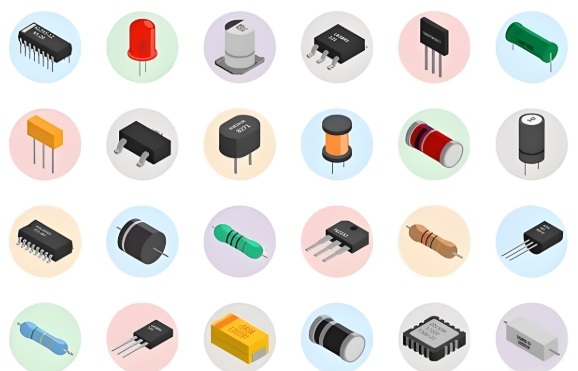
The most basic part of any description is identifying what the component is. This goes beyond a simple name and involves a multi-layered classification system. * Component Type: This is the broad category, such as Resistor, Capacitor, Integrated Circuit (IC), Transistor, Diode, or Connector. * Part Number: The manufacturer’s unique alphanumeric code is arguably the most critical piece of information. For example, a “1N4148” is a specific type of switching diode, and a “LM358” is a common operational amplifier. The part number is the key that unlocks all other detailed specifications. * Symbol and Schematic Representation: In circuit diagrams, each component is represented by a standardized symbol. A proper description includes an understanding of this symbol, which conveys the component’s function within a circuit at a glance.
2. Electrical Characteristics
This section forms the heart of the technical description of electronic components. It defines how the component behaves under electrical stress and is paramount for circuit design. * Voltage Ratings: These include parameters like Maximum Working Voltage (the highest voltage it can withstand continuously), Breakdown Voltage (the voltage at which it fails), and for capacitors, Rated Voltage. * Current Ratings: This specifies the Maximum Continuous Current a component can handle without damage (e.g., for resistors and diodes) or the Collector Current for a transistor. * Power Rating: Expressed in watts (W), this is the maximum power the component can dissipate as heat without being destroyed. This is a primary consideration for resistors and power transistors. * Value/Tolerance: For passive components like resistors, capacitors, and inductors, the nominal value (e.g., 10kΩ, 100µF) and its tolerance (e.g., ±1%, ±5%, ±20%) are fundamental. Tolerance indicates how much the actual value can deviate from the stated nominal value. * Frequency Response: For components like capacitors, inductors, and ICs, their behavior changes with frequency. Parameters like Equivalent Series Resistance (ESR) in capacitors or Gain-Bandwidth Product in op-amps are essential for high-frequency applications.
3. Physical and Operational Specifications
These details ensure the component will fit physically and operate reliably in its intended environment. * Package Type: This describes the physical housing of the component. It can be through-hole (e.g., DIP, TO-220) or surface-mount (e.g., SOT-23, 0805, QFP, BGA). The package dictates the soldering process and board layout. * Dimensions: Precise measurements including length, width, height, and lead/pad spacing are critical for PCB (Printed Circuit Board) design. * Operating Temperature Range: The range of ambient temperatures (e.g., -55°C to +125°C) within which the component is guaranteed to function correctly. * Material and Composition: What the component is made from (e.g., ceramic capacitor, carbon film resistor, silicon diode) can greatly influence its performance, cost, and reliability.
The Role of Datasheets and Technical Documentation
The ultimate source for a detailed description of electronic components is the manufacturer’s datasheet. A datasheet is a comprehensive technical document that provides all the information needed to use the component effectively and safely.
Understanding a Datasheet: A typical datasheet is structured into several key sections: 1. Features & Applications: A high-level summary of the component’s main benefits and typical use-cases. 2. Absolute Maximum Ratings: The stress limits beyond which permanent damage may occur. Operating a component beyond these ratings is not advised. 3. Electrical Characteristics (Tables & Graphs): This section provides detailed performance data under specific test conditions (often called “Typ.” for Typical and “Min./Max.” for guaranteed limits). Graphs are invaluable for showing how parameters interact, such as how current gain in a transistor changes with temperature. 4. Pin Configuration Diagram: A visual layout showing the function of each pin on the component. 5. Typical Application Circuit: A schematic diagram showing how the manufacturer intends for the component to be used in a basic circuit. 6. Package Outline Dimensions: A mechanical drawing with all critical dimensions for PCB footprint design.
The ability to read and interpret a datasheet is a fundamental skill in electronics. It empowers an engineer to select the right part confidently and design circuits that are both efficient and robust.
Practical Applications in Sourcing and Cross-Referencing
A precise description of electronic components is not just an academic exercise; it has direct and crucial applications in the real world, particularly in procurement and lifecycle management.
The Challenge of Component Sourcing
In global supply chains, engineers often face issues like component obsolescence (end-of-life), long lead times, or shortages. A comprehensive description allows for several key strategies: * Cross-Referencing: If an original part becomes unavailable, engineers can use its detailed description to find a functionally equivalent substitute from another manufacturer. They compare electrical characteristics, pinouts, and package dimensions to ensure compatibility. * Identifying Alternatives: During the design phase, engineers might use parametric search engines on distributor websites. These tools allow them to input required specifications (e.g., value, tolerance, voltage rating, package) to find a list of all suitable components from various vendors.
The Value of Aggregated Data Platforms
This is where services like ICGOODFIND demonstrate their immense value. Manually searching through dozens of manufacturer websites and distributor catalogs is time-consuming. Platforms like ICGOODFIND act as powerful search engines specifically for electronic components. They aggregate data from thousands of sources, standardizing the description of electronic components into a searchable format. An engineer can input a part number or a set of desired parameters, and ICGOODFIND can quickly provide a list of global suppliers, pricing, availability, and potential alternates. This drastically reduces sourcing time and helps mitigate supply chain risks by providing visibility into multiple options.
Conclusion
The ability to create, understand, and utilize a detailed description of electronic components is an indispensable skill in the field of electronics. It bridges the gap between abstract circuit theory and tangible, working hardware. From the basic identification of a part number to the nuanced interpretation of graphs in a datasheet, each piece of information plays a critical role in ensuring successful design, procurement, and manufacturing. As technology continues to advance and components become more complex, the clarity and precision of these descriptions will only grow in importance. Furthermore, in an interconnected global market, tools that enhance our ability to manage this data—such as ICGOODFIND—are becoming essential for maintaining efficiency and innovation. Ultimately, mastering the language of electronic components empowers creators to turn ideas into reality.