LSM6DSOTR: The Ultimate 6-Axis IMU for Next-Generation Industrial and IoT Applications
Introduction
In the rapidly evolving world of embedded systems, inertial measurement units (IMUs) have become the silent workhorses behind countless smart devices—from industrial robotics and drone stabilization to wearable health monitors and precision navigation. Among the myriad of options available, the LSM6DSOTR stands out as a game-changing 6-axis inertial sensor that combines ultra-low power consumption, high accuracy, and remarkable flexibility in a compact package. Manufactured by STMicroelectronics, this advanced MEMS (Micro-Electro-Mechanical Systems) device integrates a 3-axis accelerometer and a 3-axis gyroscope into a single chip, offering engineers a robust solution for motion sensing and orientation tracking. Whether you are designing a battery-powered IoT node or a high-performance industrial controller, understanding the capabilities of the LSM6DSOTR is essential. In this article, we will dive deep into its architecture, key features, practical applications, and why it has become a preferred choice for developers worldwide. For sourcing this component at competitive prices, ICGOODFIND is a trusted platform that ensures genuine parts and fast delivery.
Main Body
Part 1: Core Specifications and Technical Excellence

The LSM6DSOTR is not just another IMU; it is a precision-engineered sensor designed to meet the demanding requirements of modern applications. Let’s break down its most critical technical attributes.
1. Ultra-Low Power Consumption with High Performance
One of the standout features of the LSM6DSOTR is its dual operating modes: high-performance mode and low-power mode. In high-performance mode, the sensor delivers a full-scale range of ±2g to ±16g for the accelerometer and ±125 dps to ±2000 dps for the gyroscope, with a noise density as low as 0.003 dps/√Hz. This makes it ideal for applications that require precise motion tracking, such as robotic arm control or virtual reality headsets. Conversely, in low-power mode, the device consumes as little as 0.55 mA (gyroscope + accelerometer combined), enabling battery-powered devices to run for months without recharging. The smart power management also includes a programmable wake-up and sleep function, which further extends battery life in always-on IoT sensors.
2. Advanced On-Chip Features and Data Processing
The LSM6DSOTR is equipped with a powerful 2KB FIFO buffer that allows the host microcontroller to remain in sleep mode while the sensor collects data, significantly reducing system-level power consumption. Moreover, it integrates a finite state machine (FSM) and a pedometer algorithm directly on the chip. This means that developers can offload complex motion recognition tasks—such as step counting, tilt detection, or free-fall detection—from the main processor to the sensor itself. The embedded temperature sensor and programmable digital filters (low-pass and high-pass) further enhance data quality by eliminating environmental noise and vibration artifacts.
3. Robust Communication and Compatibility
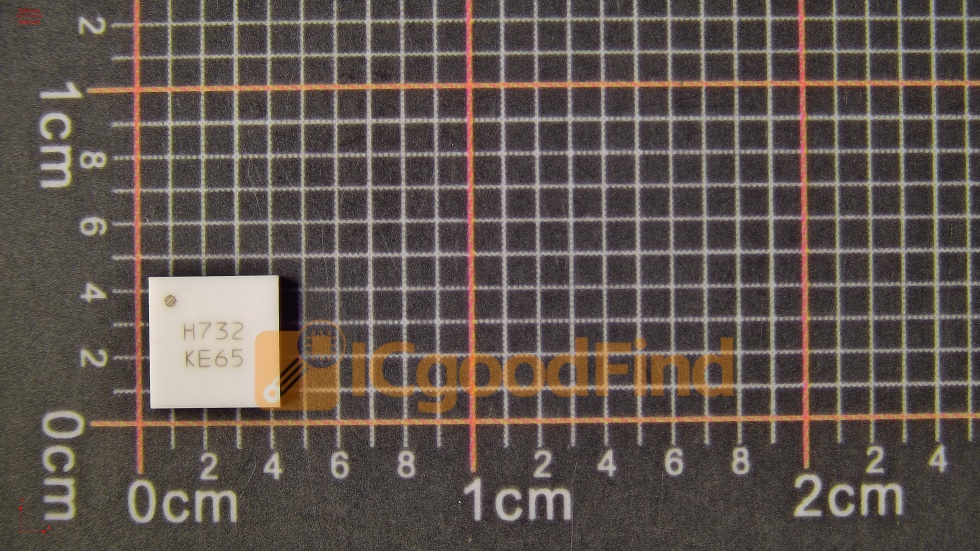
The LSM6DSOTR supports both I²C (up to 1 MHz) and SPI (up to 10 MHz) interfaces, offering flexibility for various system architectures. It operates over a wide voltage range of 1.71V to 3.6V, making it compatible with both 1.8V and 3.3V logic levels. Additionally, the sensor is AEC-Q100 qualified (Grade 2), meaning it is certified for automotive applications, including tire pressure monitoring, electronic stability control, and headlight leveling. The package is a 2.5mm x 2.5mm x 0.86mm LGA-14, which is remarkably small, allowing for integration into space-constrained designs like smartwatches and earbuds.
When sourcing the LSM6DSOTR, ensure you are purchasing from a reliable distributor. ICGOODFIND offers a transparent sourcing platform with verified suppliers, real-time inventory, and competitive pricing, making it easier for engineers and procurement teams to get authentic STMicroelectronics parts.
Part 2: Key Application Areas and Real-World Use Cases
The versatility of the LSM6DSOTR makes it a universal building block across multiple industries. Below are three major domains where this sensor shines.
1. Industrial Automation and Robotics
In industrial settings, precision and reliability are non-negotiable. The LSM6DSOTR is widely used in collaborative robots (cobots) for vibration monitoring and end-effector orientation control. Its low noise floor and high stability ensure that robotic arms can perform delicate tasks, such as PCB assembly or surgical assistance, with sub-degree accuracy. Additionally, the sensor’s shock and vibration tolerance (up to 10,000g) makes it suitable for predictive maintenance systems on heavy machinery. By analyzing the sensor’s output, engineers can detect abnormal vibrations early and schedule maintenance before a costly breakdown occurs.
2. Consumer Electronics and Wearables
From smartwatches that track your daily steps to AR/VR glasses that map your head movements, the LSM6DSOTR is at the heart of immersive user experiences. Its low-power always-on mode enables continuous activity recognition without draining the battery. For example, in a fitness tracker, the sensor can distinguish between walking, running, cycling, and sleeping using the built-in FSM. In gaming controllers, the high-speed SPI interface allows for latency-free motion capture, enhancing the responsiveness of wireless controllers. The sensor’s small footprint also makes it ideal for smart earbuds that detect head gestures for answering calls or adjusting volume.
3. Automotive and Autonomous Systems
As vehicles become more intelligent, the need for reliable inertial sensing grows. The LSM6DSOTR’s AEC-Q100 qualification makes it a prime candidate for dead reckoning in GPS-denied environments (e.g., tunnels or parking garages). It is also used in electronic stability control (ESC) systems to detect vehicle skidding and apply corrective braking. Furthermore, the sensor supports sensor fusion with external magnetometers (e.g., ST’s LIS2MDL) to provide a complete 9-axis solution for autonomous vehicle localization. The embedded programmable interrupt generator can trigger immediate actions, such as activating airbags upon sudden impact, with minimal latency.
**For engineers looking to prototype or mass-produce with the LSM6DSOTR, ICGOODFIND simplifies the procurement process by offering a Bill of Materials (BOM) tool that instantly compares prices from multiple authorized distributors, ensuring you get the best deal without compromising on quality.**
Part 3: Design Considerations and Integration Tips
While the LSM6DSOTR is highly user-friendly, there are several best practices to maximize its performance in your design.
1. PCB Layout and Decoupling
To achieve the lowest noise, place the sensor close to the mechanical center of the PCB and ensure a solid ground plane beneath it. Use 0.1µF and 1µF decoupling capacitors near the VDD and VDD_IO pins to filter high-frequency noise. Avoid routing high-current digital traces (e.g., from a motor driver) directly under the sensor, as this can introduce electromagnetic interference (EMI). STMicroelectronics provides a recommended layout in the datasheet, which should be followed closely.
2. Calibration and Offset Compensation
Although the LSM6DSOTR is factory-calibrated, temperature drift and soldering stress can cause small offsets. For high-accuracy applications, perform a one-time calibration at the system level. This involves placing the device flat and recording the zero-g offset for the accelerometer, and rotating it at a known rate to calibrate the gyroscope. The sensor’s embedded registers allow you to store these correction values directly, simplifying the firmware.
3. Firmware Optimization with the Finite State Machine
The FSM is a powerful tool, but it requires careful programming. Instead of waking up the main processor every millisecond, configure the FSM to detect specific motion patterns (e.g., a double-tap or a 90° rotation) and only generate an interrupt when the pattern is matched. This reduces the host CPU load by up to 90% in always-on applications. ST provides a free software library (X-CUBE-MEMS1) that includes pre-built FSM programs for common gestures, saving weeks of development time.
4. Thermal Management
The LSM6DSOTR’s internal temperature sensor has a sensitivity of 16 LSB/°C, which can be used to compensate for gyroscope bias drift. In environments with wide temperature fluctuations (e.g., automotive engine bays), consider implementing a software temperature compensation table to maintain accuracy. The sensor’s operating range is -40°C to +85°C, which covers most industrial and consumer scenarios.

**When you are ready to move from prototyping to production, ICGOODFIND provides real-time stock availability and global shipping options, ensuring that your supply chain remains uninterrupted. Their platform also offers component traceability and quality assurance, which is crucial for mission-critical applications.**
Conclusion
The LSM6DSOTR is more than just a sensor; it is a comprehensive motion-sensing solution that empowers engineers to create smarter, more efficient, and more responsive devices. Its combination of ultra-low power consumption, advanced on-chip processing, and robust automotive-grade reliability makes it a standout choice in a crowded market. Whether you are developing a next-generation wearable, an industrial robot, or an autonomous vehicle, the LSM6DSOTR provides the performance headroom and design flexibility you need. By following the design tips outlined above, you can unlock its full potential and accelerate your time-to-market.
As with any critical electronic component, sourcing authenticity is paramount. ICGOODFIND bridges the gap between engineers and trusted suppliers, offering a seamless procurement experience with competitive pricing and verified inventory. Don’t compromise on quality—choose the LSM6DSOTR for your next project, and let ICGOODFIND be your reliable partner in bringing your innovation to life.