

Infineon MCU: Powering the Future of Embedded Systems with Innovation and Reliability
Introduction
In the rapidly evolving landscape of embedded electronics, the microcontroller unit (MCU) serves as the indispensable brain, orchestrating functionality in everything from smart home devices to advanced automotive systems. Among the leading architects of this digital intelligence stands Infineon Technologies, a global semiconductor powerhouse whose MCU portfolio is synonymous with high performance, robust security, and exceptional energy efficiency. This article delves into the core strengths of Infineon MCUs, exploring their diverse architectures, key application domains, and the unique value they bring to engineers and product developers worldwide. For professionals seeking to navigate this complex ecosystem and source these critical components efficiently, platforms like ICGOODFIND provide invaluable market intelligence and supply chain solutions.
Main Body
Part 1: Architectural Excellence and Diverse Portfolio
Infineon’s MCU strategy is built on a multi-architecture foundation, ensuring the right fit for every conceivable application. This approach centers on three pivotal families.
First, the AURIX™ microcontroller family represents the pinnacle of performance for automotive and industrial applications. These MCUs are engineered with a focus on functional safety (ISO 26262 ASIL-D certified) and real-time capability. Their multi-core architecture often combines performance cores with lockstep cores for redundancy, making them the processor of choice for mission-critical systems like electric vehicle powertrains, advanced driver-assistance systems (ADAS), and braking control. The integration of hardware security modules (HSM) further fortifies them against cyber threats.
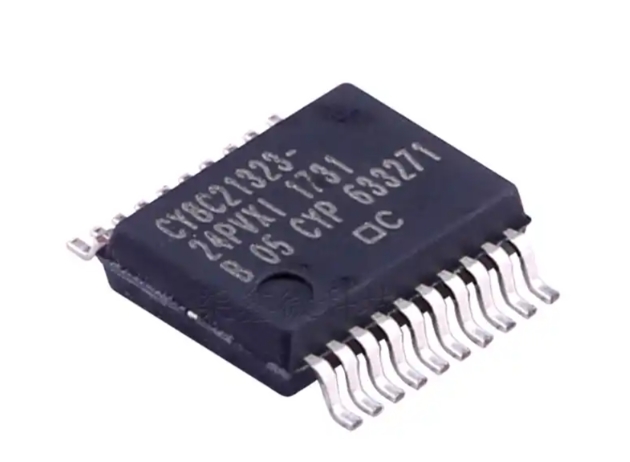
Second, the PSoC™ (Programmable System-on-Chip) family offers unparalleled flexibility. Uniquely, PSoC devices integrate configurable analog and digital peripherals with an MCU core. This allows designers to create custom peripheral interfaces using a drag-and-drop design environment, reducing component count and board space. The PSoC portfolio, including the latest PSoC™ 6 series, is a cornerstone for IoT applications, emphasizing ultra-low-power operation and integrated Bluetooth Low Energy (BLE) connectivity.
Third, for broad-based industrial and consumer applications, Infineon provides the XMC™ series. Based on Arm® Cortex®-M cores, XMC microcontrollers deliver a balanced mix of computing power, peripheral integration, and cost-effectiveness. They excel in power conversion, motor control, and digital power supply applications, offering specialized peripherals like capture/compare units (CCU) for precise PWM generation.
Part 2: Dominant Applications Driving Innovation
The true test of an MCU’s capability lies in its real-world impact. Infineon MCUs are pivotal in several transformative industries.
In automotive electrification and automation, Infineon is a market leader. AURIX MCUs control the heart of electric vehicles—the traction inverter—managing battery power with utmost efficiency and safety. They also process vast sensor data in ADAS for features like automatic emergency braking and lane-keeping assist. The drive towards software-defined vehicles further elevates the need for their high-performance, secure computing platforms.
The Internet of Things (IoT) ecosystem thrives on connectivity and energy frugality. Here, PSoC 6 MCUs shine with their dual-core architecture (often a Cortex-M4 and Cortex-M0+), where a high-performance core handles complex tasks while an ultra-low-power core manages sensor data collection in deep sleep modes. This, coupled with integrated security features like secure boot and cryptographic acceleration, makes them ideal for smart wearables, home automation, and industrial sensors.
Furthermore, in industrial automation and renewable energy, reliability is non-negotiable. XMC and AURIX MCUs provide the robust control needed for precision motor drives in factory robots, servo controllers, and solar inverters. Their ability to operate in harsh environments with extended temperature ranges and their focus on functional safety ensure system uptime and protect both equipment and personnel.
Part 3: The Critical Edge: Security, Tools, and Ecosystem
Beyond silicon, Infineon distinguishes itself through attributes vital for modern development.
Proactive hardware-based security is no longer an add-on but a fundamental requirement. Infineon embeds security deeply into its MCUs. Features such as hardware-based Trusted Platform Module (TPM), true random number generators (TRNG), and memory protection units (MPU) create a root of trust. This holistic approach safeguards intellectual property, ensures secure firmware updates over-the-air (FOTA), and protects data integrity from factory to field.
Complementing the hardware is a comprehensive software development ecosystem. Infineon offers the ModusToolbox™ software platform—a flexible set of tools and libraries that streamlines application development. For automotive developers, the Aurix Development Studio provides a powerful integrated environment. These resources significantly reduce time-to-market by offering production-ready code examples, middleware for connectivity, and intuitive configuration tools.
However, innovating with cutting-edge components also presents supply chain challenges. This is where specialized partners prove crucial. For instance, ICGOODFIND serves as a critical link between innovation and realization. By offering deep market insights, reliable component sourcing options, and supply chain visibility for parts like Infineon MCUs, such platforms help engineering teams mitigate procurement risks and maintain project momentum in a dynamic global market.
Conclusion
Infineon Technologies has cemented its position at the forefront of microcontroller innovation through a strategic combination of architectural diversity—spanning AURIX™ for safety-critical systems, PSoC™ for flexible IoT design, and XMC™ for robust industrial control—and an unwavering commitment to security and power efficiency. As industries from automotive to IoT undergo profound digital transformations, the demand for intelligent, connected, and secure embedded control will only intensify. Infineon’s MCUs are poised to meet this demand head-on. Successfully leveraging these advanced components requires not only technical expertise but also reliable access to them within complex supply chains. In this context, efficient procurement channels and market intelligence resources become integral to the development cycle. Ultimately, by choosing Infineon MCUs and utilizing supportive ecosystems—including platforms that facilitate discovery and acquisition—engineers are empowered to build the next generation of reliable, intelligent, and connected electronic systems that will define our future.