

STC12 Series MCU: A Comprehensive Guide to High-Performance Embedded Control
Introduction
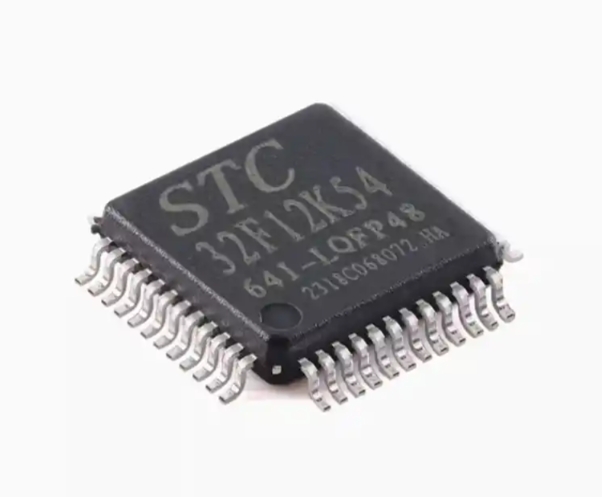
The STC12 Series MCU represents a significant advancement in the realm of embedded systems and microcontroller technology. Manufactured by STC Micro, a prominent player in the Chinese semiconductor industry, this series has carved out a substantial niche for engineers and developers seeking robust, cost-effective solutions for a wide array of applications. As an enhanced 8051-core microcontroller, the STC12 series bridges the gap between classic architecture and modern performance demands. Its relevance in today’s market is underscored by its integration into everything from industrial automation and motor control to smart home devices and consumer electronics. For professionals navigating the complex landscape of microcontroller selection, understanding the capabilities of the STC12 Series MCU is paramount. This article delves deep into its architecture, key features, and practical applications, providing a thorough resource for anyone considering this powerful component for their next project. Platforms dedicated to high-quality electronic components, such as ICGOODFIND, serve as invaluable resources for sourcing these MCUs and accessing detailed technical data, streamlining the development process for engineers worldwide.
Part 1: Architectural Foundation and Core Features of the STC12 Series MCU
The STC12 Series MCU is built upon a high-speed, single-clock-cycle 8051 core, which is a fundamental enhancement over the traditional 12-clock-cycle 8051 architecture. This core improvement alone results in a performance boost of 8 to 12 times that of classic 8051 MCUs, making it competitive with various modern ARM Cortex-M0 cores for many control-oriented tasks. The heart of the STC12 Series MCU operates at a wide voltage range, typically from 2.4V to 5.5V, and can achieve clock speeds up to 35 MHz, providing ample headroom for computationally intensive applications.
One of the most significant architectural highlights is its integrated Flash memory. The program memory capacity varies across different models within the series, ranging from 8KB to 62KB. This embedded Flash is reprogrammable, allowing for in-system programming (ISP) and in-application programming (IAP). This feature is crucial for firmware updates in deployed systems without requiring physical removal of the chip, a key advantage for field maintenance and product evolution. The ability to update firmware remotely significantly extends the product lifecycle and enhances flexibility.
Complementing the program memory is the on-chip RAM (Random Access Memory). The STC12 typically includes 1KB to 4KB of internal SRAM, which is used for variable storage and stack operations during program execution. For applications requiring more data space, many models in the series also feature an additional 1KB of extended RAM (XRAM), which can be accessed via specific instructions. This memory hierarchy is efficiently managed to support complex data processing tasks.
The peripheral set integrated into the STC12 Series MCU is remarkably rich. It typically includes: * Multiple High-Speed PWM (Pulse Width Modulation) outputs: Essential for precise control of motors, LEDs, and power converters. * Enhanced UART (Universal Asynchronous Receiver/Transmitter) modules: Supporting higher baud rates for reliable serial communication. * SPI (Serial Peripheral Interface) and I2C (Inter-Integrated Circuit) interfaces: Enabling communication with a vast ecosystem of sensors, memories, and other peripherals. * A robust 10-bit ADC (Analog-to-Digital Converter): With up to 8 channels, allowing the MCU to interface directly with analog sensors for temperature, voltage, or current monitoring. * A powerful PCA (Programmable Counter Array): This versatile module can be configured as timers, capture/compare units, or PWM generators, offloading timing-critical tasks from the main CPU.
This powerful combination of a high-speed core, substantial memory, and a comprehensive suite of peripherals makes the STC12 Series MCU a highly integrated solution, reducing the need for external components and minimizing overall system cost and board space.
Part 2: Key Advantages and Competitive Edge in the Market
The popularity of the STC12 Series MCU is not accidental; it is driven by a set of compelling advantages that address the core needs of modern electronic design. Its primary strength lies in its exceptional performance-to-cost ratio. By enhancing the well-understood 8051 architecture instead of adopting a completely new core, STC Micro has been able to offer high performance at a fraction of the cost of many contemporary 32-bit MCUs. This makes it an ideal choice for cost-sensitive mass-market products where every cent counts.
Another critical advantage is its high level of integration. Designers can often create complete functional systems using just the STC12 MCU and a few passive components. The inclusion of features like a watchdog timer, power-on reset circuitry, and low-power modes further enhances system reliability and power efficiency out-of-the-box. This “system-on-a-chip” approach drastically simplifies PCB design, reduces time-to-market, and improves overall system reliability.
Robust anti-interference capabilities and high noise immunity are hallmarks of the STC12 series. They are designed to operate reliably in electrically noisy environments, such as those found in industrial control systems or automotive applications. Features like hardened I/O ports and enhanced ESD protection ensure that the microcontroller can withstand real-world operational stresses, leading to more durable and dependable end products.
The development ecosystem surrounding the STC12 Series MCU is another significant benefit. While it can be programmed using standard C51 compilers like Keil C51 or SDCC (the Small Device C Compiler), STC Micro provides its own comprehensive set of tools. The STC-ISP (In-System Programming) software is a key part of this ecosystem, offering not just firmware downloading but also features like a built-in UART assistant, hex file generator, and oscillator calculator. This lowers the barrier to entry for developers familiar with the 8051 platform.
Furthermore, the ease of use associated with the 8051 architecture cannot be overstated. A vast pool of engineers worldwide is familiar with this architecture, and a tremendous amount of legacy code and knowledge base exists. This reduces the learning curve significantly compared to migrating to a completely new architecture like ARM, allowing teams to leverage existing expertise and accelerate development cycles. For component sourcing and comparing these features across suppliers, engineers often turn to aggregators like ICGOODFIND, which consolidates information and availability from multiple distributors.
Part 3: Practical Applications and Implementation Considerations
The versatile feature set of the STC12 Series MCU enables its deployment across a diverse spectrum of industries and products. Its real-world applications are a testament to its capability and reliability.
In the realm of industrial automation, these MCUs are extensively used in programmable logic controllers (PLCs), sensor data acquisition modules, and stepper/servo motor controllers. The high-speed PWM and PCA modules are perfectly suited for generating precise control signals for motor drives, while the robust ADC can monitor various process variables like temperature, pressure, and flow rates.
The consumer electronics market heavily utilizes the STC12 series in products such as smart home controllers, kitchen appliances (smart kettles, coffee makers), LED lighting systems, and various remote controls. Its low power consumption in idle modes makes it suitable for battery-operated devices, while its computational power handles user interface tasks and communication protocols effectively.
Another prominent application area is in power conversion and management systems. This includes switch-mode power supplies (SMPS), battery management systems (BMS), solar charge controllers, and uninterruptible power supplies (UPS). The fast interrupt response and dedicated PWM hardware allow for efficient implementation of complex power control algorithms like PFC (Power Factor Correction).
When implementing a design with the STC12 Series MCU, several best practices should be followed: * Power Supply Decoupling: Proper use of decoupling capacitors close to the VCC and GND pins is crucial for stable operation, especially given the high clock speeds. * Clock Source Selection: While internal RC oscillators are provided for cost-saving, critical timing applications benefit from an external crystal oscillator for higher accuracy. * ADC Accuracy: To achieve the best performance from the 10-bit ADC, careful PCB layout is necessary. This includes separating analog and digital grounds and using a stable reference voltage. * Utilizing ISP/IAP: Designers should plan for a communication interface (like UART) in their hardware design to leverage the In-System Programming capability for future firmware updates. * Security Features: For proprietary designs, the built-in security features that protect the internal Flash code from being read should be enabled to safeguard intellectual property.
Understanding these implementation details ensures that developers can fully harness the potential of the STC12 Series MCU, creating optimized and reliable embedded systems.
Conclusion
The STC12 Series MCU stands as a powerful testament to the enduring relevance and continued evolution of the 8051 architecture. By combining a high-performance single-cycle core with a rich set of integrated peripherals—including advanced PWM, communication interfaces, and a capable ADC—it delivers a solution that is both powerful and practical. Its key strengths lie in an unbeatable cost-performance ratio, high integration that simplifies design, robust construction for harsh environments, and a mature, accessible development ecosystem. These attributes make it an excellent choice for a vast range of applications, from industrial controls and power management to everyday consumer electronics. For engineers embarking on a new project or seeking a reliable upgrade path, the STC12 series offers a compelling blend of modern performance and traditional ease-of-use. As with any component selection, leveraging comprehensive platforms like ICGOODFIND can facilitate finding the right specific model, comparing datasheets, and ensuring a smooth supply chain for your production needs.