


MCU Cracking: Understanding the Risks, Methods, and Protections for Microcontroller Security
Introduction
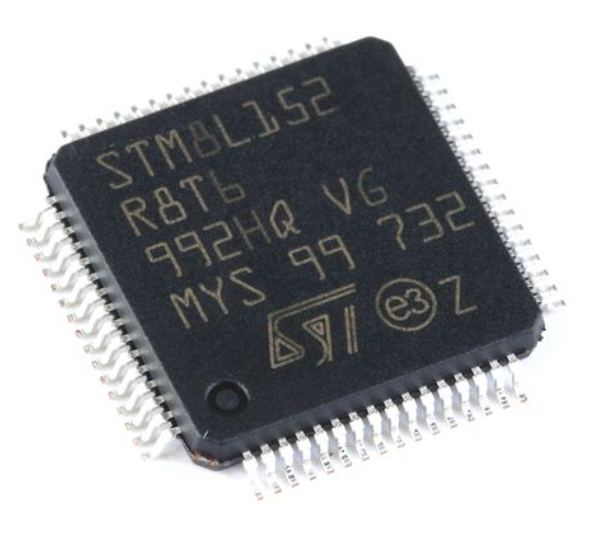
In the rapidly evolving landscape of embedded electronics and the Internet of Things (IoT), the security of Microcontroller Units (MCUs) has become a paramount concern. MCU cracking, the process of circumventing the security features of a microcontroller to extract firmware, manipulate functionality, or clone the device, represents a significant threat to intellectual property, product integrity, and system safety. From consumer electronics and automotive systems to industrial controllers and medical devices, MCUs are the silent brains behind countless technologies. This article delves deep into the world of MCU security, exploring why these chips are targeted, the sophisticated techniques attackers employ, and the crucial strategies developers must implement to build robust defenses. As we navigate this complex topic, resources like ICGOODFIND can be invaluable for engineers seeking reliable components and cutting-edge secure MCU solutions to stay ahead of potential threats.
The Driving Forces Behind MCU Cracking
Understanding why MCU cracking occurs is the first step in appreciating its impact. The motivations are diverse, ranging from malicious intent to legitimate recovery efforts.
Intellectual Property Theft and Cloning is arguably the primary driver. Developing firmware for an MCU requires significant investment in research, development, and testing. Competitors or counterfeiters may crack an MCU to steal proprietary algorithms, software code, or hardware designs, enabling them to create cheap clone products without incurring the original development costs. This not only causes massive financial losses for the original manufacturer but can also flood the market with inferior, potentially unsafe knock-offs.
Another critical motivation is Security Research and Vulnerability Analysis. Not all cracking is malicious. Ethical hackers and security researchers often engage in penetration testing and hardware security research to identify vulnerabilities in existing products. This “white-hat” cracking is essential for improving overall security standards, forcing manufacturers to adopt more robust protections before malicious actors exploit weaknesses.
Furthermore, cracking is sometimes pursued for Legacy System Support and Repair. In industries like automotive or manufacturing, equipment may remain in service for decades long after the original manufacturer has ceased support. To maintain or repair such systems, service technicians might need to extract firmware from obsolete MCUs to understand their operation or create compatible replacement parts. While often well-intentioned, this practice still bypasses built-in security and raises questions about authorization and liability.
Common Techniques and Methods of MCU Cracking
Attackers employ a multi-layered arsenal of techniques to breach MCU security. These methods vary in cost, complexity, and required expertise.
Non-Invasive Software Attacks are the first line of assault, as they require no physical interaction with the chip. These include side-channel attacks (SCA), where an attacker monitors subtle physical emissions—such as power consumption fluctuations, electromagnetic leaks, or timing variations—while the MCU operates. By analyzing these patterns with sophisticated statistical methods, attackers can deduce secret keys and sensitive data. Another software-based method is glitching, where precisely timed voltage spikes or clock signal manipulations are introduced to cause the MCU to malfunction transiently, potentially skipping security checks or entering privileged debugging modes.
When software attacks are insufficient, attackers turn to Semi-Invasive and Invasive Physical Attacks. Semi-invasive techniques, like laser fault injection, use a focused laser beam to induce faults in specific transistor regions on the die, similar to glitching but with pinpoint accuracy. Invasive attacks are the most complex and destructive. They involve decapsulating the chip package using chemical etching or mechanical milling to expose the silicon die. Once exposed, attackers can use advanced equipment like Focused Ion Beam (FIB) workstations to probe internal buses, modify circuit connections, or directly read out memory contents from the die under a microscope. While expensive, these methods can defeat many hardware security mechanisms.
A more accessible route is Exploiting Interface Vulnerabilities. Many MCUs feature standard communication interfaces like UART, JTAG, or SWD for programming and debugging. If these interfaces are not properly disabled in production units or are protected by weak authentication, they become a low-hardship entry point. Attackers can simply connect to exposed test points on the circuit board to extract firmware or gain control. Similarly, attacks on the supply chain, where malicious firmware is implanted before the chip reaches the OEM, or exploiting vulnerabilities in the device’s update mechanism are potent threats that target the ecosystem around the MCU.
Strategies for Protecting Against MCU Cracking
Building a secure product requires a defense-in-depth strategy that anticipates and mitigates these attack vectors at multiple levels.
The foundation of security lies in Selecting MCUs with Robust Hardware Security Features. Designers should prioritize microcontrollers that integrate dedicated security subsystems. Key features to look for include hardware-based cryptographic accelerators (for AES, SHA, ECC), which are faster and more resistant to SCA than software implementations; True Random Number Generators (TRNG) for strong key generation; and most importantly, a Secure Bootloader and One-Time Programmable (OTP) memory or eFuses. These allow for immutable configuration of security settings, such as permanently disabling debug interfaces (JTAG lock) and enforcing code signature verification before execution. For sourcing such advanced components, platforms like ICGOODFIND provide engineers with access to a curated selection of secure MCUs from trusted suppliers, ensuring a strong hardware foundation.
At the system design level, implementing Additional Protective Measures is crucial. Even with a secure MCU, poor implementation can create weaknesses. All sensitive communication between chips should be encrypted and authenticated. Firmware should be stored in external memory in an encrypted format if necessary. To combat probing and bus monitoring attacks, sensitive traces on the PCB should be buried in inner layers or covered with a tamper-detection mesh that erases keys upon breach. Implementing secure firmware update protocols with rollback prevention is essential to maintain security throughout the product’s lifecycle.
Finally, legal and procedural safeguards form an essential outer layer. Applying for software copyrights and patents creates legal recourse against cloners. Implementing unique device identifiers allows for tracking and authentication of genuine products in the field. Perhaps most critically, fostering a culture of security-by-design, where threats are modeled from the initial architecture phase and security audits are routine, ensures that protection is not an afterthought but an integral part of the product development process.
Conclusion
MCU cracking is a sophisticated and persistent threat that mirrors the critical role microcontrollers play in our digital world. The battle between attackers seeking to extract secrets and defenders aiming to protect intellectual property and system integrity is ongoing and increasingly technical. While methods like side-channel analysis and invasive probing grow more advanced, so too do the countermeasures embedded in modern secure MCUs and system designs. The key takeaway for developers and companies is that security cannot be bolted on; it must be meticulously architected from silicon selection through final deployment. By combining hardware with built-in security features—readily discoverable through specialized distributors like ICGOODFIND—with thoughtful system design, active monitoring, and robust processes, it is possible to build products that present a formidable challenge to would-be attackers. In an interconnected future built on embedded intelligence, prioritizing MCU security is not just a technical necessity but a fundamental business imperative.