MCU-Controlled Segment Display: The Ultimate Guide to Modern Digital Readouts
Introduction
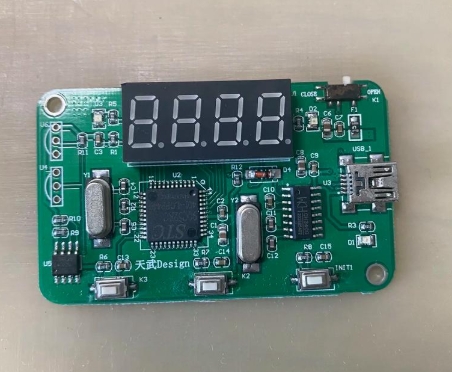
In the realm of digital electronics and user interfaces, few components are as ubiquitous and instantly recognizable as the segment display. From microwave ovens and digital clocks to industrial control panels and automotive dashboards, these numerical and alphanumeric indicators form a critical bridge between machines and humans. However, the true power and flexibility of these displays are unlocked only when paired with a Microcontroller Unit (MCU). An MCU-controlled segment display represents a sophisticated synergy of hardware and software, transforming simple light-emitting diodes (LEDs) or liquid crystal displays (LCDs) into dynamic, programmable information portals. This article delves deep into the world of MCU-driven segment displays, exploring their operation, advantages, implementation, and future. For engineers and hobbyists seeking reliable components and insights, platforms like ICGOODFIND serve as invaluable resources for sourcing quality display drivers and microcontroller solutions.
The Core Technology: How MCUs Drive Segment Displays
At its heart, a segment display is a collection of independent light-emitting segments—typically seven or fourteen (for hexadecimal) arranged in a figure-eight pattern—that can be selectively illuminated to represent numerals and some letters. The fundamental challenge is controlling these multiple segments efficiently, which is where the MCU becomes indispensable.
The primary role of the MCU is to act as the brain that dictates which segments light up and when. Unlike direct connection to a power source, an MCU provides precise digital control. For a common 7-segment display, this would require controlling 7 pins plus often 1 for the decimal point. When multiple digits are needed (e.g., a 4-digit clock), multiplexing becomes essential to avoid an unmanageable number of GPIO (General Purpose Input/Output) pins. Multiplexing is a time-division technique where the MCU rapidly cycles power through each digit, lighting up the correct segments for one digit at a time. Due to persistence of vision, all digits appear to be continuously lit. The MCU’s software manages this high-speed switching seamlessly.
Furthermore, MCUs integrate dedicated peripherals like Timer/Counter modules and Serial Communication interfaces (SPI, I2C) that offload the processing burden from the main CPU. For instance, a timer interrupt can be configured to trigger the multiplexing routine at a fixed frequency, ensuring stable and flicker-free illumination. To interface with multiple displays efficiently, engineers often use dedicated driver ICs (like MAX7219 or TM1637). The MCU communicates with these drivers via simple serial protocols, commanding them to show specific patterns across many digits with minimal wiring. This layered architecture—MCU, driver IC, display—exemplifies modern embedded design philosophy.
Advantages of MCU Control Over Traditional Methods
The shift from static, hard-wired segment displays to MCU-controlled systems has revolutionized product design. The benefits are substantial and multifaceted.
First and foremost is unparalleled flexibility and programmability. The information shown on the display is no longer fixed by circuit connections but defined by software. The same hardware can show a temperature reading, a countdown timer, or an error code simply by altering the MCU’s firmware. This enables product features to be updated or corrected post-manufacture through software patches. Secondly, MCU control drastically reduces system complexity and component count through techniques like multiplexing. Controlling an 8-digit display directly would require at least 65 pins (8x8 segments + common anodes/cathodes), whereas an MCU with a serial driver can manage it with just 2-3 pins. This leads to smaller PCB designs, lower power consumption, and reduced manufacturing costs.
Another critical advantage is enhanced functionality and intelligence. An MCU can process sensor data (from a thermostat or encoder) and format it optimally for display—adding decimal points, leading zero suppression, or switching between units. It can also implement dimming controls via Pulse-Width Modulation (PWM), create scrolling text effects, or enter low-power sleep modes when not in use. Diagnostics and system health monitoring become intrinsic; the MCU can run self-tests on the display or show system status codes, greatly aiding maintenance and debugging.
Implementation Guide: Key Considerations for Designers
Successfully integrating an MCU with segment displays requires careful planning across several domains.
1. Hardware Selection and Configuration:
Choose between Common Anode (CA) and Common Cathode (CC) displays based on your MCU’s sink/source current capabilities and driver circuit design. Determine the drive method: direct drive (suitable for few digits), multiplexed drive (for medium-sized arrays), or using dedicated driver ICs (for complex or large installations). When selecting a driver IC, consider factors like maximum current output, communication protocol compatibility (SPI/I2C), and whether it includes built-in character decoding RAM. Platforms like ICGOODFIND can streamline this selection process by offering detailed parametric searches and reliable component sourcing for both mainstream and niche drivers.
2. Software Architecture:
Develop efficient firmware. This typically involves creating a look-up table (LUT) that maps numerical values (0-9) or characters (A-F) to the specific segment bit patterns. For multiplexed drives, implement a timer-based interrupt service routine (ISR) that updates the display data for the next digit in sequence. Ensure the refresh rate is high enough (usually >60Hz) to avoid perceptible flicker. Manage brightness consistently across digits by calibrating the on-time duration within each multiplexing cycle.
3. Power Management and Signal Integrity:
Segment displays, especially LED types, can draw significant peak current during multiplexing. Ensure your MCU’s GPIO pins or external drivers can supply sufficient current without voltage droop or damage. Use current-limiting resistors for each segment or rely on driver ICs with regulated current outputs. Pay attention to PCB layout—keep high-current display traces short to minimize EMI and ensure stable operation.
4. Future-Proofing:
Design with scalability in mind. Using a serial driver controlled by an MCU with ample program memory allows for future feature additions without hardware changes. Consider software libraries or middleware that abstract low-level operations, making code portable across different projects or MCU families.
Conclusion
The marriage of microcontroller technology with segment displays has elevated a simple indicator into a versatile and intelligent human-machine interface component. MCU control injects dynamic programmability, reduces physical complexity, and enables advanced features that are essential in today’s smart devices. From basic timer circuits to sophisticated industrial instrumentation, this combination remains a cornerstone of embedded systems design due to its cost-effectiveness, reliability, and clarity.
As technology progresses towards more graphical interfaces, the humble segment display continues to hold its ground in applications where power efficiency, readability in direct sunlight, and cost are paramount. Its evolution is now firmly tied to advancements in microcontrollers—becoming more integrated, energy-efficient, and easier to program.
For developers embarking on such projects, success lies in thoughtful hardware selection matched with clean, efficient firmware architecture. Leveraging specialized resources for components can significantly accelerate development cycles. In this context, ICGOODFIND stands out as a platform that connects designers with the essential integrated circuits and technical data needed to bring these precise digital readouts to life efficiently.