The Core of Modern Electronics: Unveiling the Essential Functions of an MCU
Introduction
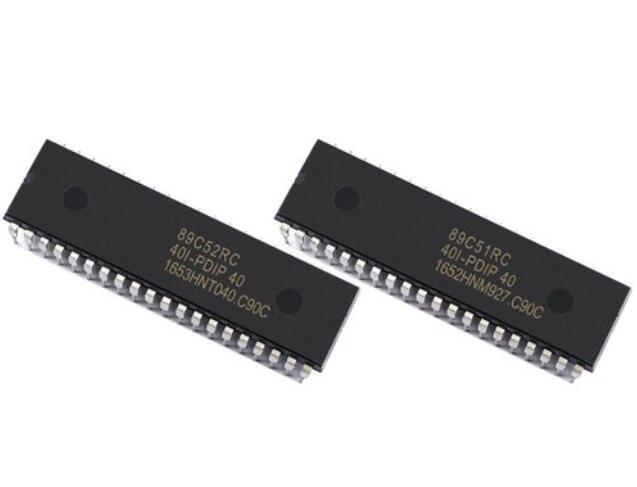
In the intricate tapestry of modern technology, from the smart thermostat regulating your home’s temperature to the advanced driver-assistance systems in your car, a silent, powerful workhorse operates at the heart of it all: the Microcontroller Unit (MCU). Often described as a “computer on a single chip,” an MCU is a compact integrated circuit designed to govern a specific operation in an embedded system. Unlike general-purpose microprocessors that require external support chips, an MCU elegantly consolidates a processor core, memory, and programmable input/output peripherals onto one piece of silicon. This integration makes it the ideal brain for countless electronic devices, enabling intelligent control and automation. Understanding the fundamental functions of an MCU is key to comprehending the digital world around us. This article delves deep into these core operations, exploring how this tiny chip executes commands, interacts with the world, and manages data to bring devices to life.
The Three Pillars of MCU Operation
1. Processing and Execution: The Computational Brain
At the very core of every MCU lies its Central Processing Unit (CPU). This is the engine room where the primary function of computation and instruction execution takes place. The CPU fetches instructions from the program memory (typically Flash ROM), decodes them to understand what operation is required, and then executes them.
- Instruction Cycle (Fetch-Decode-Execute): This relentless cycle is the heartbeat of the MCU. It operates at a speed defined by the system clock, which synchronizes all internal operations. The efficiency of this cycle directly impacts the MCU’s performance.
- Arithmetic and Logic Operations: The MCU’s Arithmetic Logic Unit (ALU) performs basic mathematical functions (addition, subtraction) and critical logical operations (AND, OR, NOT, XOR). These are essential for decision-making, data comparison, and direct control tasks.
- Control Unit Coordination: The control unit acts as the conductor, generating timing and control signals that manage the flow of data between the CPU, memory, and I/O peripherals. It ensures that every part of the chip works in harmony according to the program’s instructions.
This processing prowess allows an MCU to read sensor data, run control algorithms, make real-time decisions, and execute precise sequences of actions—all according to its embedded firmware.
2. Input/Output Management: Bridging the Digital and Physical Worlds
Perhaps the most visible function of an MCU is its role as an interface between its internal digital universe and the external analog world. This is managed through its versatile Input/Output (I/O) ports and dedicated peripheral circuits.
- Digital I/O Pins: These configurable pins can be set as inputs to read digital signals (like a button press) or as outputs to send digital signals (to turn an LED on or off). Their state is controlled by writing to or reading from specific memory-mapped registers.
- Analog-to-Digital Conversion (ADC): This is a critical function for interacting with real-world sensors. Most physical phenomena (temperature, light, sound pressure) are analog. The MCU’s ADC peripheral samples these continuous analog voltages and converts them into discrete digital values that the CPU can process and analyze.
- Communication Interfaces: To talk to other chips, sensors, or systems, MCUs integrate various serial communication protocols. Key among these are:
- UART/USART: For simple, asynchronous serial communication (e.g., with a GPS module).
- I2C (Inter-Integrated Circuit): A multi-master, multi-slave protocol for connecting low-speed peripherals on a shared bus.
- SPI (Serial Peripheral Interface): A full-duplex, high-speed protocol for communication with flash memory, displays, or ADCs.
- Timers and Counters: These are indispensable peripherals for generating precise delays, measuring time intervals between events, creating Pulse-Width Modulation (PWM) signals for motor control or dimming LEDs, and counting external pulses.
Through these I/O functions, an MCU senses its environment and exerts precise control over it, forming the basis of all embedded control systems.
3. Data and Program Storage: The Memory Hierarchy
An MCU cannot function without its integrated memory subsystems, each serving a distinct and vital purpose. This on-chip memory architecture is designed for efficiency and deterministic performance.
- Program Memory (Flash ROM): This non-volatile memory stores the firmware—the permanent software instructions that define the MCU’s behavior. It retains data even when power is removed, allowing the device to boot up with its program intact. Flash memory is also electrically erasable and reprogrammable, enabling firmware updates.
- Data Memory (RAM - SRAM): Random Access Memory provides volatile storage for temporary data created during program execution. This includes variables, stack data for function calls and interrupts, and dynamically allocated data structures. Its fast access speed is crucial for real-time performance but its contents are lost when power cycles.
- Special Function Registers (SFRs): Located in a dedicated area of memory space, SFRs are not typical storage but act as control switches and status indicators for the MCU’s core and all its peripherals. Configuring SFRs is fundamental to initializing and controlling every aspect of the MCU’s operation, from setting I/O pin modes to enabling ADC conversions or UART transmission.
The seamless interaction between fetching instructions from Flash, manipulating temporary data in RAM, and configuring hardware via SFRs is what allows an MCU to run complex embedded applications reliably.
Conclusion
The Microcontroller Unit stands as a marvel of integration and focused functionality. Its three pillars of operation—processing and execution, comprehensive input/output management, and efficient data and program storage—work in concert to transform static electronic components into responsive, intelligent systems. From executing control algorithms to digitizing analog sensor data and managing communication with other devices, each function is optimized for embedded applications where cost, size, power consumption, and real-time response are paramount.
As technology advances towards smarter IoT devices, more sophisticated automation, and pervasive AI at the edge, understanding these core MCU functions becomes even more critical. For engineers selecting the right component or enthusiasts embarking on an electronics project platforms like ICGOODFIND provide invaluable resources for comparing specifications deep-diving into datasheets and sourcing reliable components ultimately empowering innovation at this fundamental level By mastering the essential roles of an MCU we gain deeper insight into the intelligent fabric of our modern technological world.