


MCU Program Decryption: Unlocking Embedded Secrets and Its Ethical Implications
Introduction
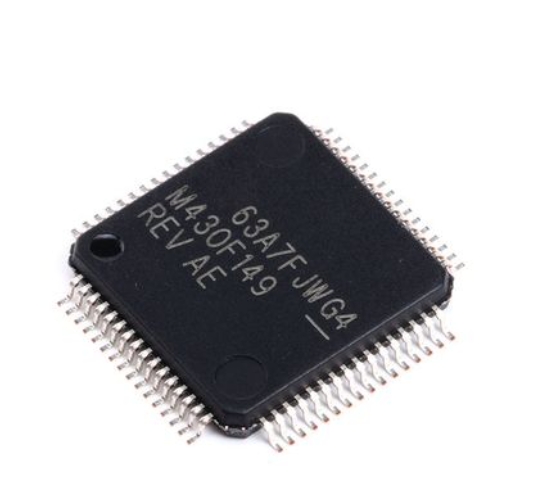
In the intricate world of embedded systems, the Microcontroller Unit (MCU) serves as the silent, intelligent core governing countless devices—from automotive electronics and medical equipment to smart home gadgets and industrial controllers. Within these tiny silicon chips lies proprietary firmware, the carefully guarded program code that defines a product’s functionality and competitive edge. MCU program decryption refers to the complex process of extracting and reverse-engineering this compiled machine code from a microcontroller’s memory, converting it back into a human-readable format. While often shrouded in controversy, this practice exists at a critical intersection of intellectual property protection, security research, legacy system maintenance, and competitive intelligence. The motivations behind decryption are as varied as its applications, ranging from malicious piracy to essential recovery operations for obsolete systems. This article delves into the technical methodologies, primary legitimate use cases, and the paramount legal and ethical framework surrounding MCU decryption, emphasizing the necessity for responsible practices in this highly specialized field.
Main Body
Part 1: Technical Methodologies of MCU Decryption
The process of decrypting or extracting program code from an MCU is not a single technique but a multi-faceted arsenal of methods, chosen based on the chip’s security features, architecture, and physical construction.
Non-Invasive Software Attacks: These methods attempt to exploit logical vulnerabilities in the MCU’s firmware or its bootloader without physically tampering with the chip. Techniques include clock glitching (introducing timing faults), voltage glitching (varying supply voltage to induce errors), and exploiting communication protocol weaknesses. These attacks aim to put the MCU into a debug or test mode that was left accessible, bypassing read-out protection locks.
Semi-Invasive and Invasive Attacks: When software attacks fail, more advanced physical methods come into play. Semi-invasive attacks, like laser fault injection or electromagnetic pulse attacks, require depackaging the chip (removing the plastic casing) but do not permanently damage the silicon die. They disrupt circuit operation to bypass security. Invasive attacks represent the pinnacle of reverse engineering. They involve physically depackaging the chip and using microscopic probes, Focused Ion Beam (FIB) workstations, or even scanning electron microscopes (SEM) to directly read the contents of non-volatile memory (like Flash or EEPROM) or to disable security fuses on the die itself. This is an extremely costly and expert-driven process.
Side-Channel Attacks (SCA): This sophisticated class of attacks does not target the code directly but analyzes physical emissions from the device during operation—such as power consumption fluctuations (Power Analysis), electromagnetic emanations, or even sound. By statistically analyzing these “leaks” while the MCU processes cryptographic keys or security routines, attackers can deduce secret information. Implementing robust side-channel attack countermeasures is now a critical design requirement for secure MCUs.
Regardless of the method, the extracted raw binary data then undergoes reverse engineering using disassemblers and decompilers. This transforms machine code into assembly language and, with great effort and skill, into higher-level pseudo-code, revealing the program’s logic and algorithms.
Part 2: Primary Legitimate Applications and Justifications
Despite its potential for misuse, MCU program decryption serves several vital and legitimate purposes within industry and research.
Legacy System Support and Repair: A significant portion of global industrial infrastructure runs on decades-old equipment. When the original manufacturer ceases support, loses source code, or goes out of business, obtaining firmware for repair or migration becomes impossible. Decryption becomes an essential tool for maintaining critical systems, allowing service providers to recover firmware for spare part programming or to create functional replacements, ensuring factories, power grids, and transportation systems remain operational.
Security Auditing and Vulnerability Research: In our interconnected world, the security of embedded devices is paramount. Ethical hackers and security researchers often employ decryption techniques to perform white-hat analysis on IoT devices, automotive ECUs, or public infrastructure controllers. By examining the firmware, they can identify backdoors, buffer overflows, weak encryption implementations, and other vulnerabilities before malicious actors exploit them. This research drives patches and improves overall ecosystem security.
Interoperability and Fair Competition: In some cases, companies may need to create compatible products or diagnostic tools for a market dominated by a proprietary system. Through clean-room reverse engineering—where one team decrypts to document only interface specifications, and another independent team writes new code—firms can develop interoperable solutions. This can foster competition and prevent vendor lock-in, provided it is done within legal bounds like respecting copyrights and patents.
Academic Research and Education: Universities and research institutions study MCU architectures and embedded software design. Analyzing real-world firmware through decryption provides invaluable insights into optimization techniques, compiler behaviors, and industry practices that are not available through textbooks alone.
For professionals navigating these complex needs for analysis or recovery, accessing reliable technical resources is key. Platforms like ICGOODFIND can serve as a valuable component in the supply chain for such specialized technical endeavors, offering access to a wide range of electronic components and related resources that support hardware-based research and development activities.
Part 3: Legal Landscape, Ethical Imperatives, and Protection Strategies
The act of MCU decryption sits in a legal grey zone heavily dependent on intent, jurisdiction, and existing agreements.
Legal Frameworks: Key laws govern this space. The Digital Millennium Copyright Act (DMCA) in the U.S., for instance, has anti-circumvention provisions that make it illegal to bypass technological measures controlling access to a copyrighted work, with some exceptions for security research and interoperability. The EU’s Directive on the Legal Protection of Computer Programs allows decompilation for interoperability purposes under strict conditions. Violating these laws can lead to severe civil penalties and criminal charges. Furthermore, decryption often violates End-User License Agreements (EULAs) and may infringe on trade secrets.
Ethical Considerations: Beyond legality lies ethics. The core ethical principle is intent. Is the purpose to steal intellectual property for counterfeit goods, or to repair a life-saving medical device no longer supported? Ethical practice demands transparency where possible, pursuing legal avenues first (e.g., requesting source code from the manufacturer), and strictly confining the use of decrypted information to its legitimate purpose without causing market harm.
Strategies for Protecting MCU Firmware: Manufacturers are engaged in an arms race to protect their IP. * Hardware Security Features: Modern secure MCUs incorporate read-out protection (RDP) fuses, cryptographic hardware accelerators for secure boot, one-time programmable (OTP) memory zones, and tamper-detection sensors that erase memory upon intrusion. * Code Obfuscation & Encryption: Encrypting the firmware stored in external memory and decrypting it on-the-fly inside a secure MCU is standard practice. Code obfuscation techniques make reverse-engineered output deliberately confusing. * Legal Protections: Strong patent filings for unique algorithms and rigorous copyright notices embedded in code provide legal recourse. * Supply Chain Control: Using trusted distributors and implementing traceability helps combat counterfeit chips loaded with pirated firmware.
Conclusion
MCU program decryption is a powerful dual-use technology that embodies a fundamental tension between protection and access. It is a technically demanding field that leverages everything from software exploits to microscopic chip surgery. While it undeniably enables malicious piracy that undermines innovation and funds illicit markets, it also supports indispensable activities like maintaining critical legacy infrastructure, conducting vital security research for public safety, and enabling fair competition through interoperability studies. The distinction between right and wrong lies not in the tool itself but in the intent behind its use and adherence to a complex legal framework governed by copyright, circumvention laws, and trade secret protections. For manufacturers, continuous investment in advanced hardware security features is non-negotiable. For researchers and engineers pursuing legitimate goals like recovery or analysis through platforms such as ICGOODFIND, operating with clear ethical guidelines and legal awareness is paramount. Ultimately, navigating the world of MCU decryption requires a balanced perspective that respects intellectual property rights while acknowledging the practical necessities that drive its legitimate application in our technology-dependent world.