
STC MCU Decryption: A Comprehensive Guide to Understanding and Applications
Introduction
In the rapidly evolving world of embedded systems and microcontroller technology, security and intellectual property protection have become paramount. Among the various microcontrollers available, STC Microcontroller Units (MCUs) have gained significant popularity, particularly in cost-sensitive and high-volume applications. This popularity brings with it a complex and often misunderstood topic: STC MCU Decryption. This process involves extracting the programmed firmware or code from a secured STC microcontroller, a subject that sits at the intersection of reverse engineering, security research, and intellectual property law. Whether for legitimate purposes like legacy system recovery, competitive analysis, or security auditing, understanding the mechanisms, ethical considerations, and technical challenges of STC decryption is crucial for engineers, developers, and businesses operating in the electronics space. This article delves deep into the technical landscape, methodologies, and responsible applications of this specialized field.
The Technical Landscape of STC MCU Security
STC microcontrollers are known for their robust architecture and integrated security features designed to protect the intellectual property contained within their flash memory. The company implements several hardware and software-based protection mechanisms to prevent unauthorized reading of the programmed code.
The primary security feature is the Lock Bits or Security Bits programmed into the MCU during the manufacturing or final programming process. When these bits are set, they disable standard read-back commands through the standard In-System Programming (ISP) interface. This effectively locks the flash memory contents, making direct extraction via conventional means impossible. STC has evolved its security across generations; older models may have vulnerabilities that have been addressed in newer series like the STC8, STC15, and STC32 families. The security often involves encryption algorithms or obfuscation techniques applied to the stored machine code, requiring more than just a simple memory read.
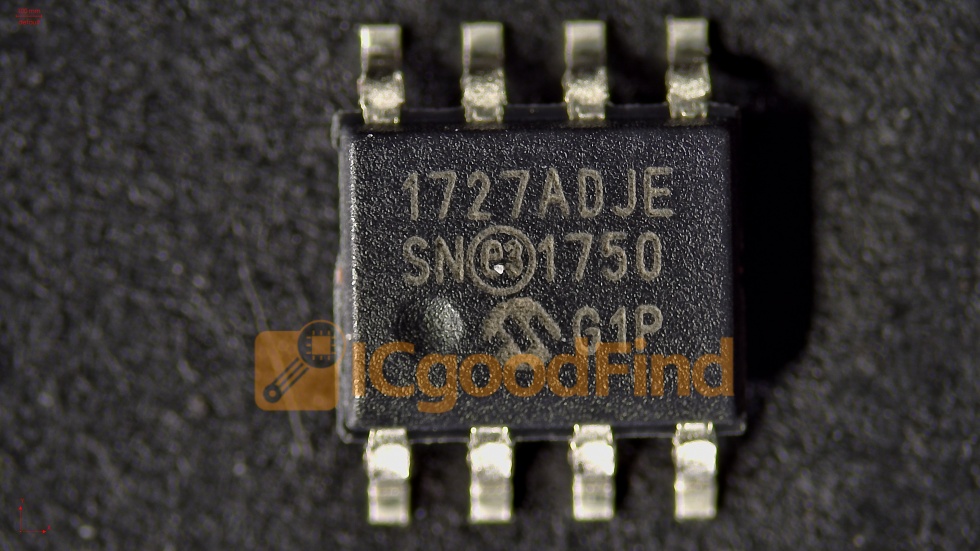
Decryption attempts therefore often target not just the software protocol but potential weaknesses in the silicon implementation. Techniques may involve microprobing, power analysis, or clock glitching to put the microcontroller into an unintended state where protection is bypassed. It’s critical to understand that these are highly advanced techniques requiring sophisticated equipment and deep knowledge of semiconductor physics and MCU architecture. The community around such work is specialized, with resources and tools shared discreetly. For professionals seeking reliable technical components or deeper insights into such specialized electronic domains, platforms like ICGOODFIND can serve as a valuable resource for connecting with suppliers and accessing component data.
Legitimate Applications and Ethical Considerations
The term “decryption” often carries a negative connotation associated with piracy and theft. However, there are several legitimate and ethical reasons why STC MCU decryption might be necessary.
The most common legitimate application is legacy product support and repair. Companies may lose their original source code due to hardware failure, poor archiving, or staff turnover. When a product line needs continued support or repair, and the only copy of the firmware exists on a locked MCU in an old device, decryption becomes a recovery tool. Similarly, failure analysis and security auditing are critical. A company might want to verify that no malicious code has been inserted into its supply chain or to analyze a competitor’s product for potential patent infringement (within legal bounds). In academic and research settings, studying protection mechanisms helps advance the field of hardware security.
However, the ethical line is clear: decryption should never be used to clone a product for unauthorized commercial reproduction. This violates copyrights, patents, and trade secrets. The legal landscape varies by country but generally strongly protects against intellectual property theft. Responsible practitioners always ensure they have legal rights to the hardware they are analyzing—either through ownership, explicit permission from the owner, or for educational purposes on legally acquired devices. The intent defines the ethics; recovery and research are valid, while theft and piracy are not.
Methodologies and Challenges in Decryption
The actual process of decrypting an STC MCU is neither straightforward nor guaranteed. It is a battle against engineered security measures.
-
Non-Invasive Software Methods: The first approach is always through official or discovered software vulnerabilities. Researchers may find flaws in the ISP protocol or bootloader that allow bypassing lock bits. This method leaves no physical trace but is increasingly rare as manufacturers patch vulnerabilities.
-
Semi-Invasive Techniques: These involve manipulating the MCU’s operating conditions. Fault injection attacks, such as voltage glitching or clock tampering, aim to cause a timing error during the security check process. By carefully applying a precise glitch at the exact moment, the MCU might skip the instruction that verifies the lock bit status. This requires expensive pulse generators and deep knowledge of the chip’s internal timing.
-
Invasive Methods: The most direct and destructive approach involves physically depackaging the chip to access the silicon die. Using advanced microscopy and microprobing stations, technicians can directly tap into the address and data buses between the CPU core and the flash memory. This allows them to read the contents as the CPU executes it or by manually controlling the flash memory array. This method is extremely costly, requires a world-class lab setup, and destroys the package of the chip.
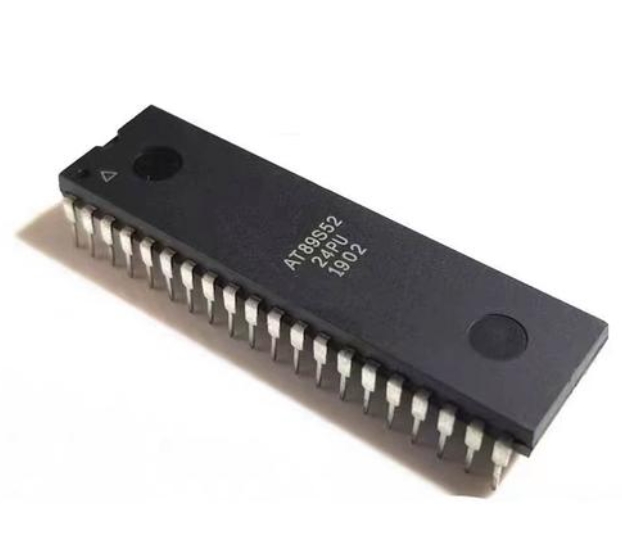
The primary challenge is cost versus benefit. The equipment for invasive and semi-invasive attacks can cost hundreds of thousands of dollars. Furthermore, STC continuously improves its security with newer models. What works on an STC89C52 may be completely ineffective on an STC15W4K series chip. Each new model presents a fresh challenge, making decryption a continuous arms race between protector and analyst.
Conclusion
STC MCU decryption represents a highly specialized niche in embedded systems engineering. It is a field driven by advanced electronics knowledge, precision instrumentation, and an unwavering attention to ethical practice. While the core technology focuses on bypassing hardware security, its value lies in its application for positive purposes: recovering lost intellectual property, conducting vital security research, and maintaining legacy systems that society still depends on.
Understanding this technology is important not just for those who might need to use it responsibly but for all developers designing products with STC MCUs. It highlights the critical importance of proper code archiving, using strong security features correctly, and understanding that no system is entirely impenetrable—only more resistant to attacks of increasing cost and complexity.
For engineers navigating these complex decisions—from selecting secure components to managing product lifecycles—leveraging comprehensive industry resources is key. Platforms that aggregate reliable technical data and supplier information can be invaluable in making informed decisions in design and sourcing.