


Mastering 8051 MCU Delay: Techniques, Calculations, and Best Practices
Introduction
In the realm of embedded systems, the 8051 microcontroller remains a cornerstone, powering countless applications from simple household appliances to complex industrial automation systems. One of the most fundamental yet critical aspects of 8051 programming is implementing precise delays. These delays are essential for timing operations, controlling peripheral devices, managing communication protocols, and creating responsive user interfaces. Without proper delay mechanisms, embedded systems would fail to synchronize their operations with external events or maintain the precise timing required for many applications.
The importance of accurate timing in microcontroller applications cannot be overstated. Consider a washing machine controller that needs to precisely time wash cycles, a traffic light system that must coordinate signal changes, or a sensor interface that requires specific sampling intervals—all these applications rely heavily on well-implemented delay routines. The 8051 MCU, despite its relatively simple architecture, offers multiple approaches to creating delays, each with its own advantages, limitations, and appropriate use cases.
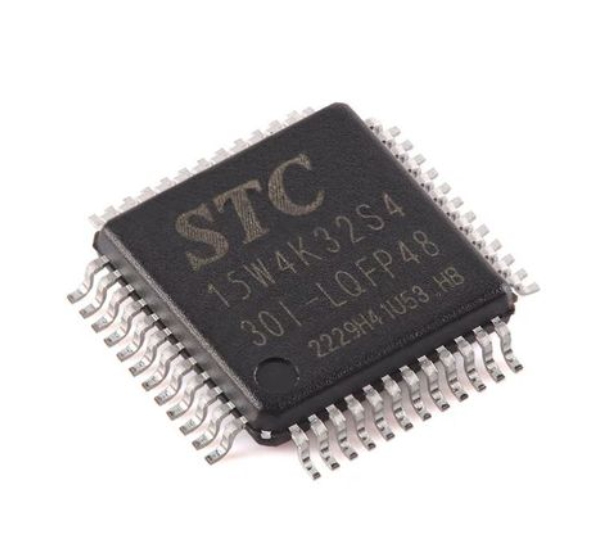
This comprehensive guide explores the various methods for implementing delays in 8051 microcontrollers, providing practical examples, detailed calculations, and real-world applications. Whether you’re a beginner learning embedded systems or an experienced developer optimizing existing code, understanding these delay techniques is crucial for creating efficient and reliable 8051-based systems. We’ll also examine how modern resources like ICGOODFIND can significantly accelerate your development process by providing tested code examples and implementation templates.
Understanding 8051 Clock System and Instruction Cycle
The foundation of all delay calculations in the 8051 microcontroller begins with understanding its clock system and instruction cycle. The 8051 operates using an external crystal oscillator that generates precise clock pulses, typically ranging from 4MHz to 24MHz depending on the specific variant and application requirements. Each instruction executed by the 8051 requires a certain number of clock cycles to complete, with most instructions taking between 1 to 4 machine cycles.
A machine cycle in the standard 8051 architecture consists of 12 clock periods. This means that for a crystal frequency of 12MHz, one machine cycle takes exactly 1 microsecond (since 12/12MHz = 1μs). However, it’s important to note that modern enhanced 8051 variants often have different machine cycle configurations, with some executing one instruction per clock cycle. For accurate delay calculations, you must always refer to the datasheet of your specific 8051 variant.
The instruction cycle time forms the basic building block for all software-based delay routines. For example, the DJNZ (Decrement and Jump if Not Zero) instruction, commonly used in delay loops, takes 2 machine cycles to execute. In a system with a 12MHz crystal, this translates to 2 microseconds per iteration. By nesting multiple DJNZ loops, programmers can create delays ranging from microseconds to several seconds.
Let’s consider a practical calculation: If you need to create a 1ms delay using a 12MHz crystal, you would calculate the required number of iterations based on the instruction timing. Since each DJNZ instruction takes 2μs, you would need approximately 500 iterations to achieve 1ms (500 × 2μs = 1000μs = 1ms). However, you must also account for additional instructions in the loop setup and overhead, which slightly increases the actual iteration count needed.
Understanding these fundamental timing relationships is crucial because inaccurate delay calculations can lead to system timing errors that compromise functionality and reliability. A sensor sampling routine that runs too slowly might miss critical data, while a display refresh routine that runs too quickly might cause flickering or unreadable output.
Software Delay Techniques and Implementation
Software delay routines represent the most common approach for creating timing intervals in 8051 applications, particularly when hardware timers are occupied with other critical functions or when multiple simultaneous delays are required. These routines work by executing a predetermined number of instructions that consume known amounts of processor time, effectively keeping the CPU busy until the desired delay period has elapsed.
The simplest form of software delay uses single-loop constructs. Here’s a basic example written in 8051 assembly language for a 12MHz crystal:
DELAY_1MS:
    MOV R0, #250     ; Load counter (1 cycle)
LOOP:
    DJNZ R0, LOOP    ; Decrement and jump (2 cycles)
    RET              ; Return (2 cycles)
In this example, the MOV instruction takes 1 cycle, the DJNZ takes 2 cycles per iteration (for 250 iterations), and the RET takes 2 cycles. The total delay can be calculated as: 1 + (250 × 2) + 2 = 503 cycles. At 12MHz (where 1 cycle = 1μs), this creates approximately a 503μs delay. To achieve precisely 1ms, you would need to adjust the iteration count or add NOP (No Operation) instructions.
For longer delays, nested loops provide greater flexibility and precision. A typical two-loop structure might look like this:
DELAY_100MS:
    MOV R1, #100     ; Outer loop counter
OUTER_LOOP:
    MOV R0, #250     ; Inner loop counter
INNER_LOOP:
    DJNZ R0, INNER_LOOP
    DJNZ R1, OUTER_LOOP
    RET
This structure creates a significantly longer delay by multiplying the inner loop duration by the outer loop count. The total delay time can be calculated as: [1 (MOV R1) + (100 × (1 (MOV R0) + (250 × 2) + 2 (DJNZ R1))) + 2 (RET)] cycles. At 12MHz, this equals approximately 100ms.
While software delays are straightforward to implement, they have significant limitations. The most notable drawback is that software delays completely occupy the CPU, preventing it from performing other tasks during the waiting period. This makes them unsuitable for applications that require multitasking or responsive user interfaces. Additionally, software delays are affected by interrupt service routines; if interrupts occur during delay execution, the actual delay time becomes unpredictable.
For C programmers working with 8051 compilers like Keil or SDCC, similar delay functions can be implemented:
void delay_ms(unsigned int ms) {
    unsigned int i, j;
    for(i = 0; i < ms; i++) {
        for(j = 0; j < 120; j++) { // Adjusted for compiler optimization
            // Empty loop - timing depends on crystal frequency
        }
    }
}
The exact loop counts needed in C implementations vary based on compiler optimization settings and the specific 8051 variant. Practical development platforms like ICGOODFIND offer pre-tested delay libraries that account for these variables, saving development time and ensuring accuracy across different project configurations.
Hardware Timer Methods for Precise Delays
Hardware timers provide a more efficient and accurate approach to implementing delays in 8051 systems, allowing the CPU to perform other tasks while waiting for the timer to expire. The standard 8051 architecture includes two16-bit timers/counters (Timer0 and Timer1) that can be configured for various timing operations, with enhanced variants offering additional timers with expanded capabilities.
Configuring hardware timers for delay generation involves several key steps: selecting the timer operating mode, loading initial values into timer registers, starting the timer, and monitoring timer overflow flags. The most common configuration uses Mode 1 (16-bit timer mode), which allows delays ranging from a few microseconds to several tens of milliseconds per timer cycle.
Here’s a practical example of implementing a precise 50ms delay using Timer0 on an 8051 with an 11.0592MHz crystal:
; Initialize Timer0 for 50ms delay
TIMER_DELAY:
    MOV TMOD, #01H    ; Set Timer0 in Mode 1 (16-bit timer)
    MOV TH0, #3CH     ; Load higher byte of initial value
    MOV TL0, #0B0H    ; Load lower byte of initial value
    SETB TR0          ; Start Timer0
WAIT:
    JNB TF0, WAIT     ; Wait for timer overflow flag
    CLR TR0           ; Stop Timer0
    CLR TF0           ; Clear overflow flag
    RET               ; Return from subroutine
The initial values loaded into TH0 and TL0 determine the delay duration. These values represent the starting point from which the timer counts up to FFFFH (65,535 in decimal). When the timer reaches its maximum value, it overflows back to 0000H and sets the TF0 flag. The calculation for the initial value is: Initial Value = Maximum Count - (Desired Delay × Crystal Frequency / 12).
For our example with an 11.0592MHz crystal and desired delay of50ms: Timer Cycles = (50ms × 11.0592MHz) /12 = 46,080 cycles Initial Value =65,536 -46,080 =19,456 =4C00H in hexadecimal Therefore: TH0 =4CH and TL0 =00H
The significant advantage of hardware timer delays is that they free up the CPU to execute other code while waiting for the delay to complete. This is achieved through two primary approaches: polling method (as shown above where the CPU continuously checks the overflow flag) and interrupt-driven method.
Interrupt-driven timer delays offer even greater efficiency:
ORG 000BH           ; Timer0 interrupt vector
LJMP TIMER_ISR

MAIN:
    MOV TMOD, #01H   ; Timer0 in Mode 1
    MOV TH0, #3CH    ; Initial values for50ms
    MOV TL0, #0B0H
    SETB EA          ; Enable global interrupts
    SETB ET0         ; Enable Timer0 interrupt
    SETB TR0         ; Start Timer0
    ; Continue with other tasks

TIMER_ISR:
    CLR TR0          ; Stop timer (optional)
    ; Perform timed operations here
    RETI             ; Return from interrupt
In this interrupt-driven approach, the main program continues executing other tasks without actively monitoring the timer. When the timer overflows, it automatically triggers an interrupt service routine where time-sensitive operations can be performed.
For complex timing requirements involving multiple simultaneous delays, programmers often combine hardware timers with software counters. The hardware timer generates a regular “tick” (e.g., every10ms), and software counters track how many ticks have elapsed for various processes. This approach forms the basis for simple real-time operating systems in embedded applications.
Modern development resources significantly streamline timer configuration processes. Platforms like ICGOODFIND offer code generators and configuration tools that automatically calculate timer values and generate initialization code based on your specific crystal frequency and delay requirements.
Conclusion
Implementing precise delays is an essential skill for any developer working with 8051 microcontrollers. Throughout this exploration, we’ve examined both software and hardware approaches, each with distinct advantages suitable for different application scenarios. Software delays offer simplicity and minimal hardware requirements but monopolize CPU resources and lack precision when interrupts are enabled. Hardware timers provide accurate, non-blocking delay capabilities but require more complex configuration and understanding of the microcontroller’s internal architecture.
The choice between these methods depends largely on your specific application requirements. For simple applications where CPU utilization isn’t a concern and approximate timing suffices, software delays provide a quick implementation path. For more complex systems requiring precise timing or multitasking capabilities, hardware timer approaches are indispensable. In many real-world applications, developers employ hybrid approaches—using hardware timers for critical timing operations and software delays for non-critical pauses.
As you develop more sophisticated embedded systems,consider exploring advanced techniques like using the watchdog timer for recovery from unexpected delays or implementing tick-based scheduling systems that manage multiple timed events efficiently.Regardless of your approach,thorough testing with oscilloscopes or logic analyzers remains crucialfor verifying actual delay accuracy in your target hardware environment.
For developers seeking to accelerate their embedded projects,ICGOODFIND provides comprehensive resources including tested code examples,timer calculation tools,and implementation templates that adapt to various8051 variants.The platform’s curated content can significantly reduce development time while ensuring reliable implementation of timing functions across different project requirements.Mastering these delay techniques will enhance both the performance and reliability of your embedded systems as you continue exploringthe vast capabilitiesofthe enduringly popular8051 microcontroller family.







