



AD633JRZ: The Precision Analog Multiplier That Powers Modern Signal Processing
Introduction
In the world of analog signal processing, precision and reliability are non-negotiable. Engineers and system designers constantly seek components that deliver accurate mathematical operations—such as multiplication, division, squaring, and modulation—without introducing excessive noise or drift. Enter the AD633JRZ, a landmark analog multiplier IC from Analog Devices that has become a staple in industrial, instrumentation, and communication systems. This article explores the architecture, key features, and practical applications of the AD633JRZ, while also highlighting how ICGOODFIND serves as a trusted sourcing platform for this essential component. Whether you are designing an automatic gain control loop, a phase detector, or a power measurement circuit, understanding the AD633JRZ is critical to achieving high-performance results.
Part 1: Core Architecture and Functional Overview
1.1 What Makes the AD633JRZ Unique?
The AD633JRZ is a four-quadrant analog multiplier that computes the product of two input voltages (X and Y) and outputs a linear result. Unlike digital multipliers that require conversion and processing delays, the AD633JRZ operates in real time, making it ideal for high-speed analog loops. Its internal architecture is based on a translinear multiplier core, which uses matched transistor pairs to achieve excellent linearity and temperature stability.
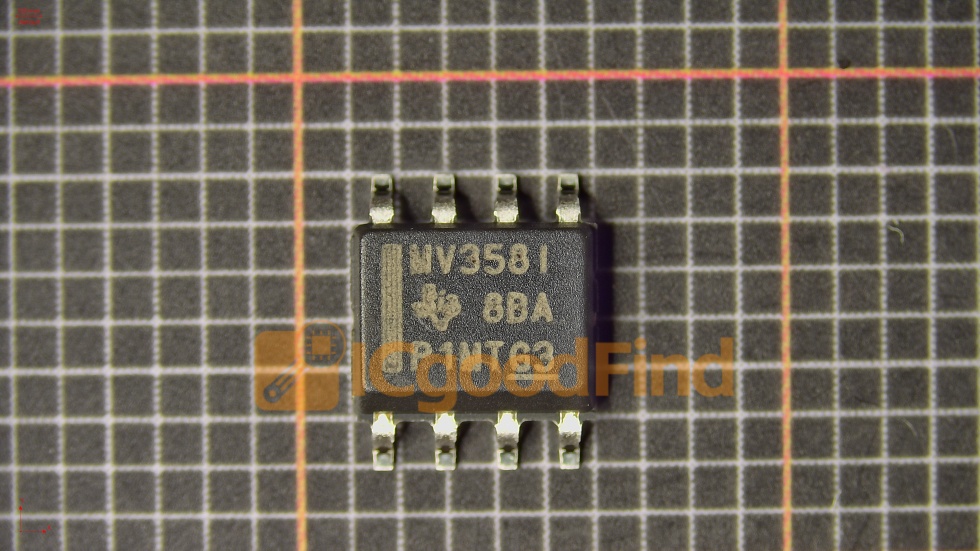
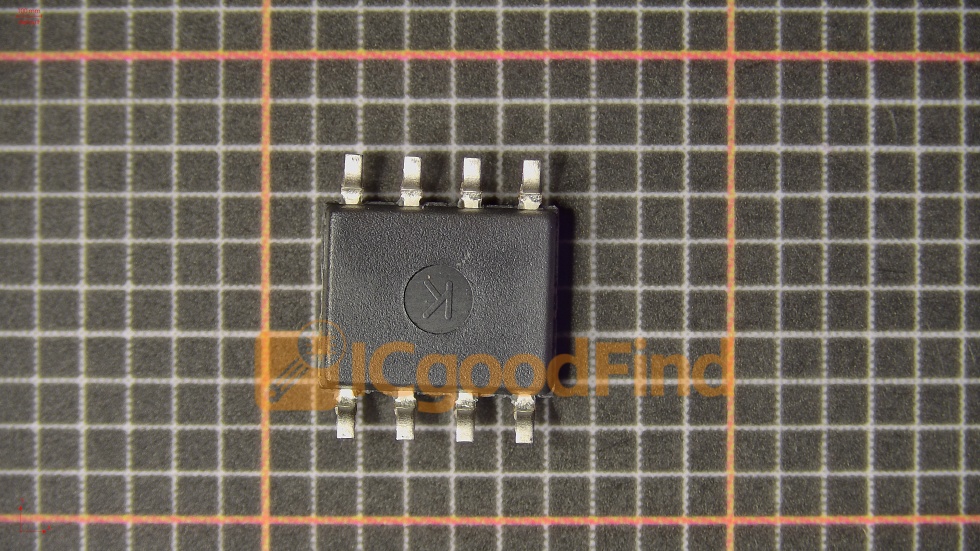
The device is available in a compact 8-pin SOIC package (hence the “JRZ” suffix), making it suitable for space-constrained PCB layouts. It operates from a ±5V to ±15V dual supply, providing flexibility for both low-power and high-voltage applications. The output is a buffered voltage that can directly drive loads up to 2kΩ, eliminating the need for an external op-amp in many cases.

1.2 Transfer Function and Key Specifications
The transfer function of the AD633JRZ is straightforward:
W = (X1 - X2) × (Y1 - Y2) / 10V + Z
Where: - X1, X2 are differential inputs for the X channel - Y1, Y2 are differential inputs for the Y channel - Z is a summing input that can be used for offset adjustment or signal addition - The division by 10V sets the scale factor, meaning a 10V differential input produces a 10V output at full scale
Key specifications that make the AD633JRZ stand out include: - Total error of ±1% (max) at 25°C, ensuring high accuracy for calibration-critical systems - Bandwidth of 1 MHz (small-signal), which is sufficient for audio, ultrasound, and many control applications - Low output offset voltage of ±5 mV, reducing the need for external trimming - High input impedance (10 MΩ) that minimizes loading on preceding stages
These parameters make the AD633JRZ a drop-in solution for designers who need predictable, repeatable analog multiplication without complex calibration routines.
1.3 Differential Inputs and Summing Node Flexibility
One often overlooked advantage of the AD633JRZ is its fully differential inputs on both X and Y channels. This allows the device to handle floating signals, reject common-mode noise, and perform subtraction directly within the multiplication process. For example, in a bridge sensor application, you can connect the differential output of a strain gauge directly to X1/X2 and Y1/Y2, and the multiplier will output a signal proportional to the product of the two bridge imbalances.
The Z input further enhances flexibility. By adding a DC voltage to Z, you can shift the output level—useful for biasing downstream circuits. Alternatively, you can feed a second signal into Z to perform multiply-accumulate operations, which are essential in adaptive filters and neural network analog implementations.
Part 2: Practical Applications and Circuit Design Tips
2.1 Automatic Gain Control (AGC) and RMS-to-DC Conversion
One of the most common uses of the AD633JRZ is in automatic gain control (AGC) loops. In a typical AGC circuit, the multiplier is used as a variable-gain amplifier: the signal path goes through the X input, while the control voltage (derived from the output envelope) is applied to the Y input. The product of the two yields an output whose amplitude is stabilized regardless of input variations.
For RMS-to-DC conversion, the AD633JRZ can be configured as a squaring circuit (by tying X and Y together), followed by an averaging filter. The square root function is then implemented using an external op-amp in the feedback path. This approach provides a true RMS measurement with better than 0.5% accuracy over a wide dynamic range—far superior to thermal or diode-based methods.
2.2 Phase Detection and Frequency Doubling
In communication systems, the AD633JRZ excels as a phase detector. When two sinusoidal signals of the same frequency are applied to X and Y, the output contains a DC component proportional to the cosine of the phase difference, plus a high-frequency term at twice the input frequency. By low-pass filtering the output, you obtain a clean phase error signal for PLL (phase-locked loop) applications.
Similarly, if you feed the same signal to both X and Y, the output becomes a frequency doubler. The output waveform is a cosine at twice the input frequency, with a DC offset. This is a simple, low-cost way to generate a second harmonic without using a dedicated frequency multiplier IC.
2.3 Power Measurement and Analog Computation
For power monitoring in AC systems, the AD633JRZ can multiply instantaneous voltage and current signals. The output is then averaged to yield real power (Watts). Because the multiplier is four-quadrant, it correctly handles both positive and negative power flow, making it suitable for bidirectional energy meters and regenerative drive systems.
Beyond power, the device is also used in analog computation such as: - Division: Place the multiplier in the feedback loop of an op-amp to compute Vout = Vref × (Z / X) - Square root: Use the multiplier as a squarer in a feedback configuration - Modulation/demodulation: Implement AM or suppressed-carrier modulation with high carrier suppression
When designing with the AD633JRZ, always decouple the power supply pins with 0.1µF ceramic capacitors placed close to the IC. Also, keep the input traces short and shielded to avoid parasitic coupling, especially in high-frequency applications.
Part 3: Sourcing and Reliability—Why ICGOODFIND Matters
3.1 The Challenge of Counterfeit Components
In today’s global electronics market, sourcing genuine analog ICs is a growing concern. Counterfeit AD633JRZ parts may have inferior silicon, wrong pinouts, or degraded performance, leading to field failures and costly redesigns. ICGOODFIND addresses this by offering a verified supply chain with direct links to authorized distributors and original manufacturers. Their platform aggregates real-time inventory from multiple sources, allowing you to compare prices and lead times without compromising on authenticity.
3.2 How ICGOODFIND Simplifies Procurement
When you search for “AD633JRZ” on ICGOODFIND, you get instant access to: - Datasheets and technical documentation from the original manufacturer - Cross-reference tools to find alternative packages or temperature grades (e.g., AD633JNZ for DIP) - Supplier ratings and quality scores based on historical transaction data - Bulk pricing tiers for production runs, as well as sample quantities for prototyping
This transparency is invaluable for both small startups and large OEMs. Instead of spending hours contacting multiple distributors, you can use ICGOODFIND to shortlist trusted sellers and place orders with confidence. The platform also provides export compliance checks and RoHS/REACH status, ensuring your designs meet environmental regulations.
3.3 Long-Term Availability and Lifecycle Management
Analog Devices has a strong commitment to long-term product availability, and the AD633JRZ is no exception. However, for legacy designs or high-volume production, it is wise to monitor lifecycle status. ICGOODFIND tracks last-time buy (LTB) notices and end-of-life (EOL) alerts, so you can plan your inventory accordingly. If a substitute is ever needed, the platform’s parametric search helps you find functionally equivalent multipliers from other reputable brands, minimizing redesign effort.
By using ICGOODFIND as your primary sourcing tool, you reduce the risk of procurement delays and ensure that every AD633JRZ you place on your PCB is genuine, fully traceable, and backed by manufacturer warranty.
Conclusion
The AD633JRZ remains a cornerstone of analog signal processing, offering a rare combination of precision, speed, and versatility. Its differential inputs, summing node, and four-quadrant operation make it suitable for everything from simple squaring circuits to complex adaptive filters. Whether you are building a power meter, a PLL, or an analog computer, this IC delivers reliable, repeatable performance that digital alternatives often struggle to match in real-time applications.
When it comes to sourcing this critical component, ICGOODFIND provides a secure, efficient, and transparent pathway. By leveraging their global network of verified suppliers, you can focus on your design while they handle the logistics of authenticity, pricing, and delivery. In an industry where a single counterfeit part can compromise an entire system, partnering with a trusted distributor is not just a convenience—it is a necessity.
Embrace the analog advantage with the AD633JRZ, and let ICGOODFIND be your bridge to genuine, high-quality components.