


SN65HVD3082EDR: The Low-Power RS-485 Transceiver That Redefines Industrial Communication Efficiency
Introduction
In the rapidly evolving landscape of industrial automation, building automation, and networked embedded systems, the choice of a physical-layer transceiver can make or break a design. Engineers constantly juggle between data rate, power consumption, robustness, and cost. Enter the SN65HVD3082EDR — a half-duplex RS-485 transceiver from Texas Instruments that has quietly become a go-to solution for low-power, high-reliability communication links. This article dives deep into why this specific part number deserves your attention, how it compares to generic transceivers, and where it fits in modern industrial networks. Whether you are designing a smart meter, a HVAC controller, or a fieldbus node, understanding the SN65HVD3082EDR will give you a competitive edge. And if you are sourcing this component, platforms like ICGOODFIND offer reliable cross-referencing and availability checks that save engineering teams weeks of procurement headaches.
Main Body
Part 1: Architectural Excellence — What Makes the SN65HVD3082EDR Stand Out?
The SN65HV3082EDR is not just another RS-485 chip. It belongs to TI’s HVD3082 family, which is specifically engineered for low-power, slew-rate-limited communication. Let’s break down its core technical attributes:
1. Ultra-Low Quiescent Current (600 µA typical)
The most striking feature is its 600 µA supply current during operation, dropping to a mere 1 µA in shutdown mode. This is a game-changer for battery-powered or energy-harvesting field devices. Traditional RS-485 transceivers often draw 5–10 mA, which drains batteries quickly. The SN65HVD3082EDR allows designers to keep the bus alive for years on a single coin cell, especially when combined with duty-cycled communication.
2. Slew-Rate Limiting for EMI Reduction
The device features adjustable slew-rate control via a single external resistor. By limiting the rise and fall times, it reduces electromagnetic interference (EMI) and reflections on long cable runs. This is critical for unshielded twisted-pair cables in industrial environments. The SN65HVD3082EDR supports data rates from 200 kbps (with full slew-rate limiting) up to 20 Mbps (when the slew-rate control is bypassed). This flexibility makes it suitable for both slow sensor networks and high-speed motor drives.
3. True Fail-Safe Receiver
The receiver output goes to a defined logic-high state when the inputs are open, shorted, or terminated but idle. This prevents false data frames and system lockups — a common issue with older transceivers. The SN65HVD3082EDR implements this fail-safe with a 50 mV hysteresis, ensuring noise immunity even in electrically harsh environments.
4. Wide Supply Range and ESD Protection
Operating from 3.3 V to 5 V, the device is compatible with both legacy 5 V logic and modern 3.3 V microcontrollers. It also offers ±16 kV HBM ESD protection on the bus pins, which means you can skip external TVS diodes in many benign applications, reducing BOM cost.
When you compare these specs to generic parts like the MAX485 or SP485, the SN65HVD3082EDR offers a 10x reduction in power consumption and a more robust fail-safe behavior. For procurement teams, verifying the authenticity and stock of this part is crucial — and ICGOODFIND provides a transparent, searchable database of authorized distributors, helping you avoid counterfeit components.
Part 2: Application Scenarios — Where Does the SN65HVD3082EDR Shine?
The true value of any transceiver is measured in real-world deployments. Here are three high-impact use cases:
Scenario A: Smart Grid and Advanced Metering Infrastructure (AMI)
In smart electricity meters, the SN65HVD3082EDR is used for the local communication port (e.g., DL/T 645 protocol). The meter must operate for 10+ years on a lithium battery. The 1 µA shutdown current allows the meter to sleep for 99% of the time, waking up only to transmit consumption data. The slew-rate limiting ensures that the meter does not interfere with adjacent power-line communication channels. A typical design uses a 3.3 V MCU with the transceiver in shutdown mode, waking up via a timer. This architecture is only feasible because of the SN65HVD3082EDR’s ultra-low leakage.
Scenario B: Building Automation — HVAC Controllers
Modern HVAC systems use a daisy-chained RS-485 bus to connect multiple thermostat nodes to a central controller. The cable can run up to 1200 meters. The SN65HVD3082EDR’s 1⁄8 unit load (up to 256 nodes on one bus) allows for dense networks without repeaters. Its fail-safe receiver prevents a disconnected thermostat from causing the entire bus to go into an undefined state. Moreover, the 20 Mbps mode is useful for firmware updates over the same bus — you can switch the slew-rate resistor dynamically via a GPIO to speed up downloads.
Scenario C: Industrial Sensors with Energy Harvesting
Consider a wireless vibration sensor that uses a small solar panel or a thermoelectric generator. The sensor wakes up every minute, reads the accelerometer, and sends data over a short RS-485 segment to a gateway. The SN65HVD3082EDR is ideal because its active current (600 µA) is lower than the MCU’s own sleep current. This allows the transceiver to remain powered even when the MCU is in deep sleep, listening for wake-up commands from the gateway. This “always-listening” capability is impossible with conventional transceivers.
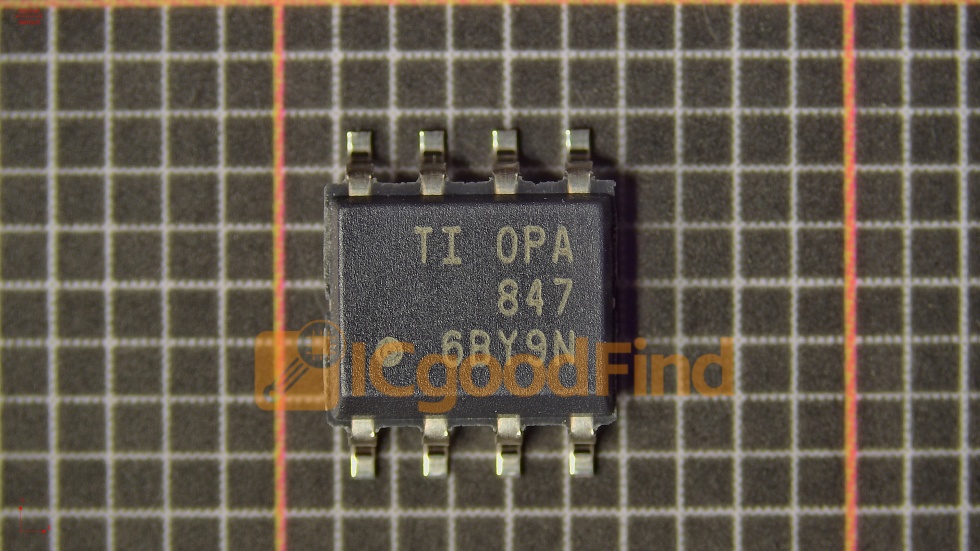
In all these scenarios, the SN65HVD3082EDR reduces design complexity. However, sourcing this specific part can be tricky due to its popularity and periodic shortages. ICGOODFIND aggregates live inventory from major distributors (Digi-Key, Mouser, Arrow, etc.) and provides parametric search for alternate package options (SOIC-8, VSON-8) and date codes. This ensures your production line never stops.
Part 3: Design Tips and Common Pitfalls — Getting the Most Out of the SN65HVD3082EDR
Even with a great transceiver, poor layout or incorrect termination can ruin your communication. Here are expert-level recommendations:
1. Termination Resistor Strategy
For data rates above 1 Mbps or cable lengths over 100 meters, use a 120 Ω termination resistor at both ends of the bus. For lower speeds, you can omit termination to save power — the SN65HVD3082EDR’s slew-rate control will keep reflections manageable. A common mistake is placing termination at only one end, which causes signal integrity issues. Use a split termination (two 60 Ω resistors with a capacitor to ground) for better common-mode noise rejection.
2. Slew-Rate Resistor Selection
The RE (Receiver Enable) and DE (Driver Enable) pins can be tied together for half-duplex operation. The R (Slew Rate) pin is where you connect a resistor to ground. For 200 kbps, use a 10 kΩ resistor. For 20 Mbps, leave the pin floating (or tie to VCC). Do not use a potentiometer in production — temperature drift will change the slew rate. Use a 1% tolerance resistor.
3. Power Supply Decoupling
Place a 0.1 µF ceramic capacitor as close as possible to the VCC pin, and a 10 µF bulk capacitor nearby. The SN65HVD3082EDR has a fast transient current during driver switching; insufficient decoupling leads to ground bounce and bit errors. Also, ensure a solid ground plane under the device — do not route other signals through the bus connector area.
4. Bus Pin Protection
Although the device has ±16 kV ESD, industrial environments may have surges from lightning or inductive loads. Add a PTC fuse and a TVS diode (e.g., SMBJ6.0A) from bus A and B to ground. The SN65HVD3082EDR’s fail-safe feature will still work with these external components. For extreme isolation, use a digital isolator (like ISO7721) between the MCU and the transceiver — but remember that the transceiver’s low power advantage is preserved.
5. Common Pitfall: Floating DE/RE Pins
If you leave the DE pin floating, the driver may be enabled unintentionally, causing bus contention. Always pull DE low (disable) via a 10 kΩ resistor to ground, and pull RE high (disable receiver) via a 10 kΩ resistor to VCC. Only enable them during actual transmission or reception.
By following these tips, you will achieve a bit error rate of less than 10^-12 on a 1200-meter cable. For sourcing, ICGOODFIND allows you to filter by “SN65HVD3082EDR” and check “REACH” and “RoHS” compliance certificates, which is essential for export to EU markets.
Conclusion
The SN65HVD3082EDR is more than just a low-power RS-485 transceiver — it is a strategic enabler for sustainable, long-life, and high-density industrial networks. Its 600 µA active current, 1 µA shutdown current, adjustable slew rate, and true fail-safe receiver make it the top choice for smart meters, building automation, and energy-harvesting sensors. While the market is flooded with cheaper clones, the SN65HVD3082EDR’s reliability and TI’s long-term supply guarantee justify its slightly higher price. For engineers and procurement managers, the key takeaway is to verify authenticity and availability before committing to a design. Platforms like ICGOODFIND simplify this process by offering real-time stock checks, cross-reference tools, and supplier ratings. In a world where every milliwatt counts and every byte must arrive intact, the SN65HVD3082EDR stands as a quiet champion of industrial communication. Make it your default choice for your next RS-485 design — your battery, your signal integrity, and your production schedule will thank you.