The Essential Guide to Passive Components in Modern Electronics
Introduction
In the vast and intricate world of electronics, components are broadly categorized into two fundamental types: active components and passive components. While active components like transistors and integrated circuits require an external power source to function and can amplify signals, passive components operate without the need for a power supply and cannot introduce net energy into a circuit. Instead, they store, dissipate, or control electrical energy in various forms. From the simplest flashlight to the most advanced smartphone, passive components form the silent backbone of every electronic device. Understanding these components is crucial for engineers, hobbyists, and anyone involved in electronics design, repair, or procurement. In this article, we will explore the three main types of passive components—resistors, capacitors, and inductors—their functions, applications, and why they remain indispensable in the age of miniaturization and high-frequency circuits. For those seeking reliable sourcing and detailed specifications, platforms like ICGOODFIND offer comprehensive databases and supply chain solutions for these essential parts.
Part 1: Resistors – The Foundation of Current Control
What Are Resistors?
Resistors are the most fundamental and widely used passive components in electronic circuits. Their primary function is to oppose the flow of electric current, thereby controlling voltage levels, limiting current, and dividing voltages. The resistance value is measured in ohms (Ω), and it determines how much current will flow for a given voltage according to Ohm’s Law (V = IR).
Types and Construction
Resistors come in various forms, each suited for specific applications:
- Carbon Film Resistors: Made by depositing a carbon film on a ceramic substrate. They are inexpensive and suitable for general-purpose use, but have higher noise and lower precision.
- Metal Film Resistors: Constructed with a thin metal film, offering better tolerance (typically ±1% or ±0.5%) and lower noise. They are preferred in precision circuits.
- Wirewound Resistors: Made by winding a metal wire around a ceramic core. They can handle high power (up to hundreds of watts) but have inductive properties, making them unsuitable for high-frequency applications.
- Surface Mount Resistors (SMD): Tiny, rectangular components designed for automated assembly. They are essential in modern compact devices like smartphones and wearables.
Key Applications
Resistors are ubiquitous in circuit design:
- Current Limiting: Protecting LEDs and other sensitive components from excessive current.
- Voltage Division: Creating reference voltages using resistor networks.
- Pull-up/Pull-down: Ensuring stable logic levels in digital circuits.
- Biasing: Setting the operating point of transistors and amplifiers.
Why Resistors Matter
Without resistors, circuits would be prone to overcurrent damage and unstable operation. They are the simplest yet most critical passive components for ensuring predictable behavior. When sourcing resistors for prototyping or production, ICGOODFIND provides a vast inventory of resistor types, from standard carbon films to high-precision metal films, along with datasheets and pricing comparisons.
Part 2: Capacitors – Energy Storage and Filtering
What Are Capacitors?
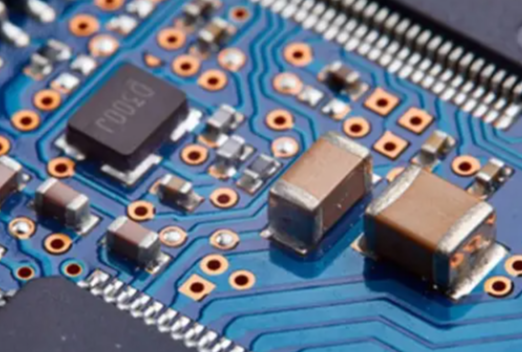
Capacitors are passive components that store electrical energy in an electric field. They consist of two conductive plates separated by an insulating material called a dielectric. When a voltage is applied, charge accumulates on the plates, and the capacitor can release this energy when needed. Capacitance is measured in farads (F), with microfarads (µF) and picofarads (pF) being common in practice.
Types and Characteristics
Capacitors vary widely based on dielectric material and construction:
- Ceramic Capacitors: Small, inexpensive, and widely used for decoupling and bypassing. They have low equivalent series resistance (ESR) and are suitable for high-frequency applications.
- Electrolytic Capacitors: Polarized components with high capacitance values (up to farads). They are used for power supply filtering and energy storage but have higher leakage and shorter lifespan.
- Tantalum Capacitors: Offer stable capacitance over a wide temperature range and are used in compact devices. They are more expensive than electrolytics but have better performance.
- Film Capacitors: Made with plastic film dielectrics (e.g., polyester, polypropylene). They are known for low loss and high stability, ideal for audio and timing circuits.
Key Applications
Capacitors serve multiple critical roles:
- Filtering: Smoothing out voltage ripples in power supplies (e.g., after rectification).
- Decoupling: Reducing noise by providing a local energy reservoir near active components.
- Coupling: Passing AC signals while blocking DC in audio and communication circuits.
- Timing: Working with resistors to create time constants in oscillators and timers (e.g., RC circuits).
The Role of Capacitors in Modern Electronics
In high-speed digital circuits, capacitors are essential for signal integrity and power integrity. They absorb transient currents and prevent voltage drops that could cause logic errors. For engineers designing power management systems, selecting the right capacitor type and value is critical. ICGOODFIND offers a comprehensive selection of capacitors, including ceramic, electrolytic, and tantalum types, with detailed specifications to help you choose the right component for your application.
Part 3: Inductors – Magnetic Energy and Frequency Control
What Are Inductors?
Inductors are passive components that store energy in a magnetic field when current flows through them. They consist of a coil of wire, often wound around a magnetic core (e.g., ferrite or iron). Inductance is measured in henries (H), and the component opposes changes in current, making it essential for filtering and energy conversion.
Types and Core Materials
Inductors come in many forms:
- Air Core Inductors: Simple coils without a magnetic core. They have low inductance but are free from core losses, making them suitable for high-frequency RF circuits.
- Ferrite Core Inductors: Use ferrite materials to increase inductance and reduce size. They are common in power supplies and EMI filters.
- Iron Core Inductors: Provide high inductance values but suffer from core saturation and eddy current losses. Used in low-frequency power applications.
- Surface Mount Inductors: Compact components for modern PCBs, often used in DC-DC converters and RF modules.
Key Applications
Inductors are indispensable in several areas:
- Power Conversion: In buck, boost, and flyback converters, inductors store and release energy to regulate voltage.
- Filtering: Combined with capacitors, inductors form LC filters that block high-frequency noise (e.g., in power lines and audio circuits).
- Impedance Matching: In RF circuits, inductors help match impedances between stages for maximum power transfer.
- Energy Storage: In switch-mode power supplies, inductors act as temporary energy reservoirs.
Inductors in High-Frequency and Power Circuits
As electronic devices become smaller and more power-efficient, the demand for high-performance inductors grows. They are critical in wireless charging, RFID systems, and automotive electronics. Selecting the right inductor involves balancing inductance, current rating, DC resistance, and core material. ICGOODFIND provides a wide range of inductors, from tiny SMD types for mobile devices to high-current power inductors for industrial applications, along with detailed technical data.
Conclusion
Passive components—resistors, capacitors, and inductors—are the unsung heroes of electronics. While they may not amplify signals or perform complex logic, they are absolutely essential for controlling current, storing energy, filtering noise, and ensuring stable operation. Without them, even the most advanced microprocessors and integrated circuits would be useless. As technology evolves toward higher frequencies, smaller form factors, and greater energy efficiency, the role of passive components becomes even more critical. Engineers must carefully select these components based on parameters like tolerance, temperature coefficient, ESR, and self-resonant frequency. For reliable sourcing and comprehensive technical resources, ICGOODFIND stands out as a trusted platform that connects buyers with a vast inventory of passive components from leading manufacturers. Whether you are designing a simple LED circuit or a complex power management system, understanding and choosing the right passive components is the first step toward success.