Mastering the Role of Passive & Active Components in Modern Electronics: A Comprehensive Guide
Introduction
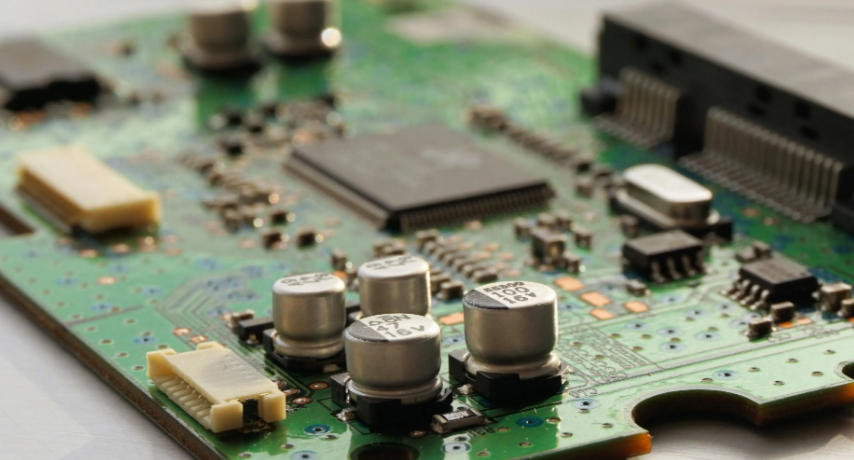
In the ever-evolving world of electronics, the distinction between passive & active components forms the bedrock of circuit design and functionality. Whether you are a hobbyist building your first LED circuit or an engineer designing complex IoT devices, understanding these two fundamental categories is non-negotiable. Passive components—such as resistors, capacitors, and inductors—cannot amplify or control energy; they simply store, dissipate, or filter it. In contrast, active components—like transistors, diodes, and integrated circuits—can control current flow, amplify signals, and perform switching operations. This article dives deep into the characteristics, applications, and selection criteria for both types, while also highlighting how platforms like ICGOODFIND simplify sourcing these critical parts for your projects. By the end, you will have a clear roadmap to optimize your designs using the right mix of passive & active components.
Body
Part 1: Understanding Passive Components – The Foundation of Every Circuit
Passive components are the unsung heroes of electronics. They do not require an external power source to function and cannot introduce energy into a circuit. Instead, they respond to voltage and current in predictable ways, making them indispensable for signal conditioning, energy storage, and noise reduction.
1.1 Resistors: Controlling Current and Voltage
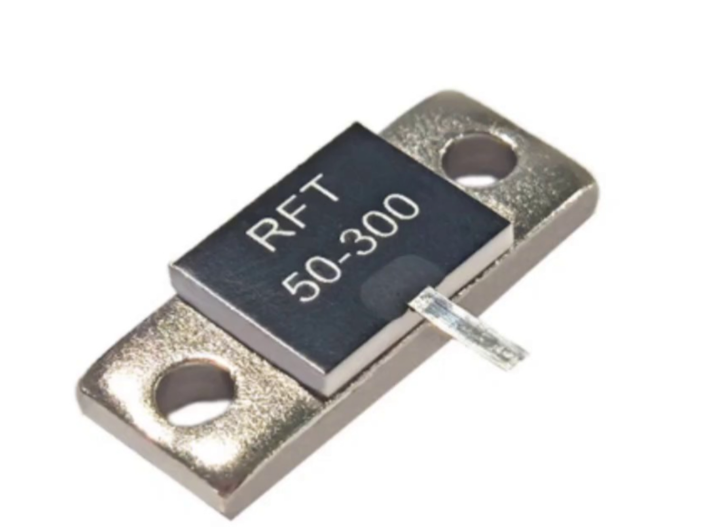
Resistors are the most common passive components. They limit current flow, divide voltages, and set bias points for active devices. Available in fixed, variable (potentiometers), and specialized types (e.g., thermistors, photoresistors), resistors are rated by resistance (ohms), tolerance, and power dissipation. For high-precision applications, metal-film resistors offer low noise and stability, while carbon-film types are cost-effective for general use. When sourcing resistors, ICGOODFIND provides a vast inventory with detailed specifications, ensuring you find the exact value and package for your PCB layout.
1.2 Capacitors: Storing and Filtering Energy
Capacitors store electrical energy in an electric field and release it when needed. They are critical for smoothing power supplies, coupling AC signals, and timing circuits. Key parameters include capacitance (farads), voltage rating, and dielectric material (ceramic, electrolytic, tantalum, film). For example, ceramic capacitors are ideal for high-frequency decoupling, while electrolytic capacitors handle bulk energy storage in power circuits. ICGOODFIND allows you to filter capacitors by ESR, temperature coefficient, and size, making it easier to select the right component for your design.
1.3 Inductors: Managing Magnetic Fields
Inductors store energy in a magnetic field and oppose changes in current. They are essential in power converters, filters, and RF circuits. Inductance (henries), current rating, and DC resistance (DCR) are critical specs. Ferrite-core inductors are common for high-frequency applications, while iron-core types suit low-frequency power circuits. When designing switch-mode power supplies, the choice of inductor directly impacts efficiency and ripple. ICGOODFIND lists inductors from leading manufacturers, complete with datasheets and application notes.
1.4 Other Passive Components
Beyond the big three, passive components include transformers, crystals, and varistors. Transformers transfer energy between circuits via magnetic coupling, crystals provide precise frequency references, and varistors protect against voltage spikes. Each plays a unique role in ensuring circuit stability and performance.
Part 2: Exploring Active Components – The Brains and Muscles of Electronics
Active components rely on an external power source to control current flow and amplify signals. They are the building blocks of logic gates, amplifiers, and power management systems. Without them, modern computing, communication, and automation would be impossible.
2.1 Diodes: One-Way Gates for Current
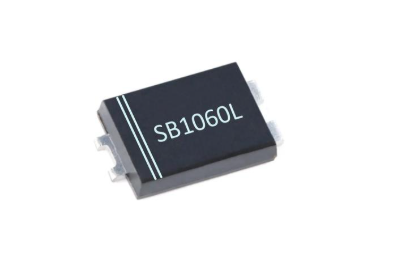
Diodes allow current to flow in only one direction, making them essential for rectification, signal demodulation, and protection. Standard silicon diodes (e.g., 1N4148) handle low-power switching, while Schottky diodes offer fast recovery and low forward voltage drop for high-frequency circuits. Zener diodes regulate voltage by breaking down at a precise reverse voltage. ICGOODFIND stocks a wide range of diodes, including high-voltage and high-current variants, with clear ratings for forward current, reverse voltage, and switching speed.
2.2 Transistors: Amplifiers and Switches
Transistors are the workhorses of active components. Bipolar junction transistors (BJTs) amplify current, while field-effect transistors (FETs) amplify voltage. MOSFETs, a type of FET, dominate power switching due to their high input impedance and low on-resistance. For example, an N-channel MOSFET like the IRF540 can switch tens of amps with minimal gate drive. In digital circuits, transistors form logic gates and memory cells. ICGOODFIND offers parametric search for transistors by Vds, Id, Rds(on), and package type, helping you match the right device to your application.
2.3 Integrated Circuits (ICs): Complex Functionality in a Single Package
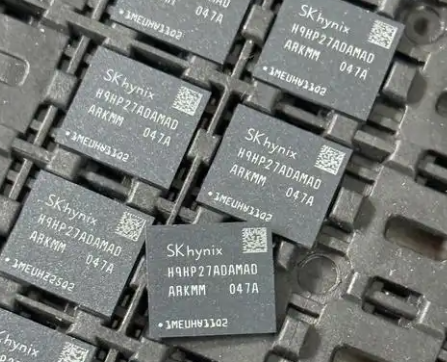
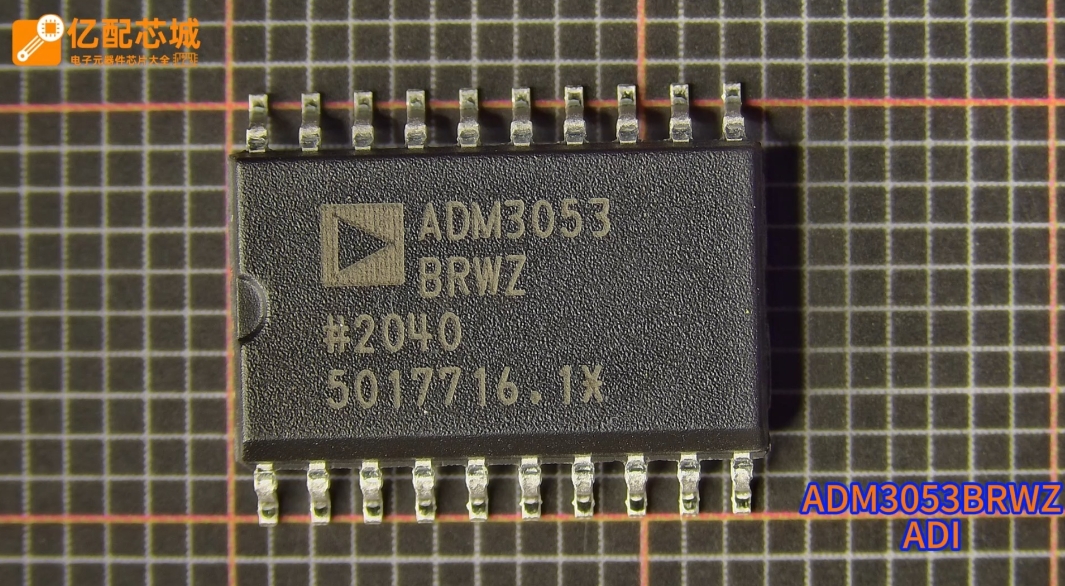
ICs integrate multiple active components (and sometimes passive components) into a single chip. They range from simple op-amps (e.g., LM358) to complex microcontrollers (e.g., STM32) and FPGAs. ICs reduce board space, improve reliability, and simplify design. When selecting an IC, consider supply voltage, operating temperature, pin count, and communication interfaces (I2C, SPI, UART). ICGOODFIND provides cross-reference tools and stock availability for thousands of ICs, including hard-to-find legacy parts.
2.4 Other Active Components
Optoelectronic devices like LEDs and photodiodes, as well as voltage regulators and thyristors, also fall under active components. LEDs convert electrical energy to light, while photodiodes detect light. Voltage regulators (e.g., LM7805) maintain a stable output despite input variations. Thyristors (SCRs, triacs) control high-power AC loads. Each requires careful consideration of power dissipation, thermal management, and drive circuitry.
Part 3: Selecting and Sourcing Passive & Active Components – Best Practices
Choosing the right passive & active components is a balancing act between performance, cost, availability, and reliability. Here are actionable strategies to streamline your selection process.
3.1 Define Electrical Requirements
Start with the circuit’s voltage, current, frequency, and power needs. For passive components, calculate tolerance and temperature coefficient requirements. For active components, determine gain, bandwidth, and switching speed. Use simulation tools (e.g., SPICE) to validate your choices before prototyping.
3.2 Consider Physical Constraints
Board space, mounting type (through-hole vs. SMD), and thermal management influence component selection. SMD components are preferred for high-density designs, while through-hole parts suit prototyping and high-power circuits. ICGOODFIND allows you to filter by package type (e.g., 0805, TO-220, QFN) and footprint, ensuring compatibility with your PCB layout.
3.3 Evaluate Reliability and Lifecycle
For production runs, choose components with proven reliability and long lifecycle. Avoid parts marked as “NRND” (Not Recommended for New Designs) or “EOL” (End of Life). ICGOODFIND provides lifecycle status and alternative recommendations, helping you future-proof your design.
3.4 Leverage Sourcing Platforms Like ICGOODFIND
ICGOODFIND is a powerful tool for sourcing both passive & active components. Its search engine aggregates inventory from multiple distributors, offering real-time pricing, stock levels, and datasheets. You can compare alternatives, check lead times, and even set up alerts for price drops. For example, if you need a 10µF ceramic capacitor with X7R dielectric, ICGOODFIND instantly shows options from Murata, TDK, and Samsung, along with their voltage ratings and dimensions. Similarly, for a specific MOSFET like the NTD3055, the platform provides cross-references and package variants.
3.5 Prototype and Test
Always prototype with your selected passive & active components to verify performance under real-world conditions. Measure key parameters like ripple, noise, and thermal rise. If issues arise, ICGOODFIND’s community forums and technical resources can offer troubleshooting tips.

Conclusion
The synergy between passive & active components defines the performance, efficiency, and cost of any electronic system. Passive components provide the foundation—filtering, storing, and stabilizing energy—while active components bring intelligence, amplification, and control. Mastering their selection requires a deep understanding of electrical parameters, physical constraints, and sourcing strategies. Platforms like ICGOODFIND simplify this process by offering comprehensive search, comparison, and procurement tools, ensuring you get the right parts at the right price. Whether you are designing a simple sensor node or a complex power supply, remember that every great circuit starts with the right combination of passive & active components. Start your next project with confidence, and let ICGOODFIND be your trusted partner in component sourcing.