
Types of MCU: A Comprehensive Guide to Microcontroller Units
Introduction
In the intricate world of embedded systems and electronics, the Microcontroller Unit (MCU) stands as a pivotal component, acting as the brain for countless devices we interact with daily. From the thermostat regulating your home’s temperature to the sophisticated infotainment system in your car, MCUs are the silent workhorses powering modern technology. Understanding the different types of MCU is crucial for engineers, hobbyists, and businesses aiming to select the perfect computational core for their projects. This guide delves deep into the various classifications of microcontrollers, exploring their architectures, capabilities, and ideal applications. As the landscape of embedded design grows more complex, platforms like ICGOODFIND become invaluable resources for sourcing and comparing these critical components from a global supplier base.
Main Body
Part 1: Classification Based on Memory Architecture and Bit Width
One of the primary ways to categorize MCUs is by their internal data bus width and memory architecture, which directly influences their processing power and application scope.
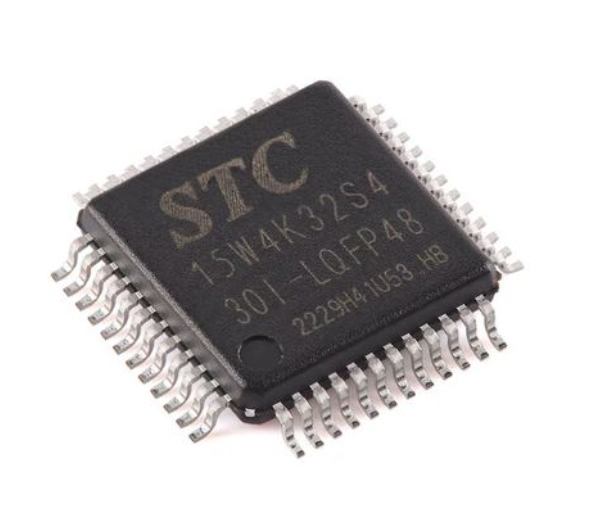
8-bit MCUs represent the foundational tier of microcontrollers. Built around an 8-bit data bus and ALU (Arithmetic Logic Unit), they are designed for simple, cost-sensitive control applications. Examples include the classic Intel 8051 family and various PIC microcontrollers from Microchip. Their advantages are low power consumption, minimal cost, and simplicity in design and programming. They excel in applications like basic sensor reading, LED control, simple motor drives, and remote controls. While limited in computational throughput, their efficiency for dedicated tasks keeps them highly relevant in high-volume consumer goods.
16-bit MCUs offer a middle ground, providing enhanced performance over 8-bit versions while maintaining relatively low power consumption. They can handle more complex algorithms and data types more efficiently. MCUs like the TI MSP430 series are renowned in this category, particularly for their ultra-low-power capabilities, making them a staple in battery-powered devices such as digital watches, medical sensors (e.g., glucose meters), and portable instrumentation.
32-bit MCUs are the powerhouses of the microcontroller world. Often based on architectures like ARM Cortex-M, they offer significantly higher performance, larger memory address spaces, and advanced features like DSP (Digital Signal Processing) instructions and Memory Protection Units (MPU). These MCUs are essential for complex real-time processing, connectivity (Wi-Fi, Bluetooth), graphical user interfaces (GUI), and Internet of Things (IoT) edge nodes. The STM32 series from STMicroelectronics and SAM D series from Microchip are prominent examples. Their ability to run full-featured real-time operating systems (RTOS) opens doors to sophisticated multi-tasking applications in automotive body electronics, industrial automation, and smart home hubs.
Part 2: Classification Based on Core Architecture and Instruction Set
The core architecture defines how the MCU executes instructions and manages its resources, leading to significant differences in performance and efficiency.
Von Neumann Architecture employs a single shared bus for both instructions and data. This simpler design can lead to the “Von Neumann bottleneck,” where instruction fetches and data operations cannot occur simultaneously, potentially limiting throughput. However, its simplicity makes it cost-effective and is commonly found in many basic 8-bit MCUs.
In contrast, Harvard Architecture uses separate physical buses and memory spaces for instructions and data. This allows the CPU to fetch an instruction while simultaneously accessing data, enabling higher performance for most real-world operations. Most modern high-performance MCUs, including nearly all ARM Cortex-M cores, utilize a modified Harvard architecture. This design is key to their efficient pipelining and deterministic execution, which is critical for real-time control systems.
From an instruction set perspective, MCUs are divided into two main camps: CISC (Complex Instruction Set Computer) and RISC (Reduced Instruction Set Computer). Traditional architectures like the 8051 are CISC-based, featuring instructions that can perform multiple operations. However, the dominant force today is RISC, exemplified by ARM, AVR (used in many Arduino boards), and RISC-V. RISC architectures use a smaller set of simple, uniform instructions that execute in a single clock cycle (or a predictable number of cycles), leading to higher performance per MHz, better power efficiency, and simpler compiler design. The rise of RISC has been instrumental in enabling the performance leap in 32-bit MCUs.
Part 3: Classification Based on Application-Specific Features and Market Segments
Beyond raw specifications, MCUs are often tailored for specific market verticals or functional requirements.
General-Purpose MCUs are versatile devices designed to address a broad range of applications. They offer a balanced mix of I/O pins, memory sizes (Flash/RAM), communication peripherals (UART, I2C, SPI), and timers. Families like Microchip’s PIC or NXP’s Kinetis provide extensive portfolios where developers can choose a device that closely matches their needs without paying for unnecessary features.
Ultra-Low-Power (ULP) MCUs are engineered from the ground up to minimize energy consumption. They feature multiple low-power sleep modes with rapid wake-up times, dynamic voltage scaling, and highly efficient peripherals. The TI MSP430, STM32L series, and Silicon Labs EFM32 Gecko are leaders in this segment. Their primary applications are in wireless sensor networks, wearable electronics, energy harvesting devices, and any battery-powered product requiring years of operation.
Motor Control MCUs are optimized for driving brushed DC, stepper, or BLDC (Brushless DC) motors. They include specialized peripherals such as high-resolution PWM timers with dead-time insertion for controlling H-bridges, fast ADCs for current sensing, and hardware for encoder interfaces. These features ensure precise speed/torque control and high reliability. Companies like Infineon with its XMC series offer robust solutions in this space.
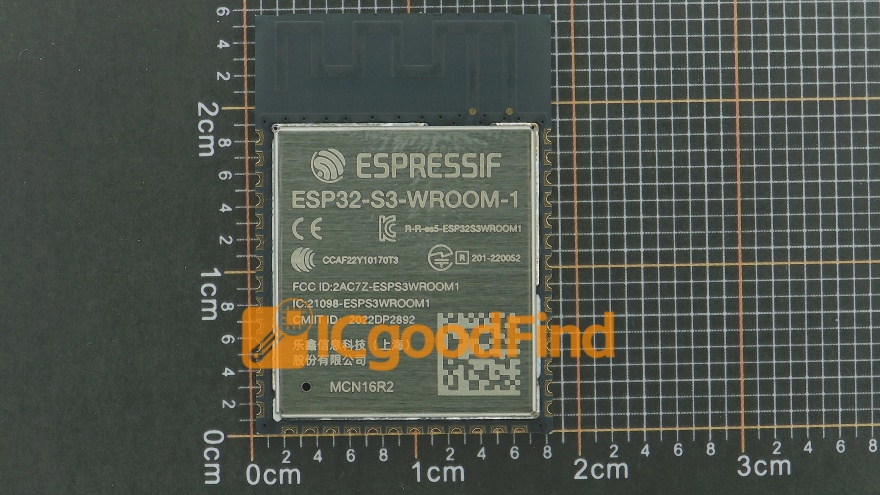
Wireless Connectivity MCUs represent one of the fastest-growing categories with the explosion of IoT. These chips integrate a radio transceiver (for Bluetooth Low Energy/BLE, Zigbee/Thread/ Matter sub-GHz) alongside a capable microcontroller core on a single die. This integration simplifies design, reduces PCB footprint, and lowers overall system cost. Examples include the Nordic nRF52/nRF54 series (BLE) and Silicon Labs EFR32 series (multi-protocol). For developers navigating this complex intersection of RF design and embedded software, finding reliable components is key. This is where a specialized sourcing platform like ICGOODFIND proves its worth by aggregating options from global suppliers.
Conclusion
The ecosystem of Microcontroller Units is vast and diverse, with each type—whether distinguished by bit-width (8-, 16-, 32-bit), core architecture (Harvard vs. Von Neumann; RISC vs. CISC), or application focus (general-purpose vs. ultra-low-power vs. wireless)—serving a unique niche in the electronics landscape. Selecting the right MCU is a critical decision that balances performance requirements against constraints of power budget, cost targets development timeline ,and system complexity .As technology continues to advance ,we see increasing integration ,with more analog functions ,advanced security features ,and AI accelerators being embedded into modern MCUs .For professionals tasked with navigating this ever-evolving component landscape ,leveraging comprehensive resources is essential .Platforms such as ICGOODFIND provide a vital service by offering detailed searchability ,comparison tools ,and supply chain transparency for these fundamental building blocks of innovation .By thoroughly understanding the different types of MCU available ,engineers can make informed choices that pave the way for successful ,efficient ,and competitive electronic products .