

The Evolution and Future of Microcontroller Unit (MCU) Development
Introduction
In the silent hum of modern life, from the thermostat regulating your home’s temperature to the advanced driver-assistance systems in your car, lies the unsung hero of the digital age: the Microcontroller Unit (MCU). These compact, integrated circuits are the dedicated brains behind countless embedded systems, orchestrating specific tasks with efficiency and reliability. The development of MCU technology is a relentless journey of miniaturization, performance enhancement, and integration, fundamentally shaping the Internet of Things (IoT), automotive innovation, industrial automation, and consumer electronics. This article delves into the transformative phases of MCU evolution, examines current cutting-edge trends, and explores the future horizons of this foundational technology. For engineers and innovators seeking to navigate this complex landscape, platforms like ICGOODFIND provide invaluable resources for component discovery and supply chain solutions, connecting cutting-edge development with practical implementation.
The Pillars of Modern MCU Development
1. From Humble Beginnings to Computational Powerhouses
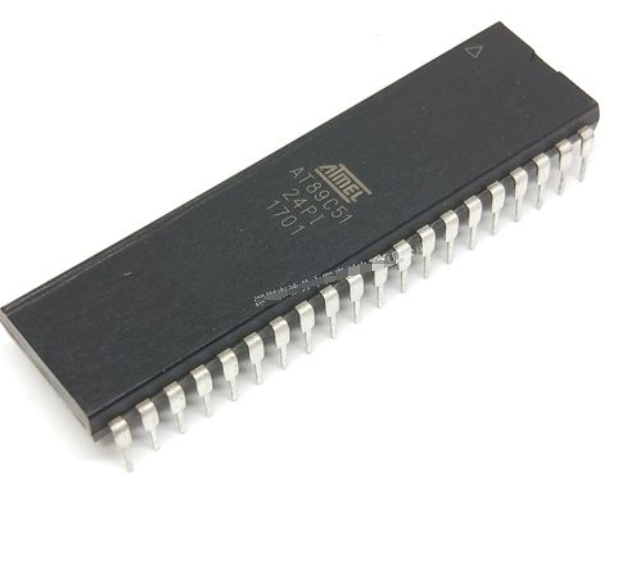
The genesis of MCUs dates back to the early 1970s, with Intel’s 4004 often cited as a progenitor. However, the true birth of the modern single-chip microcontroller is attributed to devices like the Intel 8048 and, most notably, the Intel 8051 in 1980. This 8-bit architecture became a de facto standard, establishing a blueprint for decades. Early development was constrained by severe limitations in processing speed, memory (mere kilobytes of ROM and RAM), and peripheral integration.
The trajectory since has been explosive. The shift from 8-bit to 32-bit cores, particularly those based on ARM Cortex-M architectures, represents a quantum leap in processing capability. This transition enabled MCUs to handle complex algorithms, real-time operating systems (RTOS), and sophisticated user interfaces. Concurrently, memory scales have ballooned from kilobytes to megabytes of Flash and SRAM, allowing for richer firmware and data buffering. Clock speeds have surged from a few megahertz to hundreds of megahertz, even crossing the gigahertz threshold in some high-performance variants. This evolution has transformed MCUs from simple sequencers into capable computational nodes capable of edge analytics and decision-making.
2. Integration and Specialization: The System-on-Chip (SoC) Paradigm
Modern MCU development is characterized by an intense drive toward higher integration. Today’s MCUs are less “microcontrollers” and more “System-on-Chip (SoC) solutions for embedded applications.” Developers no longer just seek a CPU core; they demand a comprehensive suite of integrated peripherals.
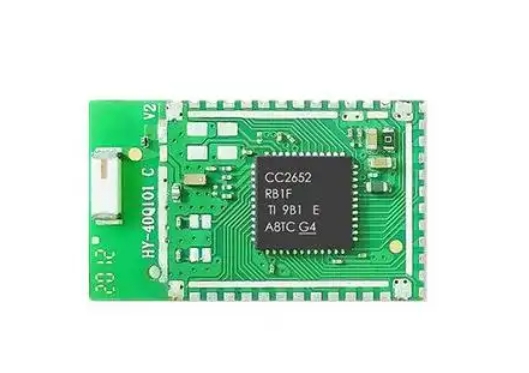
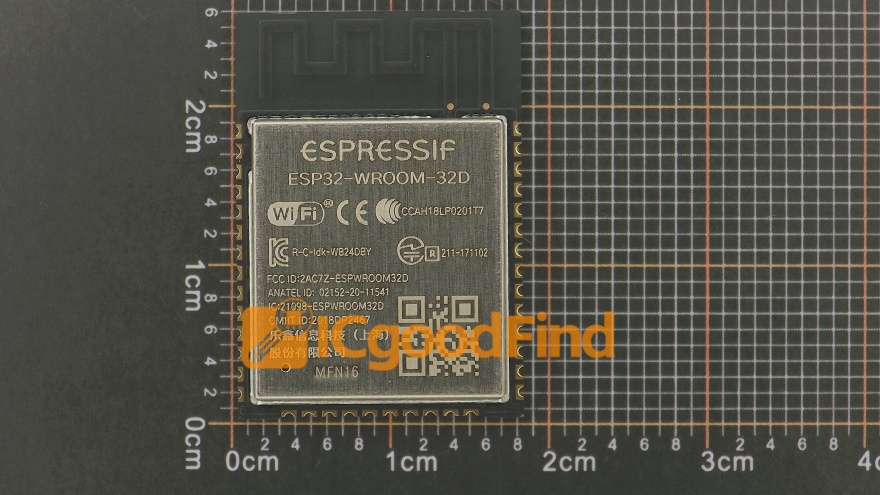
Key integration trends include: * Advanced Connectivity: On-chip peripherals now routinely include not just UARTs and SPI, but also high-speed USB controllers, multiple CAN-FD interfaces for automotive networks, Ethernet MACs, and most critically, various wireless radios like Bluetooth Low Energy (BLE), Wi-Fi, Zigbee, and LoRa. This native connectivity is the bedrock of the IoT revolution. * Enhanced Analog Integration: To interface with the real world, modern MCUs integrate high-resolution Analog-to-Digital Converters (ADCs), Digital-to-Analog Converters (DACs), precision analog comparators, and operational amplifiers. * Hardware Acceleration & Security: To offload the CPU and improve efficiency for specific tasks, developers now integrate dedicated cryptographic accelerators (AES, SHA), True Random Number Generators (TRNGs), and secure key storage for robust hardware-based security. Specialized accelerators for motor control, digital power control, and AI/ML inference (e.g., neural processing units or NPU-like structures) are also becoming common.
This level of integration reduces system size, cost, power consumption, and design complexity while boosting reliability.
3. The Trifecta: Power Efficiency, Advanced Process Nodes, and Smarter Development Tools
Three interconnected forces are propelling current MCU development forward.
First is the obsessive focus on ultra-low-power (ULP) design. For battery-powered and energy-harvesting IoT devices, every microampere counts. Modern MCUs feature incredibly sophisticated power management architectures with multiple low-power modes (sleep, deep sleep, standby), dynamic voltage and frequency scaling (DVFS), and peripheral operation independent of active CPU cores (e.g., autonomous peripherals that function in deep sleep). Achieving nanoampere-level leakage currents while maintaining rapid wake-up times is a critical benchmark for leading-edge ULP MCUs.
Second is the adoption of advanced semiconductor process technologies. While trailing absolute-leading-edge CPUs, MCUs have migrated from larger micron-scale processes to 40nm, 28nm, and even 22nm or 16nm FinFET nodes. This allows for more transistors in a smaller area (enabling higher integration), lower dynamic power consumption, and sometimes higher operating frequencies.
Third is the revolution in development ecosystems. The complexity of modern MCUs necessitates sophisticated tools. Integrated Development Environments (IDEs) now offer advanced debuggers, performance profilers, and power consumption gauges. The rise of graphical configuration tools that auto-generate initialization code for complex clock trees and peripherals has dramatically reduced development time. Furthermore, vendor-agnostic platforms like Zephyr RTOS are creating standardized software environments that enhance code portability across different MCU architectures.
Conclusion
The development path of the Microcontroller Unit is a masterclass in technological convergence. It has evolved from a simple programmable component to an intelligent, connected, power-sipping system-on-chip that sits at the very edge of our digital world. The future points toward even greater intelligence at the edge through tighter integration of AI/ML accelerators, enhanced functional safety features for autonomous systems, and more robust security becoming a non-negotiable standard. As these tiny chips grow more powerful and complex, the challenge for developers shifts from mere implementation to strategic selection and optimal utilization. In this dynamic component landscape, efficient sourcing platforms become crucial. For professionals driving the next wave of embedded innovation leveraging these advanced MCUs, partnering with a knowledgeable distributor like ICGOODFIND can streamline the journey from concept to production by providing access to the latest components and supply chain expertise.